Like a Candle in the Dark – Blog Advent (1)

It’s the first of December, and secular Advent is with us at last.  Kids (young and old!) all over the world have broken open the first window of their Advent calendars this morning, and the countdown to Christmas is well and truly on!

Advent candle

I started candle making last year, in a very small way, and mused at the time whether my advent candle, this year, might be home-made.  Well, here it is!  I’m quite pleased with it!

Advent - day 1

Candle making is a great little craft, though it can be a bit time consuming.  I’ve had an Advent candle for many years, and it’s such an important part of my pre-Christmas traditions that I wanted to get it right.

Incidentally, these instructions are equally relevant to making almost any sort of pillar or taper candle.  My consumables (wax, transfers etc) mainly came from Making Your Own Candles (see the suppliers list for more details).

Candle moulds and wickTo make a candle like this one, you’re going to need the following –

  • A taper candle mould (mine were cheap, plastic, and came from eBay – more sophisticated models are available!)
  • Appropriate candle wax – I used 90% of a paraffin pillar blend, and 10% beeswax
  • Candle dye and scent (optional)
  • Waterslide transfers for the Advent days (you can skip this if you’re just making dinner candles!).  You can buy waterslide transfer papers for laser printing yourself, or buy the transfers already printed from a candle supplies shop.
  • Wick – I used LX8 for these taper candles – wick sustainers and mould seal
  • Basic candle-making equipment – some sort of double boiler (mine is a large tin can in an old pan), a jam thermometer, an a stirring stick of some sort.  These should not also be used for food!
  • Kitchen scales, hob, fridge and freezer.
Wax beads with stirrer and dyeFirst, assemble your moulds if required, and then work out their volume (I filled them with water, and then weighed the water).  This will let you work out how much wax they will take to fill.  Wax is about 10% less dense than water, so reduce your weight by 10% and that’s the amount of wax you need.

Each of my taper moulds took about 60g of water, which I adjusted down to 55g of wax made up 50g of paraffin and 5g of beeswax.  I also added a 1g chip of fudge-coloured dye to the 110g of wax (that’s the orange thing you can se in the wax tin).  Now warm the water in your double boiler up until the wax starts to melt.  This should start at about 65C.  Try to keep the water below 75 to ensure the wax stays safely below its flashpoint (the temperature at which it’s at risk of catching fire).  The lower the temperature you keep your melted wax while working with it, the less shrinkage will happen as it cools, which is likely to give you a better result, so be patient and let it melt slowly!

Wick fixed with mould sealMeanwhile, prepare your moulds, feeding the wick through the wick hole at the bottom and plugging this with some mould sealant (I use generic white-tack of the sort you’d use to fix posters to the wall, and this seems to work fine).  Then turn the moulds the ‘right’ way up, and secure the other end of the wick to a wick sustainer, again using some of the tack.

If you’re adding scent to your candle wax, do this now, just before pouring, to reduce the amount of scent you will lose by evaporation from the hot wax.  I added a few drops of sweet orange and ginger essential oils to give a gentle festive scent – but there are lots of commercially prepared specialist candle scents, which, unsurprisingly, you should use according to the directions that come with them!
Moulds ready for pouringOnce your moulds are ready, you can start pouring the melted wax.  Do this carefully but steadily.  You can see that I placed my moulds in a tin just in case the mould seal failed, to avoid molten wax going all over the kitchen.  Fill both moulds all the way to the top.  You will have some left over wax, if you’ve calculated right. This is good news.  Put your filled moulds somewhere cold such as the refrigerator, or outside, for about an hour.

Candles with voids around wicksMeanwhile, either keep your wax melted (this involves watching it carefully all the time) or pour it out into a container like the tinfoil tray and let it set for now. After about an hour, retrieve your candle moulds.  You’ll notice that there’s a massive great ‘well’ in the centre of your candles.  Give this a bit of a poke with a kebab skewer to make sure there aren’t any hidden voids, then re-melt the wax you have left over, and use it to top up the moulds again, right to the top.

Finished candles in mouldsReturn the candles to your cold place to finish setting for a few hours.  When you get them out again, they should look a bit like this.  Now you need to release them from their moulds. Shrinkage is your friend here, so I stuck mine in the freezer for about half an hour.  Then I could pop the cap from the bottom of the mould and gently ease the candle out – well, that’s the theory at least.

Candle free from mouldAs you can see from this next photo, on this particular candle – the first I made, I ended up accidentally breaking the rounded top of the candle in the process. Well, you live and learn, and subsequent efforts were more successful!  Freezing is a big help, as is giving the mould a brisk but gentle tap before gently pushing up from the ‘pointy end’.

You can tidy up and ‘finish’ the bottom of the candle by trimming the wick and then melting the bottom against a hot iron or any other hot surface to melt it down flat.  Obviously, choose your hot surface judiciously and don’t use your laundry iron or anything that’s for food use!

If you’re just making a dinner candle – congratulations, you’re done!  If it’s an advent candle you’re set on, there’s just one more step to go.

Plain candles with waterslide transfersApplying the waterslide transfers turned out to be surprisingly straightforward.  Cut these to size, if required, then soak the transfers in a bowl of tap water for about a minute.  This will allow the clear film which forms the transfer itself to come away from the paper backing.
waterslide transfer soakingThen, very gently place the film on the surface of the candle and smooth it out.  It won’t stick down fully for a couple of minutes as it dries, so you have plenty of time to straighten it out and get rid of any bubbles or wrinkles, I found wiping it gently with a damp piece of kitchen towel was very helpful.

I’m really happy with mine – isn’t it gorgeous!  It’s a lovely warm honey colour, and has a gentle fruity scent from the essential oil additions.

Candle and calendar

Of course, many people prefer an Advent calendar to a candle – those of you who were early readers of this blog may remember my fabric Advent calendar project from last year.  You can see more photos and instructions for the calendar over here.

I’m trying to write a post a day during Advent, so, please come along with me while I try to Blog Advent – the Country Skills Way – and forgive me if I don’t quite manage it!

Read more from the Country Skills blog >>

Holidays Are Coming… and it’s very nearly Advent!

There’s no escaping the fact that winter has well and truly arrived, and that Advent, and Christmas, are just around the corner!  Christmas is probably my favourite time of year, which is a bit odd, I suppose, as I really really don’t get on with winter.  The cold, and especially the long dark months, seem to sap my energy.  I’m sure I evolved from a creature that hibernated, because honestly I could curl up under a rock in the middle of November and not come out until March.  But Christmas – Christmas is a bright, beautiful jewel in an otherwise dark and barren winter landscape.  The lights and sparkles, the food, the drink, and above all, the laughter and joy of loved ones, friends and family.

Every year that goes by, I seem to spend less money on a ‘commercial’ Christmas, and more time and effort on home-made, food and drink, gifts and decorations.  So the next few weeks are going to be really busy!  Never mind the inevitable – welcome, but time consuming – increase in social commitments, works parties, people visiting. Of course, what everyone needs with all this going on is an extra time-sink.

The thought occurred to me a couple of weeks ago that it would be really fun (fun?!?) to try to blog daily, from December 1st to Christmas Eve – about my Christmas preparations, food and drink, making and doing, building up to the big day…

So, please come along with me while I try to Blog Advent – the Country Skills Way – and forgive me if I don’t quite manage it!

Read more from the Country Skills blog >>
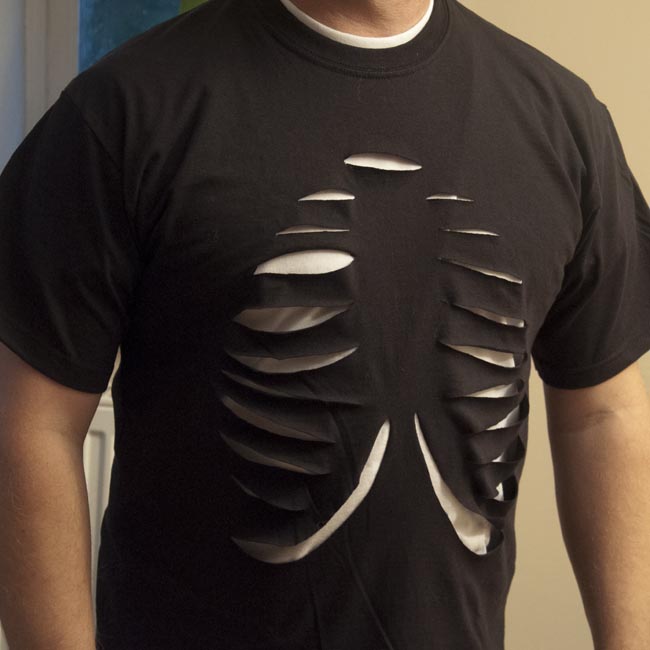
Halloween Rib Cage T-Shirt – five minute fancy dress

Oh no – you’ve got a Halloween party this evening, and to call your costume an afterthought is, sadly, dramatically to over-estimate the amount of thought that has actually gone into it so far!  We’re just back from a lovely week in Cornwall, eating great food and walking the dog on the beach.  I’d completely forgotten about our village pub’s ‘costume optional’ Halloween event this evening until we got home about an hour ago!

Halloween Rib Cage T-shirt

But, all is not lost.  Look at my natty outfit (kindly modelled here by Hubby)!

This really is a five minute costume project.  It’s thrifty, too, and no sewing required.  You’ll just need to round up the following –

  • A ‘sacrificial’ black t-shirt,
  • a white-t-shirt that you’ll get to wear again,
  • a cutting mat, small rotary cutter, and a tailor’s chalk / pencil, and
  • a basic grasp of human anatomy (google images can help you with this bit!)

Find the approximate centre lineStarting with the black t-shirt inside out, mark out the centre line as best you can.  This will be surprisingly difficult to do with any accuracy as the quality control on these things is always shockingly poor, so a decent best guess at it is perfectly alright.

Mark out ribsNext, using the tailor’s chalk, mark out a set of ribs to one side of your centre line.  There are lots of rib cages in google images to look at, and I found the PDF template for a much more complicated version of this project on marthastewart.com was a useful guide to the general size and shape of the ribs.  Remember to offer up to the white shirt you’re planning to wear underneath to make sure you’re not massively ‘out’ when it comes to necklines.

Fold for cuttingNow, fold the t-shirt in half along your centre line, so that you have both halves of the front of the shirt front-to-front and your chalk markings showing, and the cutting mat underneath.

Cut along markings with rotary cutterCut carefully along the rib markings with your cutting wheel, through both layers of t-shirt, so that the pattern is cut as close as possible to identically on both sides of your chest.

That’s it, unfold your t-shirt, and put the cutting mat inside so you can tidy up any bits the cutter hasn’t cut cleanly.

And you’re done.  Simple, or what?

You could do the back now – but don’t cut the same pattern, as the back of the rib cage differs quite a bit from the front!  But if you can’t be bothered, pair it with a cape (or a long dark coat!), dark trousers or a black skirt and knee boots, and – if you’re feeling especially keen! – a scythe made from a broomstick with a cardboard and tinfoil blade.  You’re all set!

Time to get ready to party without feeling like you’ve completely failed to go to any trouble!  Enjoy your parties, folks, and have a ghoulish good time!

Read more from the Country Skills blog >>
Meet the Family – Dave the dog

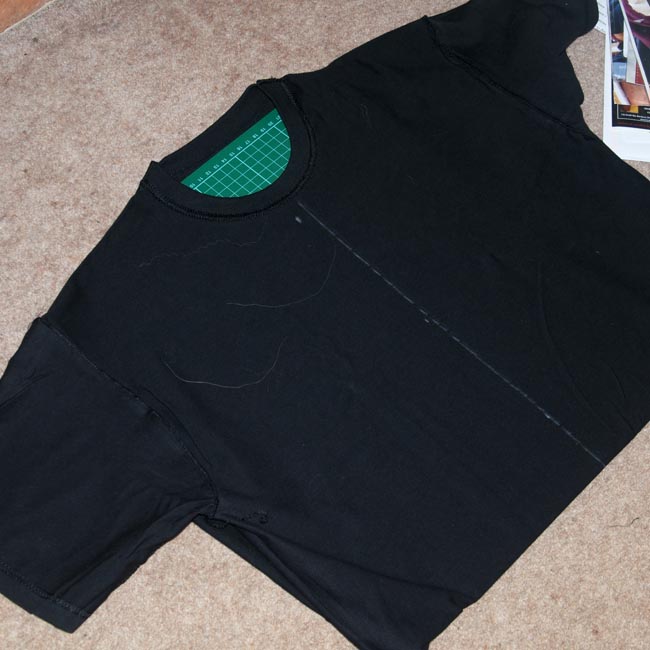
This is Dave, our eight year old rough collie.  He’s the ‘face’ of the country skills blog and twitter avatar, too. 🙂

I took this photo yesterday night, while he was ‘hanging out’ on the sofa, enjoying the new sheepskins we brought back recently from Yorkshire.  I should add, he’s not allowed on the sofa, really – but he sprained his elbow a few days ago and is feeling a bit sorry for himself, so has extra privileges just now!  I love how his coat blends and contrasts with the fleeces in this picture.

I hope all of your pets (if you have them) are enjoying good health today, and are as much a source of joy to you as Dave is to us!

Read more from the Country Skills blog >>

Last of the Harvest – bonus ‘accidental’ elderflower-infused marmalade

Today, I was planning to bottle my elderflower cordial, and make a couple of sourdough loaves for next week.  As if that wasn’t enough for a Sunday, we also had a load of rock to collect.  So of course, I had to find something *else* that needed doing, too!

Elderflower cordial, steeping

After separating the cordial from the fruit and flowers, I was about to chuck them, but suddenly couldn’t bring myself to do it.  I could almost hear my grandmother sighing, ‘all that lovely fruit…’  All that lovely fruit – four whole lemons and oranges.  It was too good to waste, and had been soaking in a sugar syrup of utter deliciousness for three days, which surely had to be a good thing?

It’s been a very long time since I made marmalade, but there’s a long family tradition of doing it – my Mum makes it every year, and Grandma did, before her.  Our ‘family’ marmalade is dark, and rich, and often has hit of whisky or rum in it.  This ‘accidental’ marmalade is nothing like it!  I dug out Pam Corbin’s ‘Preserves’ (in the River Cottage Handbooks series) and realised neither of her recipes really did what I wanted, but perhaps, by using aspects of both, I could get something sensible!

Finely sliced citrus fruitI sliced my rescued fruit slices up quite finely, removing all the pips.  The three days soaking in the sugar syrup had got them some way towards being candied – the skins already a little bit softened and less juice in the flesh than a fresh orange or lemon.

Coming up to the boil

The total weight of sliced up citrus fruit was about 1.3kg (made up of four lemons, and four large sweet oranges), to which I added 2kg of mixed sugar (mostly golden caster & granulated sugars, but with a bit of refined caster sugar to make up the volume) and 1.5l of water.  I also gave the big handful of elderflowers a good squeeze to extract the last of their flavour, before throwing these away.

Return all the ingredients into the big pan they’d been steeping in for the cordial, and bring up to a nice simmer, covered, for about an hour until the peels are nice and tender.   While this is happening, assemble your jam jars and lids (I ended up with ten, mixed sizes, scavenged from my ‘saved jars’ pile) give them a careful wash, and place them in a cold oven ready for sterilising.  I bring mine to 150C and keep them there for ten minutes before I turn the oven off.

At a nice rolling boilWhen you’re happy with the texture of your citrus peel, take the lid off, turn the heat up, and boil it all as hard as you can for about 15 minutes, until it gets to setting point (I favour the cold saucer approach to checking for set – though interestingly for this particular marmalade there was a dramatic increase in the amount of foam produced as setting point was reached, which was a bit of a give away).

Filling jarsOnce you’ve reached a set, take the pan off the heat, and just wait for the bubbles to stop, give it a stir to re-incorporate any froth from the surface, and then ladle into your hot jars fresh from the oven.  I’m really messy at ladling, so I love my wide-mouthed jar funnel. Fit the lid tightly, and up-end the jars a couple of times to make sure the boiling hot jam comes into contact with all the surfaces.

If you’re American, at this point in proceedings you’ll probably feel compelled to do something with a water bath.  I’m afraid our friends over the Atlantic don’t like this way of filling jars, they seem to regard it with great suspicion as being likely to kill you with botulism or other similar nasties.  All I can say is, it’s the only way I, or anyone else in my family, has *ever* filled jam jars, and so far we’ve all lived to tell the tale!  (More seriously, this is a nice sweet, acid concoction, and consequently pretty un-friendly to clostridial species, so you should have very little to worry about!)

Filled marlalade jarsI’m really pleased with these little beauties!  The colour is gorgeous, a real bright rich orange, and the flavour is beautifully balanced.  I’d love to say I can taste the elderflower – if it’s there it’s very subtle – but the mix of oranges and lemons gives a really nice clean crisp flavour.

It’s not an overpoweringly bitter marmalade like some of the Seville orange marmalades can be, but instead has a lovely three way balance between the acidity of the citrus flesh, the sugar sweetness, and a bitter note imparted by the pith and peel.

'Accidental' marmalade

I wish I could offer you a taste – all I can do is encourage you to make your own!  I’m so looking forward to this on a lovely thick slice of my fresh sourdough loaf for tomorrow’s breakfast.

Read more from the Country Skills blog >>

BBQ Treats – home-made thyme and tomato beef burgers

A really good, home-made burger is such a treat, hot from the BBQ, under the grill or even pan-fried, when the ingredients are great you can’t go far wrong!  Making your BBQ burgers from scratch means you know exactly what’s gone into them, too, which is no bad thing.

Burgers cooking over charcoal

To make four generous sized burgers, you will require –

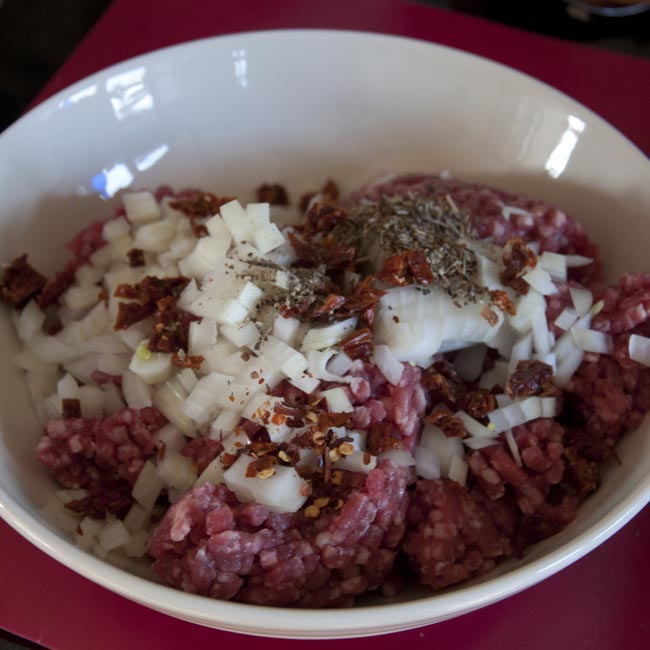
  • Ingredients ready for mixing1lb of good quality lean beef mince – don’t skimp and buy rubbish here, butcher’s is best!
  • Half an onion, finely chopped
  • Four or five sun-dried tomatoes, sliced up as fine as you can
  • Two garlic cloves, minced
  • One and a half teaspoons of dried thyme
  • Half a teaspoon of chilli flakes, and
  • A generous pinch of black pepper

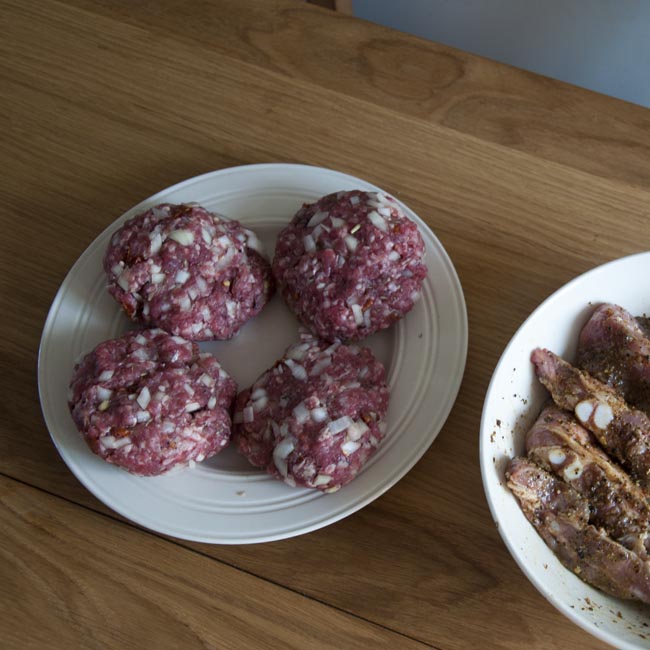
Ready to cookMix all the ingredients in a bowl, mushing them together with your fingers until they combine.  Then divide into four and shape by hand into thick burger patties.  If you have the time to return the burgers to the fridge for an hour or so, this will just firm them up a bit and reduce the risk of them falling apart on the grill.  If you’ve made more burgers than you want to eat today, interleave them with greaseproof paper before putting them in a bag, and they’ll keep in the fridge for a couple of days, or can be frozen.

When you’re ready to start cooking, place your burgers gently on the BBQ grill, and cook through nice and slowly – resist the temptation to move them or turn them until the bottom is cooking well.  Interfering with them too soon is the best way of losing your hard-earned burger into the charcoal!

Then, enjoy in a nice fresh crispy burger bun with a good dollop of sun-dried tomato ketchup, and a generous handful of salad leaves.  The thyme adds a lovely aromatic note, and the tomato a delicate sweetness to the meat that I think you’ll find rather pleasing!  I love to eat these burgers outdoors, with a cold beer or a nice crisp glass of dry white wine.

Read more from the Country Skills blog >>

Jerk Seasoning – perfect for BBQ season, when weather permits?

Summer is here – so it’s got to be time to break out the BBQ!  Never mind the weather – here in the Midlands we’re in the middle of one of the wettest droughts anyone can remember, it’s rained continuously for several weeks now.  What better to give you a taste of the Caribbean sun – even if the local one isn’t co-operating! –  than home-made jerk pork or chicken kebabs cooked over a charcoal grill, served with a cold beer or a rum cocktail?

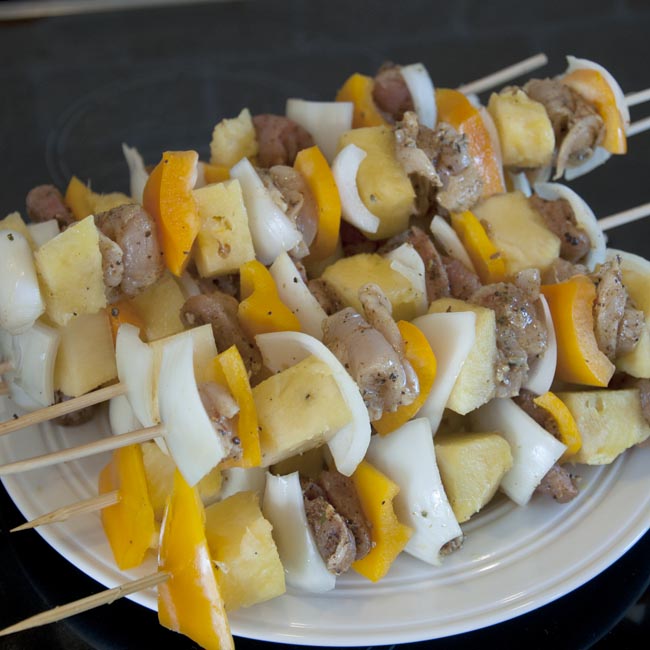
Jerk pork kebabs with pineapple, onion and pepper

[Please excuse the mix of weights & measures in this recipe – I created it more or less by eye trying to match a store-bought one.  Mine’s better.]

Making this dry jerk seasoning is really easy if you have a spice grinder.  If you don’t, you could either try using a pestle and mortar (though this may take you a very long time!), or you may be able to make something comparable using all pre-ground spices, though you’ll have to experiment a bit with the quantities and the texture won’t be so nice.  I don’t think you can buy ground bay leaves though, so I’ll leave that as an initiative test!

To make the dry jerk seasoning, take:

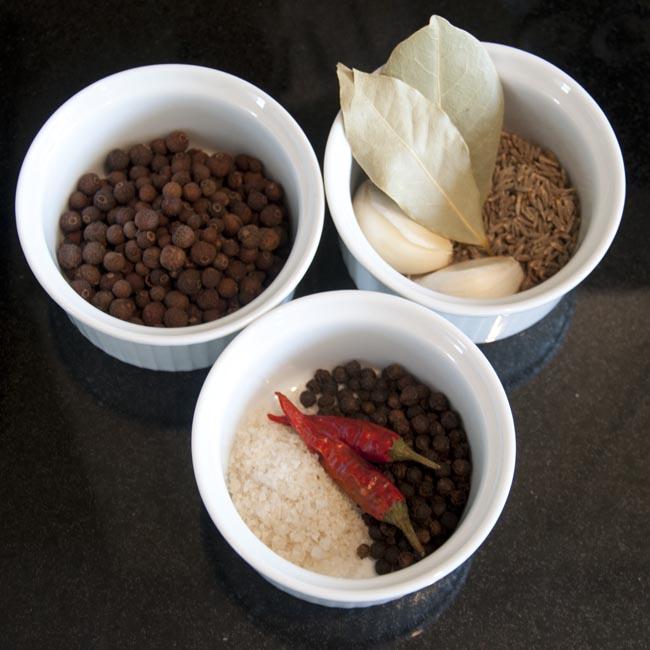
  • Whole spices for jerk seasoning15g whole allspice berries
  • 6g whole black peppercorns
  • 6g sea salt – I used salt that I’d smoked over alder and maple wood, for that bit of extra smokey BBQ flavour.  Plain salt is just fine though!
  • 2 tsp chilli flakes – or a couple of whole dried chillies – obviously the heat of the recipe will be affected by your choices here!
  • 2 tsp whole cumin seeds
  • 2 cloves of garlic, peeled
  • 2 bay leaves

Put all of these together in your spice mill and grind to a coarse powder.

Then add:

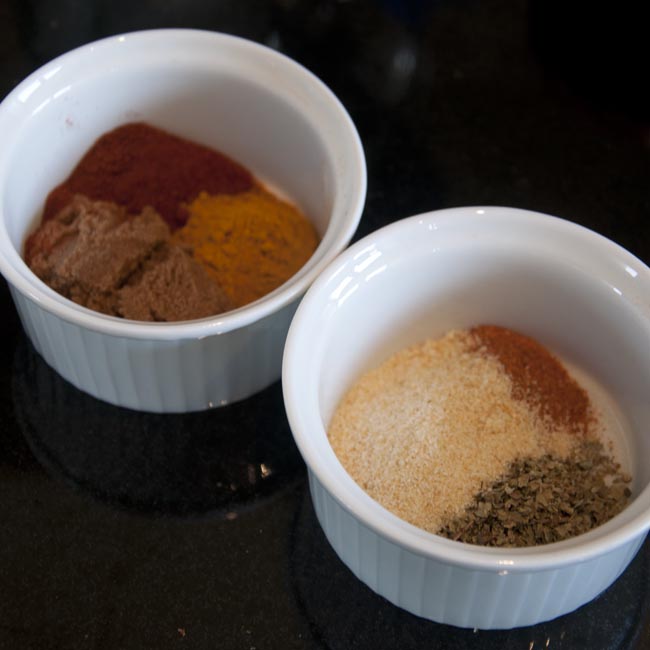
  • Ground spices for jerk seasoning1 tsp chilli powder (strength to taste)
  • 2 tsp dried oregano
  • 2 tsp onion powder
  • 2 tsp soft dark brown sugar
  • 1 tsp paprika (smoked, if you have it, and hot or mild to taste)
  • 1 tsp turmeric

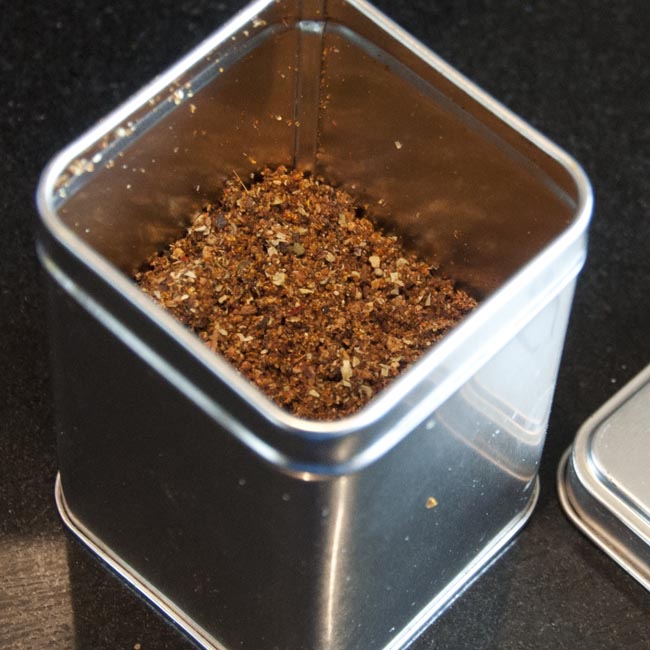
Dry jerk seasoningAnd mix well, working out all the little clumps that may have formed around the soft sugar or minced garlic, which are a bit more moist than the rest of the ingredients. Store in a small airtight container – a jam jar is ideal. It will keep well for several months at room temperature.

To use, mix as a marinade with whatever meat you want to jerk at a ratio of 2 tsp dried spice mix, with aprox 1 tbsp freshly squeezed lime juice and 2 tbsp olive oil. Rub in well with your hands and leave to infuse for a couple of hours in the fridge if possible.

The turmeric is mostly for colour and will dye your fingernails a really attractive shade of nicotine yellow. You might like to consider wearing gloves when rubbing in the marinade, or just leaving the turmeric out of the recipe, if you prefer.

Yesterday, I prepared jerk chicken drumsticks, legs, and wings for the BBQ, and jerk pork kebabs with pineapple, pepper & onion.

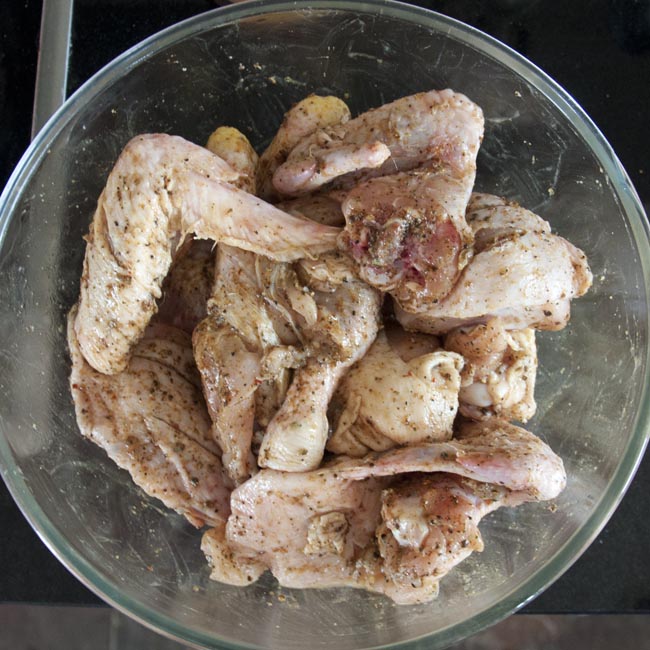
Chicken pieces in jerk marinadeThe jerk chicken portions couldn’t be more straightforward.  Either buy a pack of leg pieces from the butcher, or if you’re in the habit of portioning chicken at home, dig a couple of packs of legs & wings out of the freezer. Slash through the skin and into the meat several times on each portion – this helps the cure penetrate and also helps the thicker portions of the chicken cook evenly over the charcoal grill. Then squeeze over the juice of a whole lime, a good glug of olive oil, and several teaspoons of the jerk seasoning – I ended up using about 6 spoonfuls to get a good degree of coating on all the pieces.

Cover the bowl with cling film and leave in the fridge for several hours if possible before cooking, though you can cook immediately and the flavour will still be pretty good!  Cook over a charcoal grill, slowly, so that it cooks through without burning (a little bit of blackening on the outside is traditional, though!).  If you’re in any doubt whether the chicken is completely cooked, take it off the bbq, and place in an oven dish in a 200C oven for 10 – 15 minutes to finish cooking all the way through.  Of course, you can cook these entirely in the oven, if the weather’s not co-operating!

Prepared jerk pork kebabs with pineappleAny pork will do for the kebabs, really – I used half a pork tenderloin I had in the freezer. Cut into strips, and marinade like the chicken, with lime juice, oil and the dry seasoning mix.  Allow these to marinade for several hours if possible.  Prepare fresh pineapple by slicing thickly, removing the skin and cutting into square pieces.  Also slice a couple of onions and sweet peppers into similar sized pieces.  Then, just before cooking,  thread the marinaded pork onto skewers with the chunks of pineapple, onion and sweet pepper.

Kebabs cooking over charcoal

Get some good friends together, and marinade gently in some good drink and good company, while your jerk kebabs cook gently over a charcoal grill, then serve with salad & warmed pitta bread, and your choice of sauce (I quite like sweet chilli with this!).  Yum!  Dig in, and enjoy an early taste of summer!

Read more from the Country Skills blog >>
With Apologies for the Hiatus – it’s been a busy month!

There’s been a lot going on the past few weeks – my little sister’s wedding, the reason for the wedding bunting I’ve been making since Christmas, beginning a new job, and finally, now that we’re home from a much needed holiday, spring is well under way and we’re seriously behind on our garden preparations!

Congratulations to the bride and groom on a gorgeous wedding – very much their personal style and lots of beautiful handmade touches to the ceremony and reception. I was particularly taken by the home-grown baskets of bulbs as table centres, and the handmade pyrography favours.  The bunting was pleasingly well-recieved!

At the wedding

Normal service on the Country Skills blog will be resumed very shortly – including a round-up of my volunteers’ thoughts on their big bacon challenge results, more foraging tips, and how to make your very own home-cured ham!

Read more from the Country Skills blog >>
Bloggers – Your Country (Skills Blog) Needs You!

I’m still looking for a handful of volunteers for Kate’s Big Country Skills Bacon Challenge!

If you want to try something new and very cool – making your own bacon at home – and have a UK postal address, get in touch, and I’ll provide the curing salt.  Then, just brag about your bacon wherever you blog and to whoever will listen!

Thank you everyone, I now have a full set of volunteers!  Instructions, and hopefully feedback, coming soon!

That Wedding Bunting – now well underway!

The quick and simple Christmas Bunting was only ever a dry-run for the big task – I’d promised my sister bunting to decorate the village hall for her wedding reception.    Time is ticking on, so I’ve been getting on over the last few weeks.

Wedding bunting, complete

My plan was eventually to make 6 strings of 10m length each, in pursuit of which I’ve begged, borrowed and not *exactly* stolen all manner of fabric scraps, old clothes and bits and pieces.  I also bought a 72 yard bolt of yellow double-fold bias tape from the US via the marvel that is ebay.  This time I’ve chosen a bigger pennant, 8″ long by 6″ across.  I’ve also tightened the spacing so there is 6″ between flags.

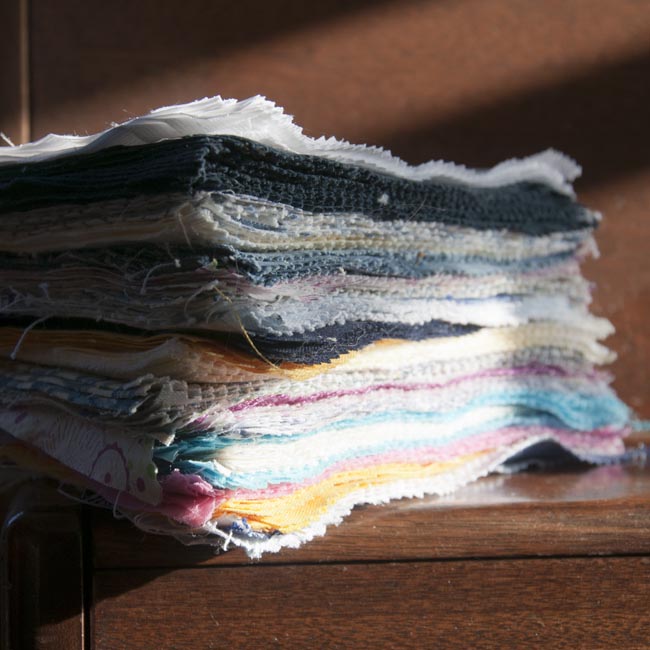
Bunting pennants, laid outIt’s a great selection of colours and patterns, garnered from friends, family, work colleagues, the back of my wardrobe, and freecycle.  The fabrics come from three sets of curtains, three blouses, a pair of jeans and a pair of cords, one pair of jim-jams, two offcuts of woollen suit fabric, some polyester scarf material, and one tea towel.

Bunting pennants, cut and ironedA bit of back-of-envelope calculation and I worked out I needed 29 flags per string.  I drew a new template on cardboard from a packing box.  Words cannot express what a slow boring job cutting out 180 triangles is, but with perseverance, and sat cross-legged on the floor in front of the telly evening after evening, we got there in the end.

Bunting pennants, sorted into groupsAfter ironing and sorting into piles, time to assemble the bunting.  Bias tape has quite a lot of ‘give’ in it, so peel a load off the roll and give it all a good stretch, this will also help it lie flat.  I measured 10m lengths and then found the middle of each.  Then starting in the middle, pin the pennants one at a time into the fold of the bias tape, measuring the gap between them approximately.  After that, it’s just a matter of running the whole length through your sewing machine using appropriate complimentary – or if you like, contrasting – thread.  Try to avoid skewering your fingers on the pins too often.

Completed bunting

There it is – I hope she likes it!  Only four more strings to assemble before it’s all done!

Read more from the Country Skills blog >>