Scaling Up – second attempt at smoked salmon

Buoyed up by the success of my first attempt at curing and smoking a very small salmon tail fillet, and tempted by the whole sides of salmon that appear in the shops at this time of year, I thought ‘hey, why not?’ and asked my husband to pick one up when he was shopping.  Having got it home and looked at it, in all it’s 1.75kg glory, and about an inch and a half thick at it’s thickest point, I did wonder if I hadn’t perhaps bitten off a bit more than I could chew…  so like any sensible experimental cook, I put the thought firmly to the back of my mind and got on with it anyway.

Before curing I decided to add a bit of flavour to the fillet in the form of a bit of a whisky infusion, so a tot of Laphroaig went into the bag with the fillet for an hour or two.  In retrospect I should have got the fillet out, washed and dried it and deprived it of its pin bones before doing anything with whisky, as I’m pretty sure that most of the flavour I added got washed away at this slightly later preparation stage.   Lesson learned!

After that, I cut the fillet in half (none of my oven dishes is anything like long enough to take a whole fillet in one go, and my fish kettle is metal and not really suitable for curing) and rubbed it generously with the cure mix which, as last time, is 2/3rds table salt and 1/3rd golden caster sugar.  In aiming for a very short cure period (about 6 hours) I’m keen to make sure the pickle doesn’t become unsaturated, so I use a lot more cure mix than I probably need to in order to get maximum water extraction during the short contact time.  I made up about a pound of cure mix, though I didn’t use it all.
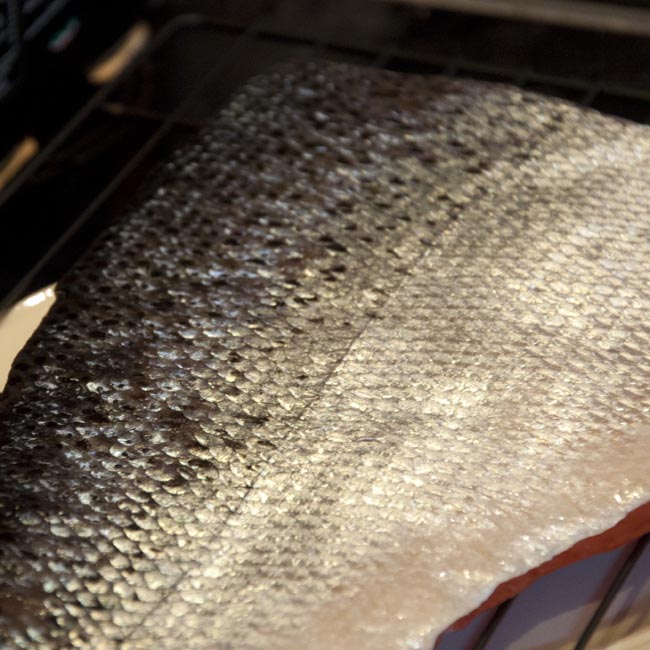
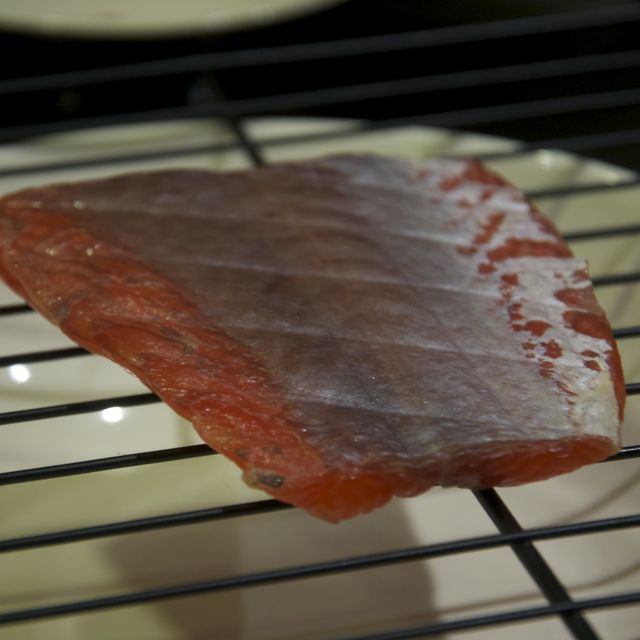
Cured salmon skinOnce rubbed in the cure, with a thin layer in the dish beneath the fish, I covered the fillet pieces with cling film and weighed them down with most of the canned goods in my larder!  I turned them every couple of hours.  At the end of the six hours a really quite striking amount of liquid had been drawn out of the fillet by the osmotic action of the salt and sugar.  More striking than that was the effect of the curing process on the salmon skin, which had reverted from the rather soft pliable texture you expect, to a firm, almost cardboard-like texture with the beautiful blue iridescence you would normally see only in the skin of a freshly caught fish.  More culinary alchemy, and quite beautiful!

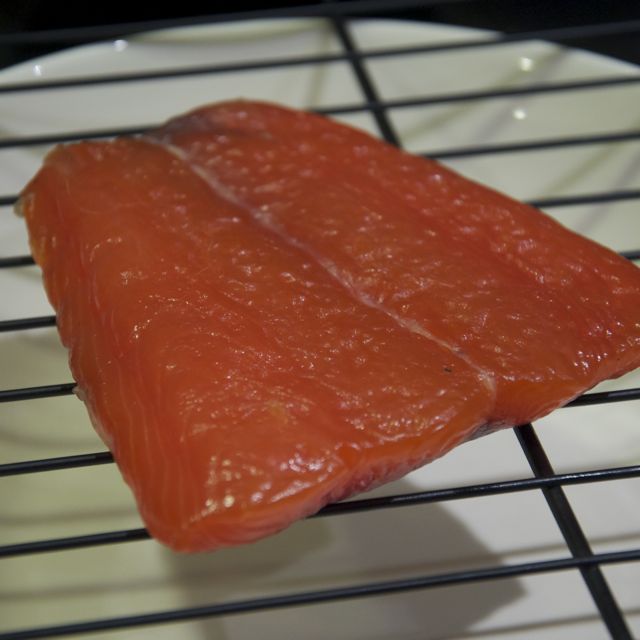
Cured salmon before smokingAfter washing and drying, the salmon pieces went into my fridge on open racks overnight.

The next morning, they were part of the second smoker run, and smoked for 10 hours over a mix of oak and apple wood.

After smoking I portionned the fish for freezing, which also gave me a good chance to examine it in cross-section.  The thinner tail piece is perfect, I think.  I cut some slivers from the surface and tasted them fresh from the smoker, it’s some of the best smoked salmon I have ever tasted – a gentle saltiness and sweetness, the oiliness of the fish mixing with a soft smoky flavour and perhaps, with a little faith, even the faint bite of the whisky in the background.  In cross section it is an even translucent orange-pink all the way through and a nice firm texture.

The thicker head-end half of the fillet is not quite such an unmitigated success.  There is a clear visual and textural distinction between the skin 1/3rd of the piece and the rest, with the flesh nearest the skin softer, pinker, and with more distinct fat-lines visible.  In all respects, this part of the fish is much closer in appearance to a fresh fillet than to a cured and smoked one.  I can only assume that the cure mix was not able to penetrate well through the skin (which in retrospect I should have checked was properly scaled) and had not had the time in the cure to be reached from the other side.   It’s not a terrible disaster as these pieces are now frozen and will be perfect to use in dishes like the creamy smoked-salmon pasta, but I don’t think they’re suitable for eating raw.

The options for addressing this, as far as I can tell are –

  1. Skin the fillet – not appealing as a plan, as it will reduce the structural integrity of the fillet and make it harder to slice thinly as smoked salmon later, also I think skinned fillets are a lot less visually appealing!
  2. Cure the salmon for longer, perhaps 8 – 10 hours – also not very appealing, as the flavour of the salmon is, in my opinion, perfect as it is, and I would not like it any saltier
  3. Do something to the skin side to help it absorb the cure better – certainly making sure the skin is fully scaled may well help here, but I’m also tempted to do something in the way of shallow piercing / scarifying of the skin to help the cure penetrating.  I have ordered (Amazon to the rescue again) a device called a blade tenderiser, intended for making lots of stab incisions in steaks before cooking, which I think with some minor modification to control the stabbing-depth may well do exactly what I want to the skin on the thick end of the fillet without too much faff.

Watch this space for the third effort – I’m running out of time before Christmas now so the third time had better be the charm!

Tinker and Try Again – second burn of the DIY cold smoker

It was obvious on the first burn of the DIY cold smoker that despite my best woodworking efforts (I do *not* possess joinery skills!) it leaked like a sieve from almost every edge and corner.  It was always going to be an iterative design process, so we broke out the mastic and panel pins and sealed the sides as best we could.  Then I cut and fixed batons along the edges of the slate roof to improve the seal between this and the sides of the smoker box.   After leaving it overnight for the mastic to go off, it was time for the second burn.

The morning dawned unconvincingly, grey damp and foggy.  Even the hens seemed unimpressed when I opened their pop door before turning my attention to getting the smoker set up for its second outing.

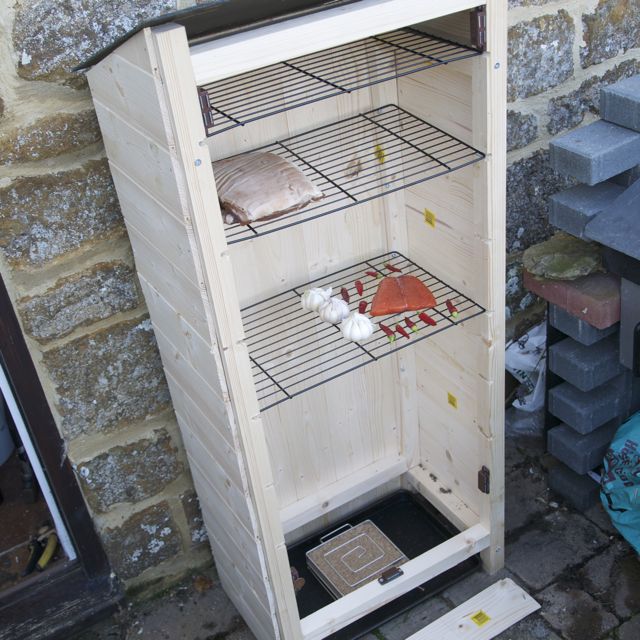
Smoker set for second burnI chose a mix of oak (~70%) and apple (~30%) dusts for my second burn.  In the smoker I had a whole side of cured salmon, my experimental Christmas bacon, a slab of cheddar, the bulb and a half of garlic from my first smoker run which hadn’t already been eaten, and a mix of already-smoked and unsmoked chillies.  Oh, and a little muslin bag of sea salt.  It was more or less full.

The smoker was greatly improved by the modifications, and breathed whisps of smoke out through the intended ventilation gap at the front steadily for about 11 hours.  The burn time was longer on this occasion, and I’m not sure whether that was due to the different mix of wood dusts or the weather (it stayed damp and foggy all day and never got above about 7 degrees celsius).  The apple smoke smelt wonderful, sweeter and softer than the 100% oak from the previous burn.

I plan to write more about the salmon in due course.  The bacon took the smoke very nicely and I’m very pleased with the results.  The garlic has definitely benefitted from a longer total time in the smoker, so I suspect I’ll batch garlic smoking to weekends I plan to run the smoker for two consecutive days to give a stronger smoke.

The cheese was a request from a friend, so we await the verdict!  As for the salt, it *smells* of smoke, though that may be the muslin.  I’m gratified that it doesn’t appear to smell of salmon at all.  It looks entirely unchanged – photos of caramel-brown smoked salt I’ve seen on other blogs aren’t the case here, though most of those have been hot-smoker efforts – but I look forward to tasting it soon!

Read more DIY Cold Smoker & Home-Curing posts >>

Read more from the Country Skills blog >>

Meddlesome creatures – the return of the bletted medlars

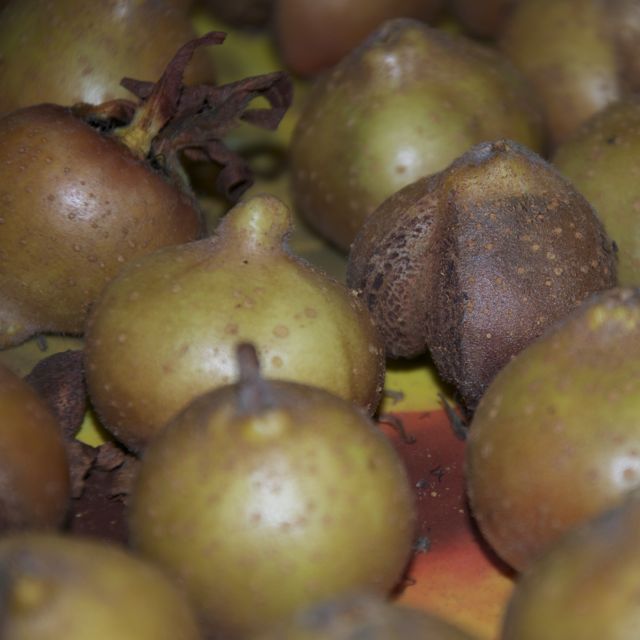
After two and a half week’s bletting in the spare bedroom, about half the medlars looked unchanged, the other half had softened and darkened in colour, with skins that look and felt a bit like nicely ripened passion fruit.

Bletted medlars

I was itching to get on and, in any case, had read in a couple of places that having some un-bletted medlars in the mix would help with setting the jelly, as they are higher in pectins. Brilliant then – time to get going!

Medlars in different stages of blettingFermenting medlarOf course, I had to taste the bletted medlars – I can report they’re a very unattractive mid-brown squishy substance, with a gentle sweet and slightly floral, perfumed flavour.  Not unpleassant but nothing to get really excited about.  One of my medlars had started fermenting, it’s skin was tight with gas and there were bubbles escaping from the calyx (the ‘dog’s bottom’ bit of the fruit).  In the spirit of experimentation (and so you don’t have to!) I did have a little taste of the liquid leaking from this – again not unpleasant, a little more citrussy than the bletted medlar.  I may have to look into medlar wine recipes!  There were also a couple of medlars which were dry and hard and black in the middle.  I threw those ones away.

Bletted medlars on a plateAfter consulting a few different sources (many recommended adding apples to the mix – something I wasn’t keen to do as I really want to see what medlars taste like!) I settled on a very simple recipe – medlars, sugar, and just a squeeze of lemon juice into the stewing water, using my almost-all-purpose fruit jelly recipe.

The liquor that drained from the jelly bag nearly had me giving up in disappointment.  It was distinctly cloudy with a rather insipid pale brown colour, a bit like too-weak milky tea.  A quick taste, and it was quite bland apart from a dominant flavour of tannin – like I’d been boiling up dry leaves and bark for an hour.  It almost went down the sink, but since I wasn’t sure what it was meant to taste like, I decided to persevere.

Medlar jellyThe result is a revelation – dark golden in colour, sweet/acid with a gentle floral top note and a soft tannin base flavour, quite unlike anything else you’ve ever eaten – my husband tried for several minutes to work out what it tasted ‘like’ before giving up on the exercise. The set of my jelly is a bit softer than I would have liked – to my pint and a half of liquor I added a pound of preserving sugar and half a pound of golden caster I had lying around. The jelly had been boiling for well over half an hour at this stage so I suspect the main problem was shortage of pectin from the quite well-bletted medlars.  I don’t think it really matters!

First smoke! Testing the DIY cold smoker

Time: 5 minutes – Patience: 10 hours – Difficulty: Trivial – Knackynes: Low

So I built a cold smoker, and then it was time to try it!

The items in my first smoke run were the cured salmon fillet, a piece of home-cured bacon, three garlic bulbs and about a dozen home-grown chillies.  These were loaded into the smoker on the racks – I considered hanging the bacon piece from a  hook but decided against this time.  The loaded smoker looks really empty so the first lesson is to have more items ready for smoking and do them all at once.

Smoker, loadedThe ProQ smoke generator lit very straightforwardly and behaved immaculately, smouldering gently without any noticeable heat output for almost exactly the advertised ten hours.  I used oak sawdust in the smoke generator for the first attempt, and the 100g pack I had was a little bit more than I needed.

ProQ cold smoke generator, litThe smoker itself leaked like a sieve from the junction between the roof and box, and also from the side of the magnetically-attached door panel.  I suspect this meant the smoke density inside the box was rather less than it might have been.  Before the next run, I plan to plug as many of these leaks as I can using silicone mastic and some batons, and we’ll see if I get a more concentrated smoke as a result.  I could conceivably run a second smoke generator, but this would increase my costs, so I’d rather not!

Overall, the salmon was a great success.  It was firm, glistened slightly with oil on the surface, and cooked wonderfully into the creamy home-smoked salmon pasta I made for dinner on Monday.  You can see photos and more discussion with the recipe.

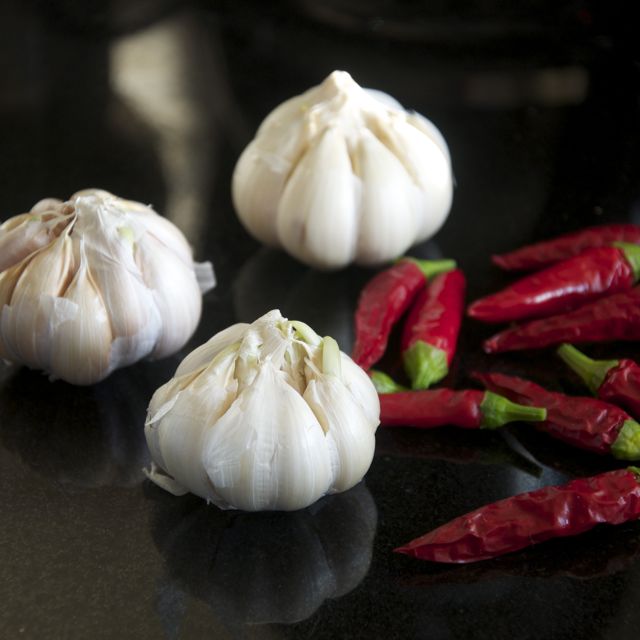
The garlic and chillies didn’t appreciably change in appearance during smoking – at odds with the smoked garlic I’ve seen before which was dark yellow to brown in colour.  I have seen recommendations for smoking times for garlic up to 36 hours, though, so 10 may not be enough to achieve this, especially in a leaky-smoker.  They smell wonderfully of oak smoke though and the flavour of the garlic is a treat – nice fresh flavour with a subtle but distinct note of oak smoke, not too obtrusive and lovely for general cooking.  I might re-smoke one of the bulbs next time I run the smoker, if I’ve not eaten it all by then.

Bacon, salmon, garlic and chillies after smokingThe bacon has a bit of smoke staining on the rind and has darkened on the meat side.  I think you might get more discolouration on the rind with the bacon hanging rather than sat rind-up on a rack.  Apart from that, it looks and smells as I would expect from good smoked streaky bacon.  I haven’t tasted it yet – but plan to have some for my lunch!

Read more DIY Cold Smoker & Home-Curing posts >>

Read more from the Country Skills blog >>

A little bit fishy – first attempt at smoked salmon

Time: 15 minutes – Patience: 24 hours – Difficulty: Easy – Knackyness: Low

As the smoker build was progressing well, my mind of course turned to what to put in for the first experimental firing along with the piece of bacon I’ve been curing this week.

I’ve never smoked or even cured fish before but there were a couple of tail-piece salmon fillets in the Co-op this afternoon.  Opinions seem to vary incredibly widely on how long one should cure the salmon for (and indeed whether table salt or curing salt are required), whether to dry cure or brine, and then how long a smoke is required (with opinions ranging from 6 to 36 hours!).  Since I planned to run the smoker the next morning, and the fillet is small and thin (and has also been robbed of it’s skin – something I didn’t notice when I bought it) I went for the lowest of all the estimations, and the simplest of approaches.

I used:

  • A 125g farmed Atlantic salmon tail fillet (skinless – not ideal)
  • Very simple dry cure made from 30g of sea salt and 15g of golden caster sugar

Salmon, with cure appliedWeighed down with tinRub the cure generously into both sides of the fish with some extra under the fillet.  Then weigh the fillet down with a plate and a can of tomatoes to encourage the water to come out of it.  Leave the fillet like this in the fridge for six hours.

Salmon fillet after curingAfter six hours the fillet should be flatter, firmer, darker in colour and lighter in weight.  The photograph is the same fillet as above.  After six hours of curing there was lots of salt still left in the bowl, along with quite a bit of pickle (the liquid which has oozed out of the fish).  The fillet, rinsed and dried weighed 111g, a 14g weight loss in water in six hours.

Now put the fish, uncovered, on a rack in the fridge overnight.  In the morning it will have formed a shiny pellicle, and lost a bit more weight (mine was 109g by this time).  Time now to load my home-built cold smoker for it’s maiden voyage…

Salmon after smoking - skinned sideSalmon fillet after smokingAfter ten hours of cold oak smoke, the fillet is 106g (a 19g total weight loss which is about 16% – not far off the 17-18% I’ve seen recommended).  It has a glossy, slightly oily surface, a firm texture, and smells more of smoke than it does of fish.    I would describe it as ‘lightly smoked’, for reasons I’ll discuss further in the write-up of the first (rather experimental!) burn in the smoker.  Because I don’t know enough about the storage conditions of the fillet before I bought it, I plan to cook with it instead of eating it raw – probably tomorrow night. Expect a post-sampling update!

Smokin’!! DIY Cold Smoker – design and build

Time: 4 hours build time – Difficulty: Easy – Knackyness: Moderate (woodworking skills & equipment required)  – Cost: around £50

I’ve wanted to try cold smoking for a long time.  Hot smoking is an easily solved problem, modify a BBQ with a lid or some heavy duty tinfoil and add some woodchips, or even on the kitchen hob burning rice in an un-loved saucepan and steamer with the cooker hood running full pelt.  Hot smoked food is tasty enough, but though our American cousins have raised it to an art-form, I can’t get terribly excited about it.

Cold smoking, on the other hand, is far more interesting.  It requires more complicated equipment and, a bit like curing, feels like a sort of culinary alchemy.  The knack is to fill a space with sufficiently thick smoke for a long enough period to flavour your food, without raising the temperature so high that the food starts to cook, or worse, is at risk of spoilng.   Now someone observant once said, ‘no smoke without fire’, and therein lies the problem.  The internet, and the various books published on the subject, have a wide variety of different designs for low-cost home smokers.  The involve oil drums, modified fridges and filing cabinets, air conditioning duct, garden sheds, breeze blocks, and innumerable other approaches.  There are high tech ‘smoke generators’ and low tech fires in holes in the ground.  Then there are the purpose built smokers like the lovely-looking ones Bradley make, but they’re a bit outside my budget.

My smoker is a variation on a wooden box, and uses the ProQ cold smoke generator, which burns sawdust, as a smoke source.  I have built my smoker out of new wood, though I would have preferred to have used reclaimed wood – both on cost and ecological grounds.  If you are using reclaimed or scrap wood do make sure it’s clean and hasn’t been treated with any toxic wood preservatives.  The roof is a spare slate I happened to have, you may need to come up with something different. The structure is assembled from 2.5cm square section timber and covered with tongue-and-groove cladding, using various screws and fixings you are likely have in your toolbox.

What I bought to make the smoker –

  • The ProQ smoke generator and a few bags of wood dust
  • Set of 3 non-stick cooling racks (mine were from Amazon, but a cookshop would have similar products)
  • Four 2.5cm square 1.8m lengths of timber
  • Ten 1.8m lengths of tongue-and-groove cladding board
  • Four magnetic clips

I also used the following items I already had –

  • Wood saw, tape measure, screw driver
  • Electric drill and screwdriver, work bench (not essential, but useful)
  • Variety of screws, pins, fencing staples
  • A roof slate
  • Wood glue
  • Water-based shed stain

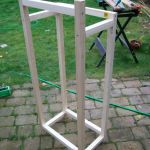
Smoker Frame

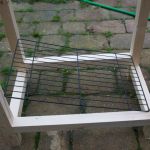
Smoker frame, size relative to rack

Dimensions of the smoker are 1.1m high at the front, 1.0m high at the back.  The width and depth are based on the size of the racks you want to use.

First, build the frame.  It will probably look something like this (note it is slightly narrower than the width of the rack.  Secure the horizontal timbers with long wood screws.

Frame showing slots for racksSlot the front vertical timbers to hold the racks.  The choice of spacings is yours, I placed a slot about every 15cm from about 40cm above the ground.  We cut the slots with a large drill bit and tidied up with a chisel.  There’s a bit of hit-and-miss here and while all the slots are not equally beautiful, they should do the job.  You could also slot the back timbers, but we decided to use small screws here with their heads proud to support the back of the racks,  also preventing backward and forward slip.  The highest slot is positioned to allow a rack to rest on the side timbers to take the weight of items hanging from it on hooks.

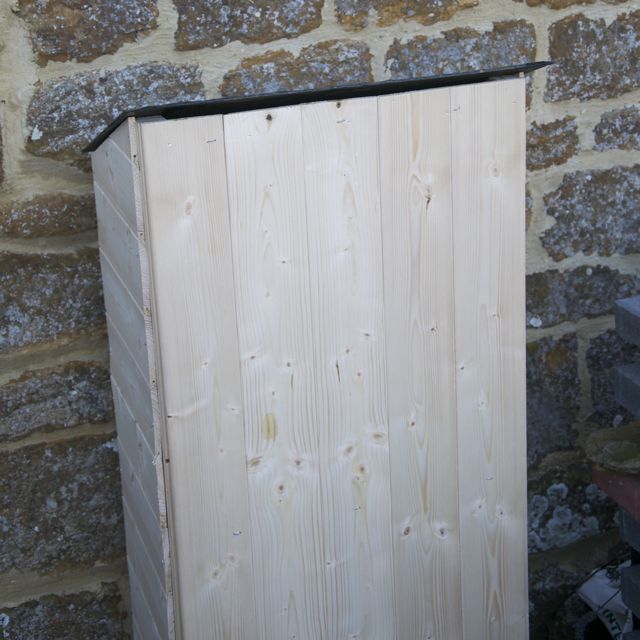
Applying claddingNext cover the back and sides with cladding going from floor level all the way to the top of the frame, including the triangle sections at the top of the sides.  I glued the tongue and groove for extra stability.  You could equally use plywood to clad the box.  We used fencing staples to secure the cladding to the frame.  Panel pins would be more traditional.

Complete smoker - openI want the whole front of the smoker box to be removable, in two sections – a large top section to allow me to load and unload the smoker racks and hooks, and a small bottom strip to allow management and monitoring of the smoke generator without letting all the smoke ‘escape’ from the box during use.  I built the main panel and secured it with three strips of 1cm baton.  The top and bottom baton positions are chosen to rest on the horizontal timbers forming the front of the structure, taking the weight of the front panel.  Four magnetic clips hold the front panel snugly in place.  The angle of the roof will allow a 1cm ventilation gap above the front panel.  A final length of cladding is used horizontally for the bottom section.

Complete smoker - closedFixing the roof will depend on your materials.  For the time being my slate just rests carefully on top, in due course we’ll come up with some sort of clip arrangement.  A plywood roof could be screwed in place.  I’m going to use a knackered old baking tray on the floor of the smoker to catch ash and any drips from the food.

The outside of the smoker will be painted with water based fence and shed stain.  The inside will not be painted, and I hope that with time exposure to smoke should provide a good seal to these surfaces.

Next, the first very experimental firing…  I can hardly wait!

Read more DIY Cold Smoker & Home-Curing posts >>

Read more from the Country Skills blog >>

Banner320-260

Medlars – an experiment with strange fruit

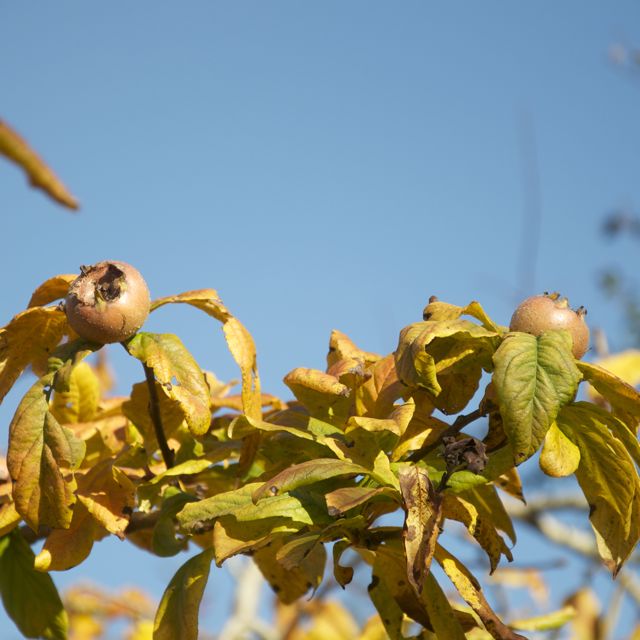
Have you met a Medlar?  Medlars on tree

The Medlar is known less politely as the ‘dog’s bottom fruit’ (and other related and even less polite descriptive names, discovery of which is left as an exercise for the reader!), and was once very popular, these days it seems to have been more or less forgotten, at least as a culinary fruit.  The Royal Horticultural Society describes Medlars by reference to their flowers and habit before their fruit.  They’re in the same horticultural family as roses, filed somewhere between pears and hawthorn.

Bletting medlarsI was lucky enough to be able to harvest a lovely little medlar tree, which yielded about a third of a carrier-bag full of fruit.  While late October / early November is the right time to pick medlars, they aren’t actually ripe and need to go through a process of ‘bletting’, where they are allowed to ripen fully in a frost-free, cool dark place.  The only place I have for a tray of fruit is the spare room, which while dark-ish and undoubtedly frost-free, is at house temperature.  Bletting is supposed to take 2 – 3 weeks, during which the fruit will soften and become a dark brown to black colour.  If it all goes well, I plan to make some medlar jelly, so I’ll be back in due course to let you know!