Cooking with James Martin – a little taste of the treats on offer!

Our day at Food at 52  with James Martin was in two halves.  Our participation was called for in the morning as we were pressed into service as a rag-tag team of commis chefs in the preparation of the first three dishes – which made up our menu for lunch.  James guided and instructed and was only occasionally scathing of our efforts!

In the afternoon, already replete with amazing food, and enjoying a nice drop (or two!) of Sauvignon Blanc, we got to sit back and relax as James prepared a further six dishes while we watched, asked questions, and then struggled despite our already full bellies to taste all his wonderful creations.

Here’s a quick whizz through the wonderful dishes we tasted – hopefully I’ll be able to post some recipes in due course!

Lunch Menu

Thai crab risottoThai crab risotto – This was the first dish we tasted and was definitely one of the stand-out recipes of the day for me.  It has amazing complex & multi-layered flavours in exquisite balance, and despite how much is ‘going on’ in this dish somehow manages to taste crisp and clean and not at all muddled.  James described this as his ‘signature dish’ and I can completely see why – it knocks every risotto I’ve ever tasted into a cocked hat!
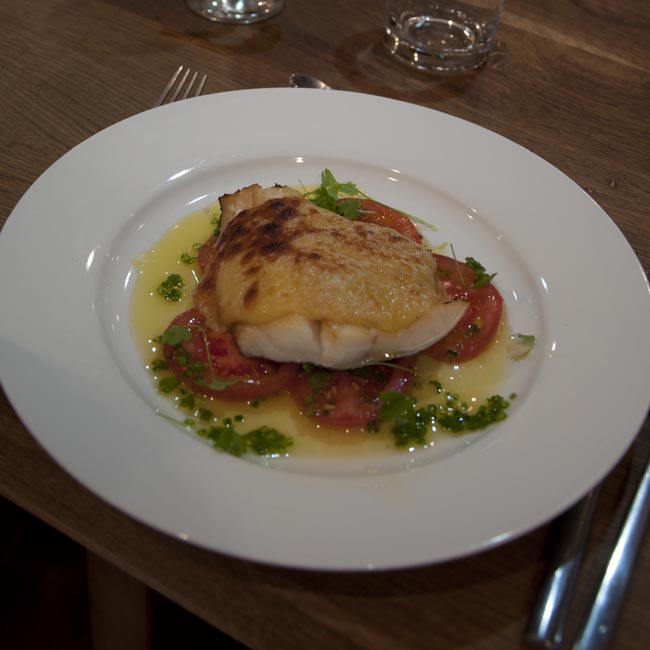
Smoked haddock rarebitSmoked haddock rarebit with confit tomatoes – An unusual twist on a Welsh rarebit, with the cheese-based layer built on top of a lovely naturally smoked haddock fillet.  Served with a confit tomato salad (which will definitely be making it into my culinary repertoire) it’s a lovely dish for an English summer’s day, balancing the clean crisp flavours of the tomatoes with the comforting warmth of smoked fish and grilled cheese.
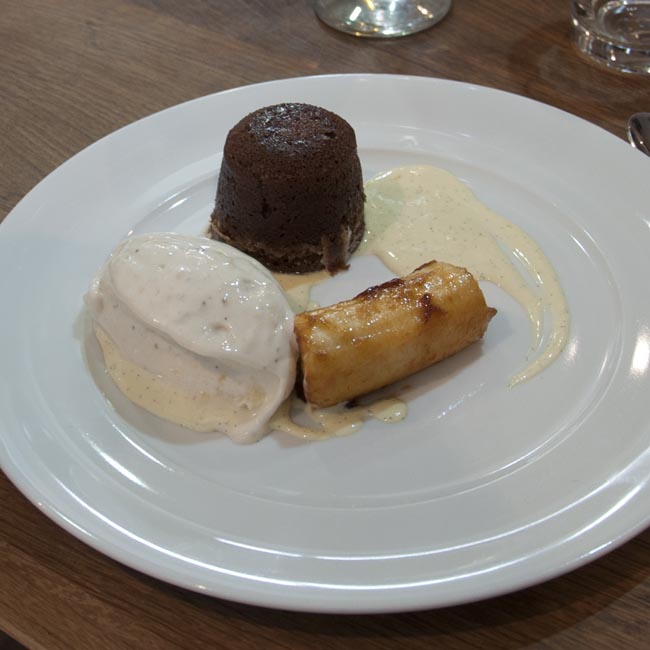
Hot chocolate mousseWarm chocolate mouse with banana ice cream & custard – The freshly made ‘last minute’ banana ice cream is actually the star of this dish for me.  It’s packed with really distinct flavours and heaps of texture.  Perhaps it’s because I’m not that much of a chocoholic – the chocolate pudding is tasty, and gooey in the middle, but very similar to things I’ve had before.  The custard involved a lot of hard work, and is clearly something I should master, but I’m not that much of a custard fan and I’m not convinced it adds that much when you already have the gorgeous banana ice cream.

Demonstration Dishes

Pea and watercress soupPea and watercress soup served with a deep-fried egg – This soup is an amazing colour (no Photoshop trickery here!) and has a lovely fresh pea flavour.  I’ll certainly be playing with this soup recipe at home, though I have to admit to being a bit mystified by the soft boiled egg crumbed and deep-fried and served in the centre in a style – I’m afraid – a bit reminiscent of the famous Australian ‘meat pie floater’! It’s a dramatic ‘cheffy’ touch to finish the dish but I’m not entirely convinced it adds anything that a poached egg wouldn’t in terms of flavour (in fact I suspect I’d prefer the latter) and the crispy texture it imparts is duplicated in the streaky bacon garnish.  Think ham and egg with peas, but all taken apart and put back together again!
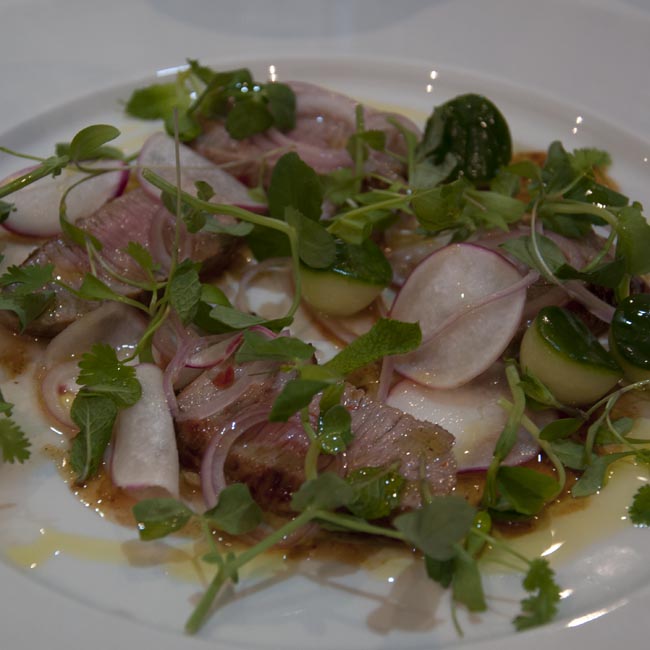
Pea and watercress soupLamb with chilli pickle – This is a great little dish, James described it as ‘bar food’ and it would be ideal for nibbles with drinks, but also makes a lovely light lunch or supper dish if you’re looking to impress someone!  Great fresh flavours with a lovely crisp tang from the freshly prepared pickled vegetables, and the lovely tender pink lamb loin is the perfect counterpoint.
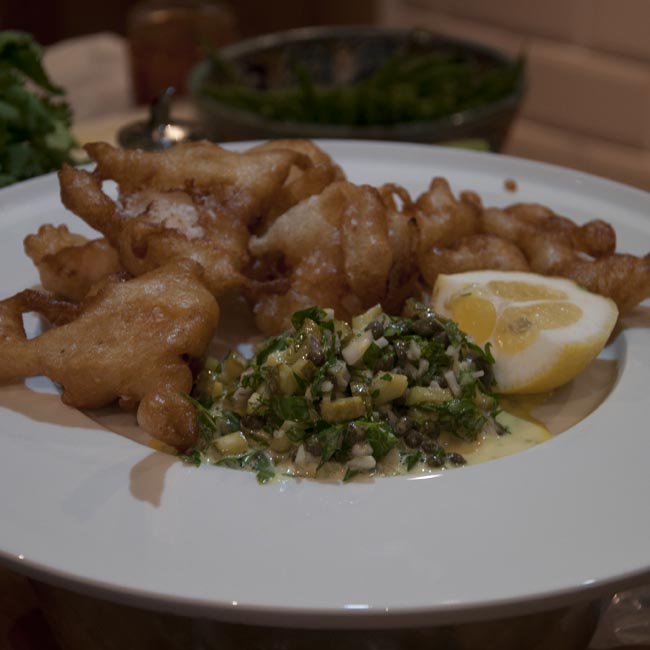
Cod cheeks with tartar sauceVodka-and-tonic battered cod cheeks with tartare sauce – The batter was an unusual concoction, with the cocktail-cupboard ingredients and made ‘live’ with yeast, quite unlike anything I’ve ever seen before.  It fries up lovely and crisp and keeps the cod cheeks gorgeous and moist.  The freshly made tartare sauce is the first such I’ve ever actually liked!  I don’t batter and deep-fry much, but it looks like a  great party-piece!  I can imagine diving into a big bowl of this with a load of friends around a table, perhaps with some slightly spiced potato wedges.

Seared tuna with 'Japanese slaw'Seared tuna in spiced apricot marinade with ‘Japanese slaw’ – A beautiful dish to look at on the plate with some lovely flavours – there’s an almost North African vibe with the fruit & spice flavours.  By this stage in the tasting I was really struggling to eat another bite, but was very glad I did.  We don’t often cook fresh tuna at home but I will certainly adapt this marinade next time we do, as it just lifts that slightly bland character it can have while letting the flavour still shine through.

And now for some desert!  We now felt so full we could pop…
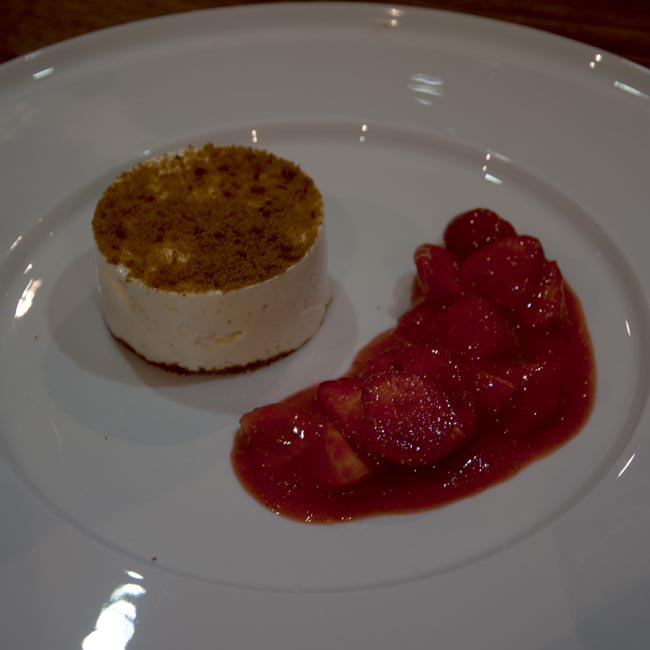
Strawberry cheesecakeStrawberry vanilla cheesecake – James introduced us to this dish, which is one that he developed for Thomas Cook‘s refreshed airline menu.  This is a wonderful quick simple & impressive little desert which you can imagine being able to adapt almost infinitely with different fruits in season and flavours in the cheesecake mix & biscuit crumb.  I particularly liked that this wasn’t an over-sweet dish, letting the flavours of the fresh English strawberries and the slightly acid-note from the cheese shine through.  It isn’t at all cloying and has an almost palate-cleansing quality, nice and fresh – just the thing when you’d eaten quite as much as we had!  All in all a great little dish and definitely another one for the repertoire!

Cheat's GateauxLast, but quite definitely not least, James’ rather marvellously named Bullshit (or “Cheat’s”, for polite company!) Gateaux seems quite the work of patissier’s art.  Just look at it!  In fact it’s startlingly simple – well, for the most part! There’s a story behind this cake – and the name – which I hope to share with you soon..!

For the time being here’s a little snapshot of the man himself doing some of his famous sugar-craft!

Sugar spinning

I hope this has really whetted your appetite for more details of these dishes – writing about them and going through the photos has certainly made me hungry!  I can safely say it’s the most amazing day’s foodie indulgence I’ve enjoyed in a very long time.  I can’t wait to experiment some more with the recipes and let you know how I got on!

Read more from the Country Skills blog >>
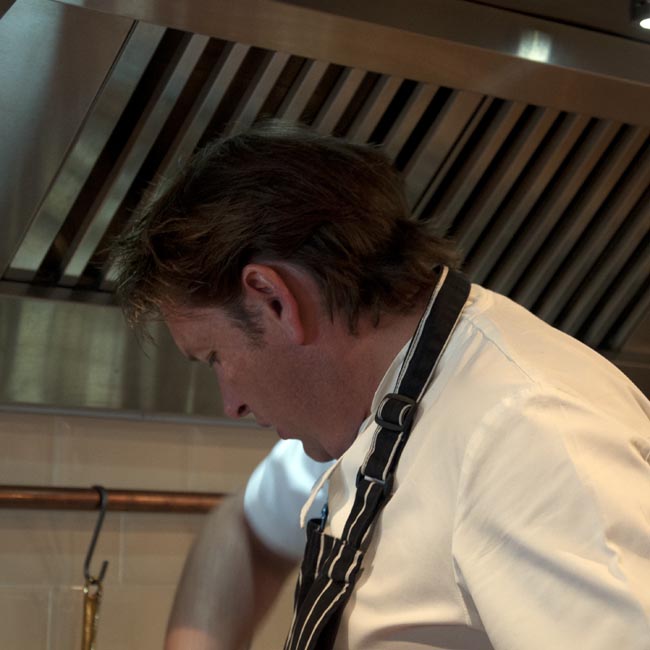
Cooking with James Martin – some initial thoughts & photos!

The big day was today – I’m finally back home from London (seriously, Londoners, how do you survive the Tube these days?!) exhausted but seriously excited about today’s cullinary adventure!  The competition winners met up with famous chef James Martin at the ‘Food at 52‘ cookery school in Clerkenwell, and he spent the day sharing with us some of the tricks of his trade and feeding us until we nearly popped (while he himself seemed to survive on a diet of Diet Coke and Red Bull!).  The whole event was thanks to Thomas Cook, with whom we heard James had been collaborating on aeroplane catering.

James Martin

There are recipes and tips to share with you, and we’ll get to those in due course (probably once I’ve re-cooked at least some of the recipes to iron out quantities etc!) but I just wanted to share a few initial ‘teaser’ photos featuring some of the marvellous ingredients we got to ‘play’ with today.

Brown crab  Ingredients  More ingredients

It’s also been a great opportunity to meet other keen cooks and bloggers, and I hope some fun things will come of that in the future, too!

Look forward to more blogging on the subject once I’ve had a good night’s sleep (perhaps several!) and caught up on myself a little!

Read more from the Country Skills blog >>

Exciting news – and a bit of a tease!

A little while ago, I entered a recipe competition with a variation on my jerk marinade, thinking ‘here goes nothing!’.  Last weekend, I received an email – I nearly deleted the winning notification – I mean, what else do you do with emails which start ‘CONGRATULATIONS!’ and go on to tell you you’ve won something??

1st Prize!

I was a bit gobsmacked, truth be told.  I’m the sort of person who never wins anything – not even a colouring competition when I was a kid!  In fact, the only thing I’ve ever won was a Blue Peter Badge (those of you outside the UK will have to look that one up!).

So, one day next week, I get to travel to a secret London location and spend the day enjoying a masterclass with one of my favourite celebrity chefs!  How cool is that??

I’m so excited about this (does it make me a prize-winning food writer, I wonder?) and can’t wait to share all the details & photos with you all after the event!

Read more from the Country Skills blog >>

Jerk Pork Ribs – a bargain BBQ treat

Regular readers of the blog will know that I love to advocate using great quality bargain cuts of meat, even if that means a little bit of extra preparation.  Using the less fashionable cuts means getting to enjoy great, outdoor reared, higher welfare meat without having to shell out the premium price tag – and these cuts also reward the creative cook by being, very often, some of the most interesting to eat!

Jerk ribs on the BBQ

I often have a couple of bags of pork ribs in the freezer, as offcuts from the pork belly I make my streaky bacon from.  From that point of view, these ribs are basically free.  Last time we had some friends over and I wanted a few extra, my butcher sold me a 6 -7 inch chunk for 50p.  If you’re buying them as ‘ribs’ in packs from the supermarket, rather than as offcuts, you’ll pay more, of course.  Yet another reason to cultivate your friendly local butcher, and develop a few basic butchery skills yourself.

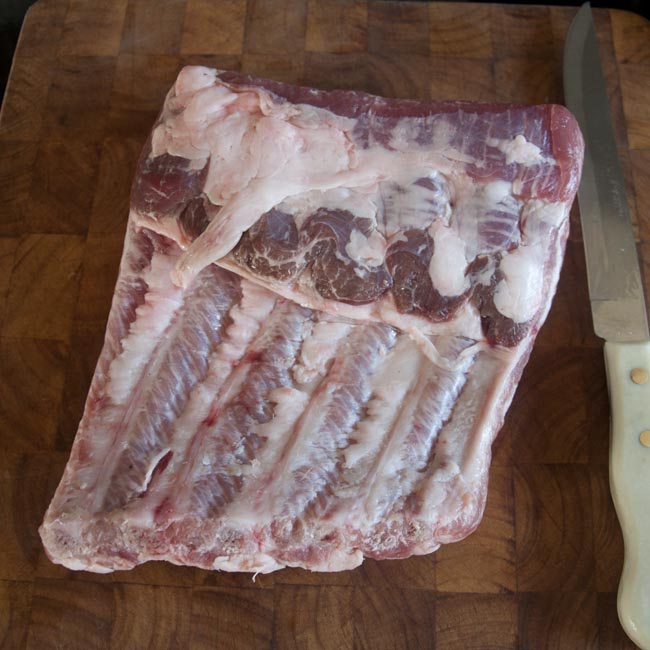
Pork rib sectionThis is how I expect your ribs will arrive – as a roughly square or rectangular piece with more or less loose tissue (from the diaphrgagm) attached to the inner (concave) side.  There should not be very much meat on the outer (convex) side, as the belly meat should have been cut away.

If the belly is still there, you can either remove it and prepare it seperately – as bacon, or as a roast pork belly – or you can leave it attached and make really thick juicy ‘streaky ribs’.  Beware, though, as these will be very fatty and consequently encourage your BBQ to flare up when cooked over coals.  Pork belly is so wonderful, there are better ways to prepare it, in my opinion!

Separating ribsYou need to divide up your rib portion into separate ribs, and this couldn’t be simpler.  Looking at this inner side, feel where the ribs are with your finger tips, and identify the gap between them.  Using a nice, sharp, long knife, place the blade midway between the ribs and cut parallel to them.  Butchered ribsThere’s some cartilage attachment up at the ‘knuckle’ end of the ribs, but any plausibly sharp blade should slide straight through this (bonus hint – keep your kitchen knives *really* sharp – a sharp knife is a safe knife!).

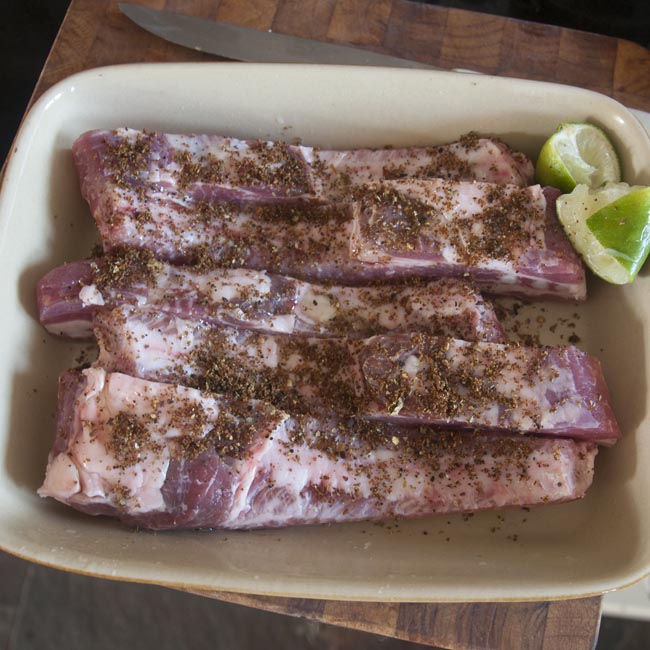
Ribs with seasoning appliedCarry on until all your ribs are divided up.  Now find a nice big dish large enough to contain them all reasonably snugly. Squeeze over the juice of half a lime, and a big glug of olive oil. Then sprinkle generously with your home-made dry jerk seasoning mix and rub in all over.  Turn the ribs over and apply some more mix to the other side.

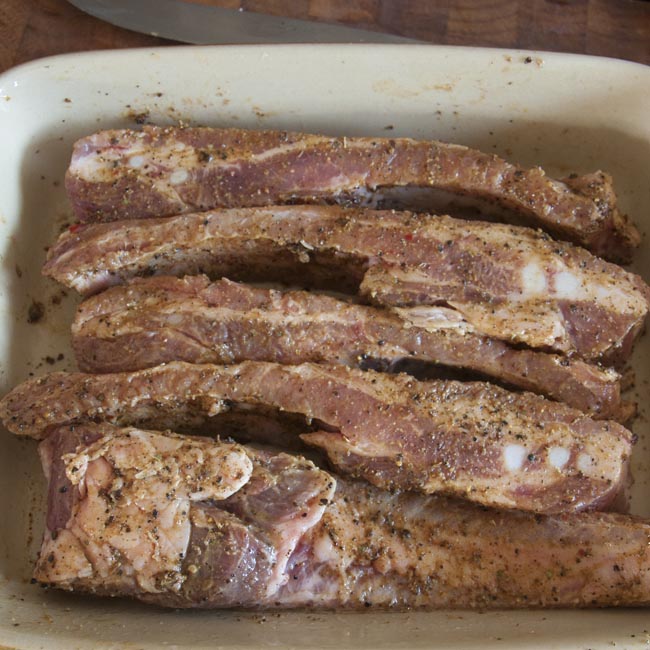
Ribs, restingOnce you’ve finished applying your rub, wash your hands carefully or they’ll end up stained an attractive nicotine-yellow from the turmeric.  Cover the ribs and set aside in the fridge for at least an hour – if you’re able –  before cooking.

Once your BBQ charcoal is smouldering gently, without any flame, put your ribs on the grill and cook until done.  If I’m cooking for a large party, I like to start these ribs in the oven and then just finish them on the BBQ for that lovely open fire flavour without the extended cooking time.  You’ll still get a great result.  Then, sit back, and enjoy your tasty, juicy, spicy, bargain ribs with a nice cold drink!

Read more from the Country Skills blog >>

BBQ Treats – home-made thyme and tomato beef burgers

A really good, home-made burger is such a treat, hot from the BBQ, under the grill or even pan-fried, when the ingredients are great you can’t go far wrong!  Making your BBQ burgers from scratch means you know exactly what’s gone into them, too, which is no bad thing.

Burgers cooking over charcoal

To make four generous sized burgers, you will require –

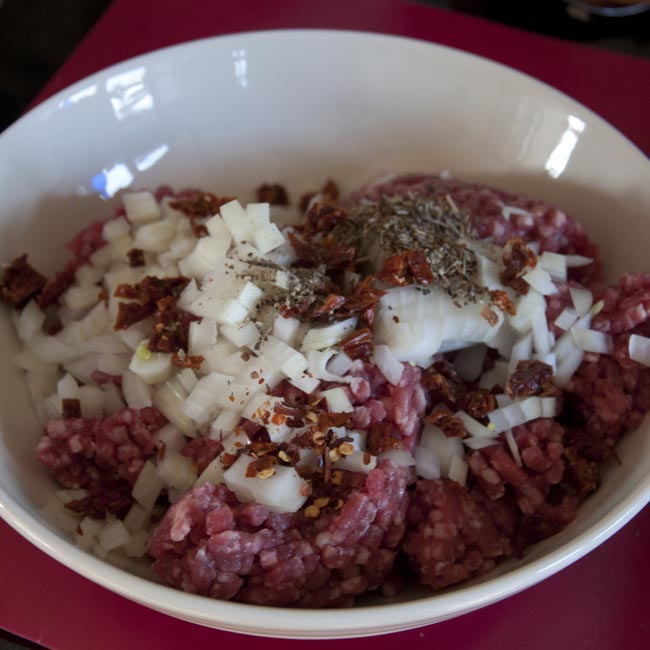
  • Ingredients ready for mixing1lb of good quality lean beef mince – don’t skimp and buy rubbish here, butcher’s is best!
  • Half an onion, finely chopped
  • Four or five sun-dried tomatoes, sliced up as fine as you can
  • Two garlic cloves, minced
  • One and a half teaspoons of dried thyme
  • Half a teaspoon of chilli flakes, and
  • A generous pinch of black pepper

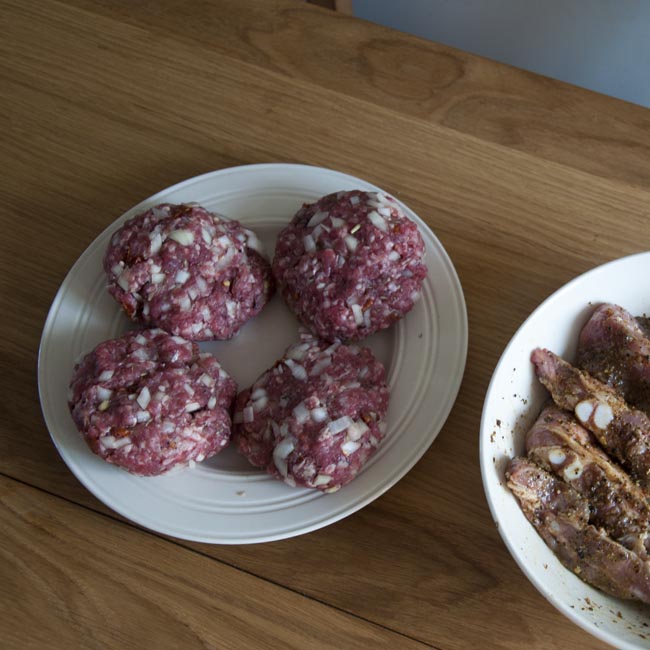
Ready to cookMix all the ingredients in a bowl, mushing them together with your fingers until they combine.  Then divide into four and shape by hand into thick burger patties.  If you have the time to return the burgers to the fridge for an hour or so, this will just firm them up a bit and reduce the risk of them falling apart on the grill.  If you’ve made more burgers than you want to eat today, interleave them with greaseproof paper before putting them in a bag, and they’ll keep in the fridge for a couple of days, or can be frozen.

When you’re ready to start cooking, place your burgers gently on the BBQ grill, and cook through nice and slowly – resist the temptation to move them or turn them until the bottom is cooking well.  Interfering with them too soon is the best way of losing your hard-earned burger into the charcoal!

Then, enjoy in a nice fresh crispy burger bun with a good dollop of sun-dried tomato ketchup, and a generous handful of salad leaves.  The thyme adds a lovely aromatic note, and the tomato a delicate sweetness to the meat that I think you’ll find rather pleasing!  I love to eat these burgers outdoors, with a cold beer or a nice crisp glass of dry white wine.

Read more from the Country Skills blog >>

Smoked Trout – so simple, so tasty, and all home-made

Smoked trout – like its close cousin smoked salmon – is one of the great ‘luxury’ foods.  I find I prefer it – the finished product, while it looks very similar to salmon, has a more delicate flavour with less of the aggressively-fishy oiliness which can characterise smoked salmon.  It’s much less readily available, too – and can certainly be expensive, a quick google suggests prices from £40 – £80 a kilo direct from a number of British producers.  Expect further mark-up in a smart London delicatessen!

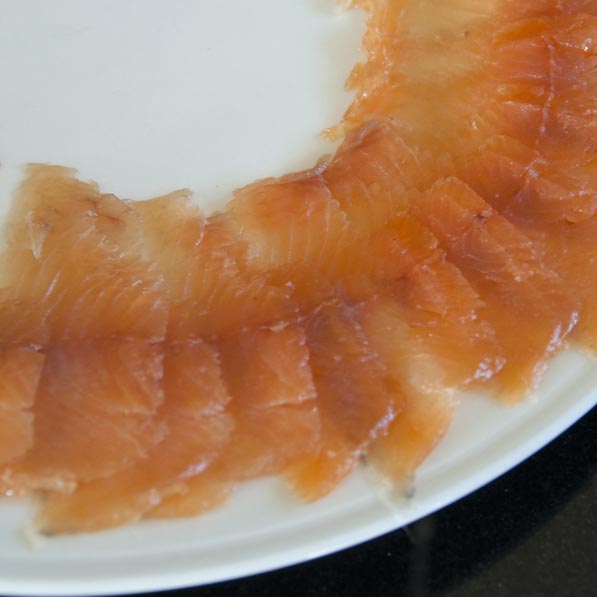
Sliced home-smoked trout

Of course, if I were just writing this in praise of smoked trout and telling you to go and buy some from a smokehouse on the internet, it wouldn’t be the country skills blog!  Making smoked trout at home is straightforward, and produces a first-class product which is the match of anything you’ll buy from even the most up-market smokehouse or deli counter.  Better still, it costs a fraction of the commercial product.  The two fillets of rainbow trout I cured and smoked for this post cost the princely sum of £1.53, with a combined final weight of a little over 200g – including other ingredients and consumables, that’s a total cost of well below £10/kg.  A little luxury, then, that we can all afford to enjoy a bit more often!

You’re going to be eating this fish raw, effectively, so freshness is of the essence.  Choose a lovely fresh whole trout – with bright clear eyes, red gills and no ‘fishy’ smell – and have it descaled and filleted for you by the fishmonger (or do it yourself – it’s not that tricky really!).  Good quality farmed trout is readily available, even on supermarket fish counters, and if you can get hold of a lovely fresh wild fish, even better!  Avoid pre-packed fillets, whose freshness it is more difficult to be certain of.  Wash the fillets off carefully under the tap, to remove all the mucus coating from the skin.  Make sure you’ve removed all the rib bones and pin-bones (the small pointy bones that run along the middle of the fillet) – a pair of tweezers is very useful here.  This will take a few minutes, but is worth the effort to do properly.  Then rinse the fillets and dry them carefully with kitchen towel.   Weigh the fillets and make a note of this weight.

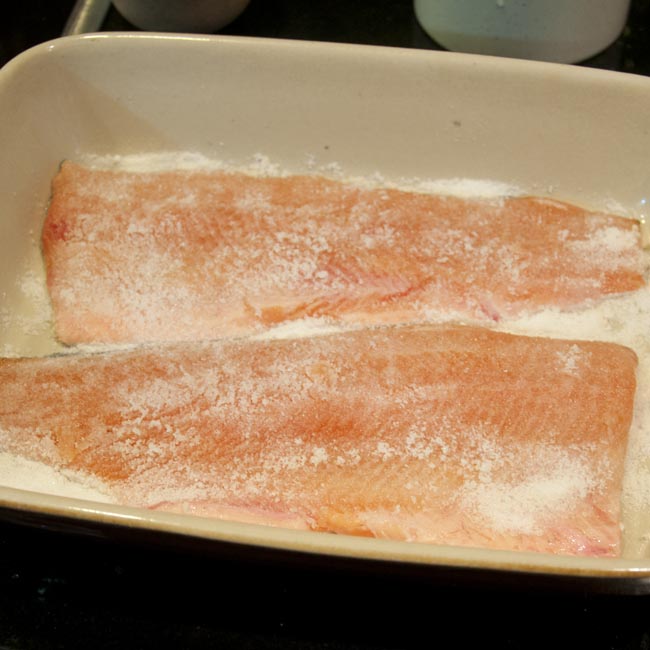
Trout fillets with cure appliedThe cure I use for trout and salmon is very simple – made up of 1/3rd sugar (golden caster sugar is my favourite here) and 2/3rd table salt.   I favour a short curing time – just overnight – with an excess of dry-cure so that the cure stays saturated throughout.  Be generous – you can afford to be, since the ingredient cost is very low – in the scale of pence for a couple of fillets.

Weighed down for curingYou want a thin layer of cure in your non-metallic dish below the fish, and a good coating over the top.  The photo gives a good idea of the sort of coating you’re aiming for.

You then want to weigh down the fillets to help draw water out – you’ll need to improvise something – I found a couple of plastic ‘take-away’ containers fitted very nicely in my dish, and then weighed them down with tin cans.  Don’t use anything metallic in direct contact with the curing fish.  Put the salted fillets in the fridge.

Cured fillets, next morningI would tend to get the cure going when I get home from work, having collected my fresh fish on the way home – so just before bed I turn the fillets over in the cure, and replace the weights before putting them back in the refrigerator.  The next morning, there will be quite a lot of liquid in the dish and most of the cure will have dissolved. Take the fillets out of the dish, noting the change in texture – the skin will have taken on a harder, almost cardboard character, and the flesh will be firmer and more translucent.  Rinse and dry the fillets, and weigh them again, and note down the reduction in weight.  My fillets had dropped from a starting weight of 256g to 220g at this stage – a 14% water loss.  You’re aiming for a final loss of ~18% by the end of the process, so that’s well on target. Now place the fillets on an open plate, uncovered, in the refrigerator for 24 hours before cold smoking.

You may have read this far, and are now thinking ‘well, that’s no use to me – who has a cold smoker at home?!’.  At it’s simplest, cold smoking requires two things – a source of cold smoke (from smouldering sawdust, for instance), and a space in which to contain it.  Last year, I built a wooden tower smoker, but there’s no need to start with a construction project.  A cardboard box, or a (clean!) upturned bin or barrel, rigged up creatively with a rack or two, will do just as well for the occasional smoking job!

ProQ cold smoke generator, litYou will need a smoke source, and I can heartily recommend the ProQ Cold Smoke Generator, which is a nifty little gadget which entirely takes any stress or complication out of the process.  It’s a little pricey (around £35 at this time), but will pay for itself incredibly quickly once you get the smoking bug!  It reliably provides 10 – 12 hours of cold smoke (depending on the temperature, humidity, and your sawdust choice) with very little heat production.  Have a look at the Supplier’s List for suggested sources of smoking and curing supplies.

Trout fillets, loaded in the smokerChoose a day without too much wind or rain (the occasional shower isn’t important), and where the temperature is roughly between 5 degrees and 15 degrees centigrade.  I’ve successfully smoked between 0 and 5 degrees but smoke penetration is less effective.  Colder, and your fish will freeze rather than taking smoke.  Warmer and the risk of spoilage increases considerably – though cold smoking temperatures up to about 20 degrees are cited in some places.  Get the smoker going first thing in the morning, and leave it for the day – though I would keep it under much closer supervision if using a cardboard box!.

I used a mix of alder and maple sawdust for this smoker burn (about 10% maple) – this produced a gorgeous neutral smoke-flavour with very little bitterness and with a noticeable ‘sweet’ note, presumably from the maple.  It’s definitely a mix I’ll use again in the future.

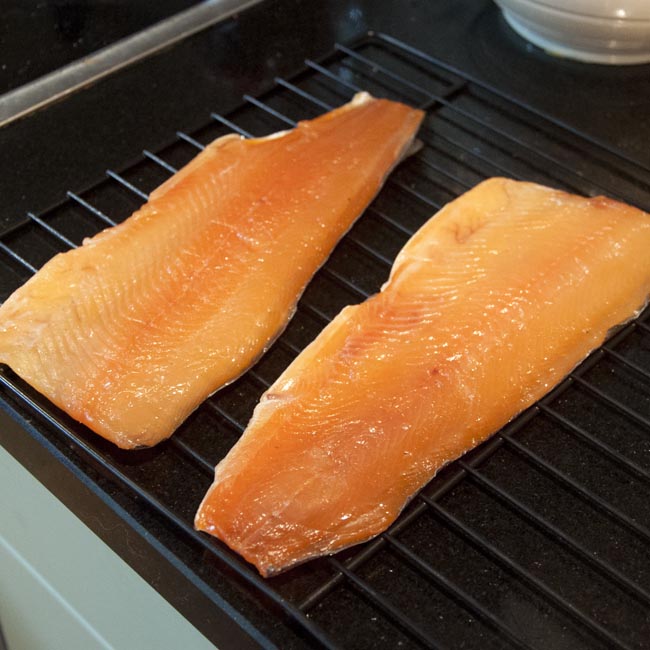
Trout, fresh from the smokerOnce the smoke generator has burned all the way through, unload your smoker, and take a final weight on your fillets. They should have lost another 4 – 5 %.  They will have a lovely orange-pink colour with a noticeable translucency and a glossy surface.  Then wrap them tightly in cling film, and freeze them.  Smoking fish in this way isn’t really a preserving mechanism, and storage time in the fridge is about 3 – 4 days.  Even if I’m going to eat them very soon, though, I tend to freeze them at this stage – a day or two in the freezer should ensure any parasites which may be present in the fish have been killed off.  You can keep them frozen for a couple of weeks without too much loss of quality, but after a month or so you’ll start to notice the deterioration.

Sliced smoked trout fillet

Once thawed, I slice the smoked trout thinly with a sharp knife, starting at the ‘head’ end of the fillet, at about a 45 degree angle.  There’s a bit of a knack to this, but you’ll get good at it really quickly – and who cares if the slices are thicker, or a bit uneven?  This produces small, almost translucent slices which are great for nibbles.  I love to serve these with water biscuits or oatcakes (or your preferred sort of cracker), cream cheese – or a soft goat’s cheese is also very nice, freshly ground black pepper and a squeeze of lemon juice.  But the limit is really your imagination.  Smoked trout with scrambled eggs on a toasted muffin is a beautifully indulgent breakfast!

I really do hope you chose to give home-smoked trout a try, and that however you prepare and enjoy it, it brings you as much foodie pleasure as it brings me!

Read more from the Country Skills blog >>

Banner320-260

Jerk Seasoning – perfect for BBQ season, when weather permits?

Summer is here – so it’s got to be time to break out the BBQ!  Never mind the weather – here in the Midlands we’re in the middle of one of the wettest droughts anyone can remember, it’s rained continuously for several weeks now.  What better to give you a taste of the Caribbean sun – even if the local one isn’t co-operating! –  than home-made jerk pork or chicken kebabs cooked over a charcoal grill, served with a cold beer or a rum cocktail?

Jerk pork kebabs with pineapple, onion and pepper

[Please excuse the mix of weights & measures in this recipe – I created it more or less by eye trying to match a store-bought one.  Mine’s better.]

Making this dry jerk seasoning is really easy if you have a spice grinder.  If you don’t, you could either try using a pestle and mortar (though this may take you a very long time!), or you may be able to make something comparable using all pre-ground spices, though you’ll have to experiment a bit with the quantities and the texture won’t be so nice.  I don’t think you can buy ground bay leaves though, so I’ll leave that as an initiative test!

To make the dry jerk seasoning, take:

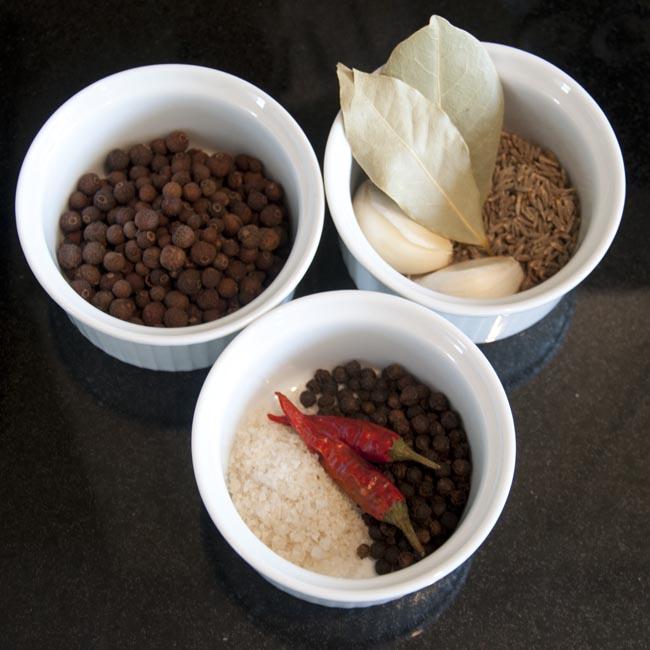
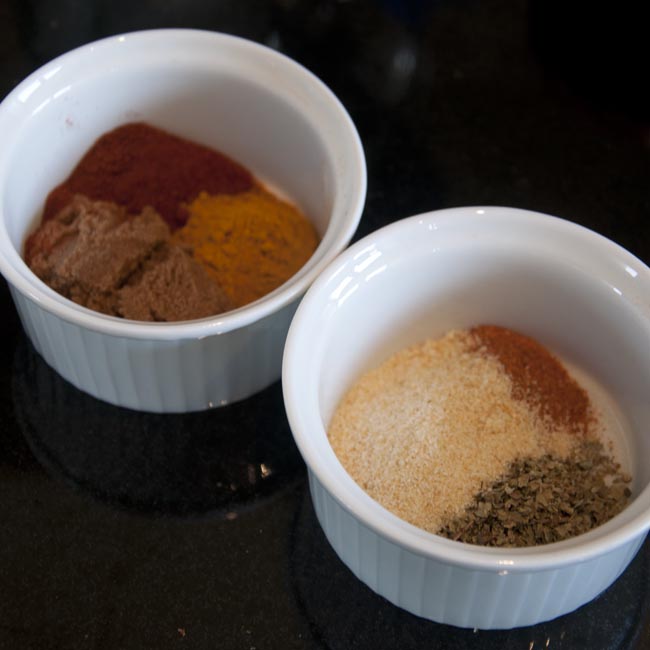
  • Whole spices for jerk seasoning15g whole allspice berries
  • 6g whole black peppercorns
  • 6g sea salt – I used salt that I’d smoked over alder and maple wood, for that bit of extra smokey BBQ flavour.  Plain salt is just fine though!
  • 2 tsp chilli flakes – or a couple of whole dried chillies – obviously the heat of the recipe will be affected by your choices here!
  • 2 tsp whole cumin seeds
  • 2 cloves of garlic, peeled
  • 2 bay leaves

Put all of these together in your spice mill and grind to a coarse powder.

Then add:

  • Ground spices for jerk seasoning1 tsp chilli powder (strength to taste)
  • 2 tsp dried oregano
  • 2 tsp onion powder
  • 2 tsp soft dark brown sugar
  • 1 tsp paprika (smoked, if you have it, and hot or mild to taste)
  • 1 tsp turmeric

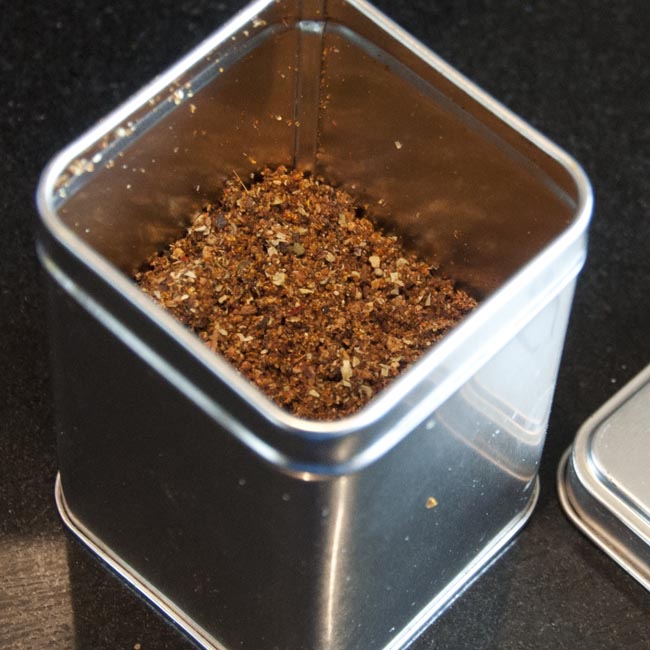
Dry jerk seasoningAnd mix well, working out all the little clumps that may have formed around the soft sugar or minced garlic, which are a bit more moist than the rest of the ingredients. Store in a small airtight container – a jam jar is ideal. It will keep well for several months at room temperature.

To use, mix as a marinade with whatever meat you want to jerk at a ratio of 2 tsp dried spice mix, with aprox 1 tbsp freshly squeezed lime juice and 2 tbsp olive oil. Rub in well with your hands and leave to infuse for a couple of hours in the fridge if possible.

The turmeric is mostly for colour and will dye your fingernails a really attractive shade of nicotine yellow. You might like to consider wearing gloves when rubbing in the marinade, or just leaving the turmeric out of the recipe, if you prefer.

Yesterday, I prepared jerk chicken drumsticks, legs, and wings for the BBQ, and jerk pork kebabs with pineapple, pepper & onion.

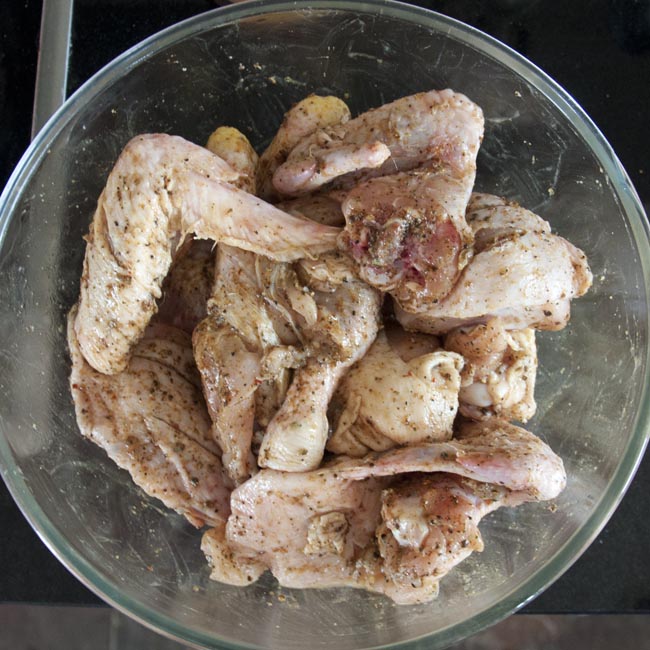
Chicken pieces in jerk marinadeThe jerk chicken portions couldn’t be more straightforward.  Either buy a pack of leg pieces from the butcher, or if you’re in the habit of portioning chicken at home, dig a couple of packs of legs & wings out of the freezer. Slash through the skin and into the meat several times on each portion – this helps the cure penetrate and also helps the thicker portions of the chicken cook evenly over the charcoal grill. Then squeeze over the juice of a whole lime, a good glug of olive oil, and several teaspoons of the jerk seasoning – I ended up using about 6 spoonfuls to get a good degree of coating on all the pieces.

Cover the bowl with cling film and leave in the fridge for several hours if possible before cooking, though you can cook immediately and the flavour will still be pretty good!  Cook over a charcoal grill, slowly, so that it cooks through without burning (a little bit of blackening on the outside is traditional, though!).  If you’re in any doubt whether the chicken is completely cooked, take it off the bbq, and place in an oven dish in a 200C oven for 10 – 15 minutes to finish cooking all the way through.  Of course, you can cook these entirely in the oven, if the weather’s not co-operating!

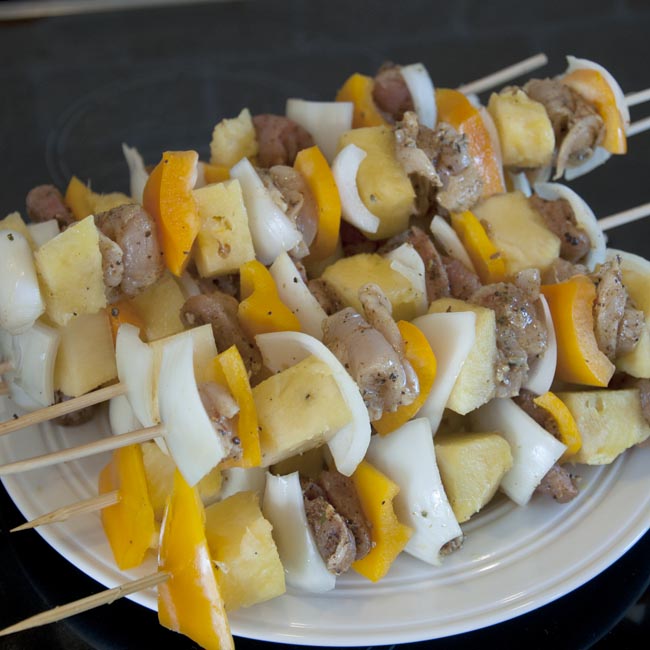
Prepared jerk pork kebabs with pineappleAny pork will do for the kebabs, really – I used half a pork tenderloin I had in the freezer. Cut into strips, and marinade like the chicken, with lime juice, oil and the dry seasoning mix.  Allow these to marinade for several hours if possible.  Prepare fresh pineapple by slicing thickly, removing the skin and cutting into square pieces.  Also slice a couple of onions and sweet peppers into similar sized pieces.  Then, just before cooking,  thread the marinaded pork onto skewers with the chunks of pineapple, onion and sweet pepper.

Kebabs cooking over charcoal

Get some good friends together, and marinade gently in some good drink and good company, while your jerk kebabs cook gently over a charcoal grill, then serve with salad & warmed pitta bread, and your choice of sauce (I quite like sweet chilli with this!).  Yum!  Dig in, and enjoy an early taste of summer!

Read more from the Country Skills blog >>
Better than Branded – homemade sun-dried tomato ketchup

It’s too early in the year to have a glut of tomatoes, but I wanted to try my hand at home-made tomato ketchup.  The commercial offering is so ubiquitous, how many of us pause to think what’s in it, or if we could make it better ourselves?  I wondered if using sun-dried tomatoes, the dry-packed sort, might give me a shortcut to a sauce that would pack a real concentrated tomato punch.  Well, they do – with the added bonus of not requiring the extended cooking time required to drive excess water off fresh tomatoes.

To make a little over a litre of sun dried tomato ketchup, you will require the following –

  • 250g of dry-packed sun dried tomatoes
  • Two small to medium sized yellow onions
  • 5 cloves of garlic
  • Whole red chilli
  • Red wine vinegar
  • Balsamic vinegar
  • Fresh ginger
  • Soft brown sugar
  • Ground allspice
  • A carton of apple juice
  • Food processor, ideally with blender attachment, or hand-held liquidiser

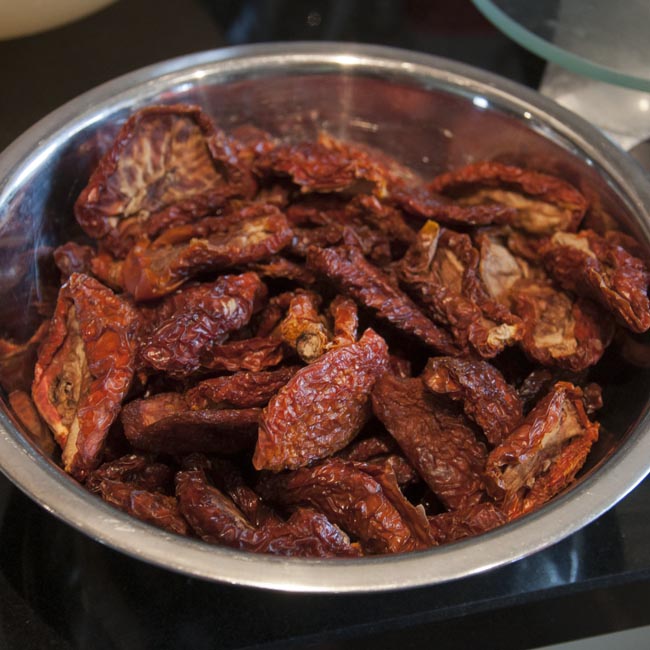
Sun dried tomatoesPut the tomatoes in a bowl and pour over enough freshly boiled water to cover.  Roughly chop the onions (or peel, quarter, and chop in the food processor).  Mince the garlic.  Once the tomatoes have been soaking for about half an hour, pour off – but reserve! – the soaking liquid.  Roughly chop the tomatoes by hand or put them through the food processor.  Also finely chop the whole chilli (it can go through the machine with the tomatoes).

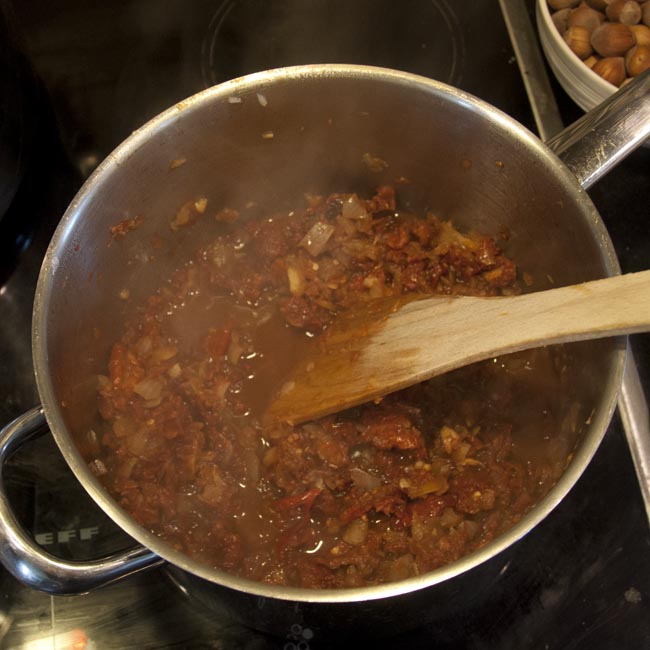
Frying onions & garlicNow put a glug of olive oil (or your preferred cooking oil) in the bottom of a large pan, and then start to fry off the onions, adding the garlic when the onion has gone translucent, but not taken on any colour.  Fry until just colouring and then add the chopped tomatoes & chilli, mix together and add the tomato-soaking liquid back in.  This liquid will have taken on some lovely flavour from the tomatoes (which is why we’re using it).  Note however that dry-packed tomatoes are preserved with salt, so if reducing the amount of salt in your diet is important to you, you should discard this liquid and instead add enough apple juice to allow you to start to stew the tomatoes.

Stewing tomatoes & onionsAt this stage, the whole process becomes a matter of personal taste.  I added about a cm of fresh grated ginger to the pot, along with a quarter of a teaspoon of allspice.  I started by adding 50ml of red wine vinegar, a glug of balsamic vinegar, and a tablespoon of soft dark brown sugar.  Keep tasting the mix as it cooks, and adjust your seasoning as required.

Ketchup in blenderOnce it’s been bubbling away for about twenty minutes, pour the contents of the pan into your blender, or take the pan off the hob and use your handheld blender.  Start to liquidise the mix, adding apple juice as you go until you achieve your desired consistency. I stopped short of blending mine completely smooth, because I like it to have a little texture –  a sort of hybrid ketchup/salsa feeling.  I ended up adding about half a litre of apple juice in total.

Ketchup bubblingNow return your mix to the hob and set it bubbling again.  This is the time to make the final adjustments to your flavours.  I ended up adding an extra splash of wine vinegar at this stage, along with another half tablespoon of sugar.  Remember that you’re tasting the ketchup hot, once it’s cold, most flavours, but particularly vinegar flavours, will be less marked, so if a really sharp vinegar is to your taste, make sure you dial it in now!

Once it’s cooked and seasoned to your satisfaction, pack your ketchup into sterilised jars or bottles while still piping hot, and seal tightly.  Old glass salad dressing bottles are great (and will have plasticised lids, which will help protect the metal from the vinegar).  I would expect this to keep similarly to chutney, and to have a shelf life of several months in a cool dark place.  Keep it in the fridge once opened and eat up reasonably quickly!

Bottled ketchup

Try it – it’s gorgeous, sharp and sweet and packed with concentrated tomato flavour.  I tasted it alongside commercial ketchup today and it makes the branded stuff taste like red acidic sugar water.  It will make a great burger relish, and goes beautifully with oven baked spicy potato wedges.

Read more from the Country Skills blog >>

What’s Your Beef? Beth’s wonderful home-cured salt beef

Salt beef is quite a rarity these days.  I’m aware our American cousins (to whom it’s corned beef) think of it as an Irish thing and eat it with cabbage at St Patrick’s the way we eat haggis, neeps and tatties on Burns Night.  Despite having Irish heritage, I’ve never eaten salt beef, in this context or any other (honestly, Irish-American folks, that’s one tradition you’ve made up all for yourselves!).  But I was very excited to experiment with the idea when I saw a lovely rolled brisket of beef at our local farm butcher’s shop.

Cold sliced home-cured salt beef

A bit of asking around family brought me the information that my sister-in-law, Beth, and her family, were keen salt beef curers and consumers.  She kindly shared her recipe & process with me, which I’ve adapted slightly to suit my purposes.

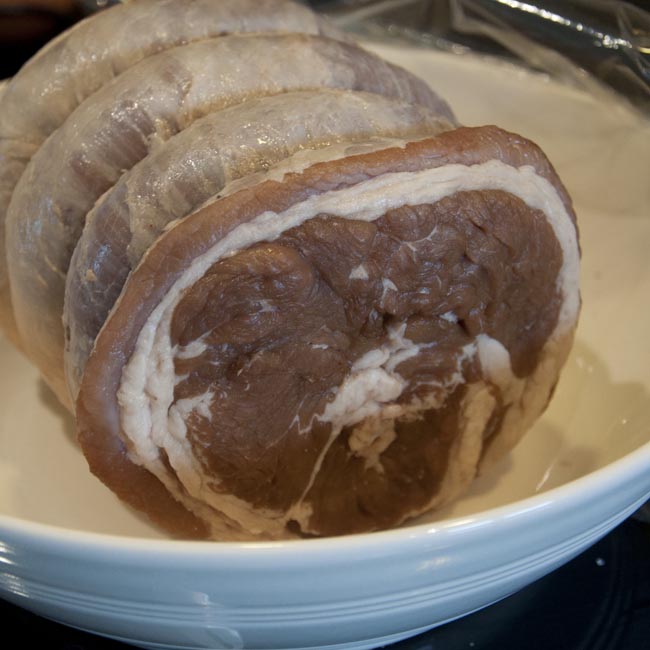
Raw rolled beef brisket

You will require the following to salt your beef –

  • Piece of rolled beef brisket, mine was about 1kg, which was about right for a meal for two plus cold cuts, or would have served four for dinner.  You may need to find a real butcher’s shop, since brisket, despite being great value, is rather unfashionable and rarely available in the supermarket.
  • Curing salt (I used supracure, which is the pre-mixed salt-and-saltpetre mix I use for making bacon).  Alternately you can use plain salt with (or without) added saltpetre.  You won’t get quite the same flavour without the saltpetre, and the beef will be grey rather than the characteristic dark pink colour of salt beef.
  • Dark sugar, whatever sort you prefer
  • Whole peppercorns, juniper berries, cloves, bay leaves (dry or fresh), and a few sprigs of fresh thyme.  Or experiment with any other herbs / spices you think might work well!
  • A non-metallic bowl big enough to completely submerge your beef in
  • Large saucepan, kitchen scales & measuring jug

Herbs & spices for the brineOnce you’ve gathered all your tools and ingredients together, you need to make your brine.  First, work out how much brine you need.  Put your beef in the bowl and cover it completely with water.  Then take the beef out, and measure the water. That’s your target volume.

Now, for each litre of brine you require, weigh out the following into the saucepan –

  • 300g of supracure
  • 100g of dark sugar
  • Approximately 10 peppercorns, 6 juniper berries
  • A bay leaf, a clove, and a sprig of thyme (or whatever herbs and spices you fancy!)

Add the required volume of water (the more observant among you will notice that you’re going to end up with slightly more brine than you actually wanted, due to adding the dry ingredients – this is fine, don’t worry!) and heat to dissolve all the dry ingredients.  Boil the brine briskly for a few minutes, and then allow to cool (refrigerate once it’s at room temperature to get it down to about 5 degrees centigrade).

Beef in the brineOnce the brine is cold, add your beef.  Weigh it down with a small plate or saucer if required to keep it fully submerged.  This is quite a ‘hard’ (concentrated) brine and the beef will tend to want to float up in it.  Now put the bowl of brine & beef in the fridge, and apart from turning the beef over in the cure once a day, if you remember to, leave it alone. My 1kg piece of beef was in the brine for 5 days.  You’ll want a longer curing time for larger pieces of beef, perhaps up to 10 days or so.

After your curing time has elapsed, take your beef out of the brine.  It will have become considerably denser and firmer in texture (surprisingly so, in fact), as well as darker in colour.

After curing, soaking in fresh water

The alchemy that is salt-curing has happened now, so you’re going to want to soak the salt beef for 24 hours to reduce the saltiness of the finished product a bit.  Wash off the beef and submerge it in clean tap water (it will sink, so you don’t need to weigh it down this time) and return it to the fridge.  Change the water at least once during the 24 hours.

Salt beef after 24 hours soaking in fresh waterNow, either cook it straight away, or remove from the soaking water, and return, covered, to the fridge for a day or two until you plan to prepare it.

Salt beef with stock vegetablesI prepared my salt beef in the simplest way, by poaching it gently.  Add a quartered onion, a handful of roughly chopped carrots, a bay leaf and some peppercorns to the saucepan, and cover the beef with water.  You could also add some celery, but I don’t particularly like it.

Poaching liquid, after cookingBring to the boil and then simmer, covered, very gently for two and a half hours (longer for larger pieces), until it yields easily to a fork. Then remove it from the poaching water and rest for half an hour, covered with foil. The water you’ve poached the beef in will now look like a rich beef broth.

Sliced poached salt beefAfter resting, slice your beef thickly (it’ll fall apart if you try to slice it too thinly) and serve with your choice of side dishes.  Potatoes and cabbage appeared to be traditional (at least in some circles!) so I opted for boiled new potatoes and wilted spring greens, served with a white sauce made from a roux, some of the poaching liquor, a glug of cream and a big spoon of hot horseradish.

Salt beef with potatoes and spring greens

It was beautiful, though I say so myself.  The beef, served hot, is incredibly tender and succulent.  Cooled and sliced, the rest of the salt beef is also beautiful and will make cracking sandwiches.  It’s firm and dense, slices nicely, and has a lovely gentle aromatic flavour.  Home-cured salt beef is sure to become a regular culinary feature in our household.  If any of you have favourite ways of preparing or serving salt beef, I’d love to hear them.  Finally, thank you so much to Beth for her recipe and guidance, and I hope you all consider giving salt beef a try some time!

Read more from the Country Skills blog >>

Heston Blumenthal – how not to roast a chicken

I saw Heston Blumenthal the other night on TV with his roast chicken recipe, and I wish I hadn’t.  His suggestions really worry me.  Leaving aside his recommendation to brine the bird before roasting (because what we all need in our western diets, ladies and gentlemen, is more salt!), he advocates roasting the bird at 90 degrees centigrade (70, even, in a fan oven!) for several hours to a target internal temperature of 60C in the thickest part of the breast.  While I have no doubt that this treatment results in a marvellously moist tender bird (it’s barely cooked after all!) the food safety implications of the process are pretty horrifying.

All raw meat is contaminated with bacteria. This is just a fact of life – after all, meat is dead animal, and animals have bacteria in and on them in life which are impossible to remove in the course of processing.

Poultry meat in particular is high risk.  A UK study published in 2000 identified Campylobacter jejuni in 83.3% of supermarket chicken that they sampled.  I would go as far as to say, I almost guarantee that any raw chicken you purchase will be contaminated with Campylobacter, Salmonella or E. coli, and the risks are probably higher with free range birds which aren’t raised in a sealed environment.

The reason we don’t all have food poisoning all the time is that cooking – the application of heat – is extremely effective in killing these pathogens.  Here’s the problem – Salmonella requires a temperature of 60C for 10 minutes to be effectively killed. Campylobacter also needs to get to 60C, though it’s a bit  more fragile so a minute or two should do trick.  E. coli is more robust – but less common in poultry meat – and needs to be heated to 72C.  The universal advice for safe cooking of poultry meat takes all of this into account and advises the thickest (and hence least heated) part of the meat should reach a minimum temperature of 75C for at least 10 minutes.

On these numbers you can see how Heston’s recipe might *just about* not be gastrointestinal suicide, but you would want to be very confident of your temperatures.  The trouble is, any error in measurement – if your probe isn’t really in the absolutely coldest part of the bird – is going to read higher than the true lowest temperature, making it very easy to overestimate the minimum temperature and have parts of your bird below 60C.

To be quite honest, I don’t care how tender and succulent this roast bird might end up – it amounts to food hygiene russian roulette!  I’ll be staying away from the Fat Duck, I think.

Please, if you want a wonderful succulent roast chicken, buy a good free-range bird with some good fat under the skin, add some lovely flavours in the cavity (I like a quartered lemon with some whole cloves of garlic and a handful of thyme), a little bit of salt and pepper on the skin with a couple of rashers of bacon if you fancy it, and then roast at about 180C to a safe internal temperature.  Rest for 20 – 30 minutes before carving, and enjoy a tasty, succulent, and above all safe roast dinner!

Read more from the Country Skills blog >>