Last Minute Christmas – perfect giblet stock

If you’ve bought a bird for roasting today, there’s a good chance it’s come with a little plastic packet of ‘bits’.  Whatever you do, don’t throw them away!

These bits are the giblets – the offal – usually the neck (in one or two pieces), the heart, the liver, and the gizzard.  The gizzard is thick, muscular structure with two hard abrasive grinding plates that the bird uses to crush up corn and other food items to make them digestible.  Giblet stock is quick, simple, and makes the most wonderful Christmas gravy.

I have a goose this year, but the following applies just as well if you have a chicken or turkey.  Personally, I use the goose heart and liver in one of my stuffings, so only the neck and gizzard are available for the stock.

In addition to the giblets, you need the following:

  • Stock vegetables.  I use one onion (red or white) and a couple of carrots, I don’t like celery so I don’t use it, even though it’s the often-quoted third member of the stock vegetable trinity.
  • A bouquet garni.  This is just a posh culinary term for some herbs. I use some bay leaves, rosemary, thyme and sage, along with some whole pepercorns and a few juniper berries.  Dried is fine.
  • Water.  Glug of white wine (optional).
  • A splash of olive oil.

Prepare your gizzard by cutting away and discarding the hard plates (use a small sharp knife inserted below and parallel to the plates) and chopping the rest of the meat roughly

Put the splash of olive oil into a nice big saucepan, and brown the neck and gizzard meat, and then add the roughly chopped onion and carrots and sautee for a couple of minutes.  Now add about a litre of water (and the splash of white wine if you want) and the bouquet garni, bring to the boil and simmer for about an hour.  Strain, discard the solids, and return the stock to the pot and boil again until reduced in volume by half.  That’s it.  Set aside in the refrigerator until you make your gravy later. You won’t regret it!

In Fermentation We Trust – apple juice turns into cider

On a lovely bright November weekend, I pressed a load of apples for cider-making.

For the next part of the process, you need to put together the following bits and bobs:

  • Your apple juice (which is already in a fermenting bucket with any luck – you’ll need the lid, if it’s one with a hole for an airlock, so much the better – if so, you’ll also need an airlock)
  • Wine or cider yeast, and yeast nutrient
  • A nice warm location at about 18 – 21 degrees celsius
  • Enough demijohns (plus stoppers and airlocks) to contain the volume of apple juice you’ve collected.  All my demijohns have come from Freecycle, so it’s worth keeping your eyes open.  For recommendations of UK homebewing equipment suppliers, see the suppliers list.
  • A syphon
  • Homebrewing steriliser solution

Now, time to turn your wonderful juice into cider (for any Americans who might be reading, we mean hard cider – the traditional alcoholic sort).  Traditional ‘real cider’ makers would do nothing with it at this stage, and wait for the natural yeasts which you hope are already present on the apples to do their job and get fermenting.  There is an alternative approach which involves using campden (sulphite) tablets to kill off the wild yeasts and then adding some wine or cider yeast of your own, which with any luck should guaranteed a ‘clean’ culture of your chosen yeast strain.  I decided to go a third route, didn’t use any campden, but did add wine yeast and yeast nutrient to give the process a ‘kick-start’ and make sure that an appropriate culture was at least in there with a fighting chance!

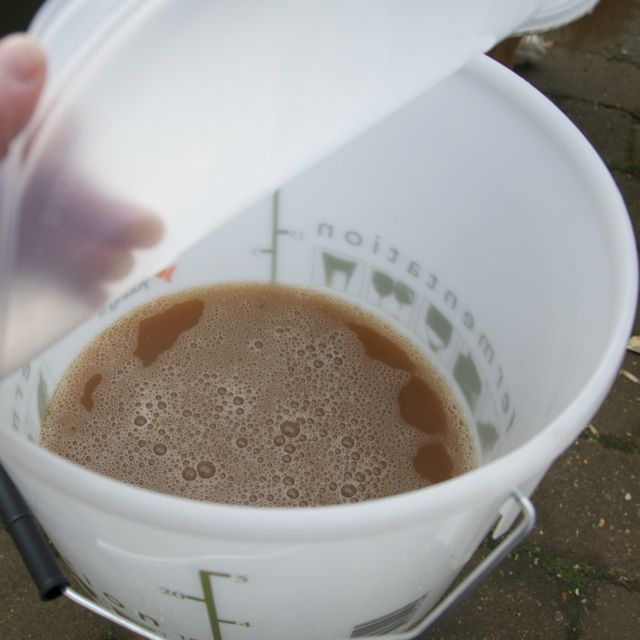
Apple juice before fermentation

You should probably take the specific gravity of your apple juice before you start fermenting, as this will tell you something quite important – with a bit of arithmetic (or there are online SG to ABV calculators out there you could avail yourself of) you should be able to work out how alcoholic your cider ends up.  This is relevant both for keeping your driving licence, and for making sure your cider contains enough sugar, and therefore after fermentation, enough alcohol, to keep well.  You’re aiming for a minimum of about 3.5% ABV, real ciders can easily get up to about 8%.

I didn’t test my juice (do as I say not as I do, right?), but it tasted nice and sweet so I think it’s likely my cider is about the 6% mark. Invest in a glass hydrometer (they’re cheap, easy to use with a bit of practice, and ever such pretty bits of old-fashioned looking laboratory glassware), you won’t regret it!

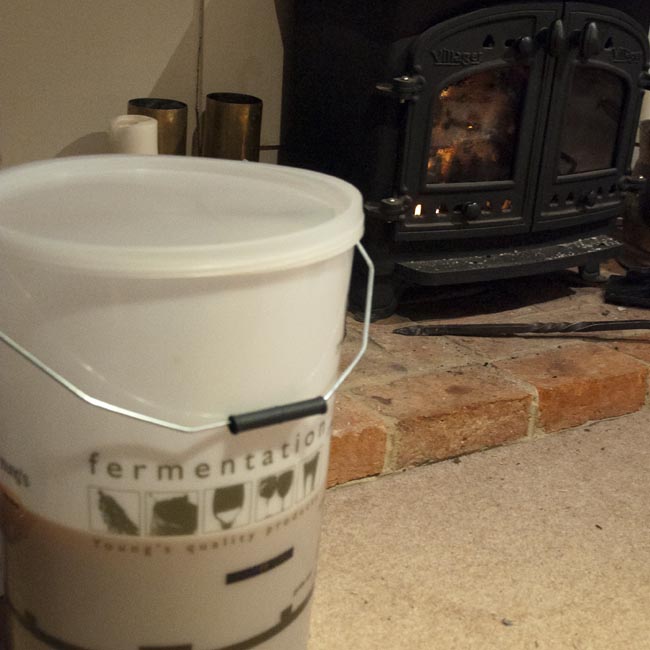
Fermenting by the fireThere is lots of advice that you should ferment your cider under lock.  I didn’t have an airlock capable bucket available so just kept the lid loosely on.  My experience from beer brewing is that the CO2 produced during fermentation will give a good blanket over the brewing liquor, being heavier than air, and oxidation shouldn’t be a problem at this stage as long as you don’t disturb the fermenting juice.  If your bucket does have an airlock, after adding the yeast and nutrient close the lid tightly and set up the airlock.  If it doesn’t, just fit the lid loosely so that the gas produced during fermentation will be able to escape without blowing the lid off!  Put your bucket in a nice warm place and try to avoid peeping.  Mine went by the fire in the living room for the first few days, as we were having a bit of a cold-snap.

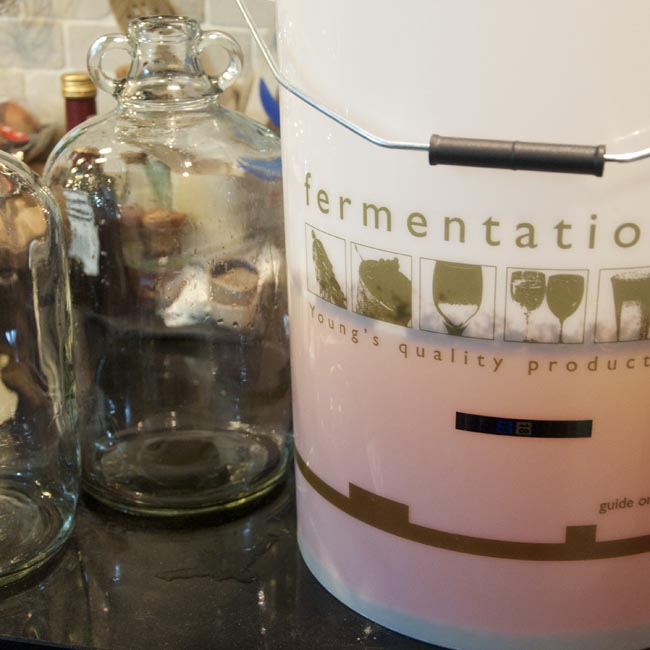
Ready for rackingYou’ll be able to tell fermentation has started when you see bubbles through your airlock, or when a nice loose foam starts to form on top of your apple juice (because you’re not peeping, right?).  During fermentation, the dead yeast and quite a bit of the solids from the apple juice will settle out in the bottom of the bucket, and the colour of the juice changes from brown to a yellow-orange.  In general, the cider will not clear completely, but it will be brighter than it was before.

Top fermenting yeastOnce fermentation seems to have stopped (I gave mine a generous month), you’ll have a nice thick layer of debris on the bottom of the bucket with cider above it.  Now it’s time to ‘rack’ the cider into demijohns for bulk conditioning.  When I opened the bucket, I found rather an alarming-looking layer of yeast floating on the surface of the cider.  I can only assume that this was a wild, top-fermenting yeast strain, as it seems to have done nothing awful to the cider so far!

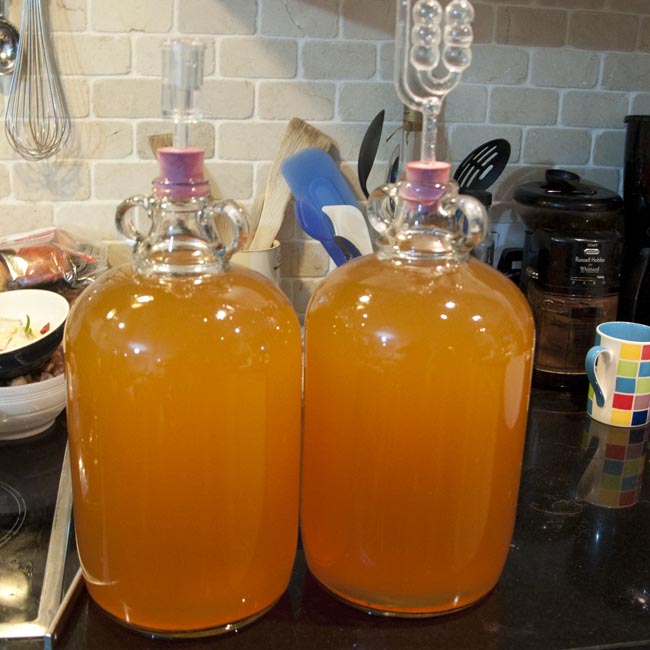
Clean and sterilise your equipment (demijohns, syphon, stoppers & airlocks) carefully this time, following the directions on your steriliser.  Now the cider has fermented you risk accidentally making cider vinegar if acetobacter bacteria were to get in.  It’s also important to avoid introducing oxygen into the cider at this stage – acetobacter need oxygen to make vinegar from alcohol, so even if there’s some contamination they’ll struggle to get going if the cider stays free of air.  Syphon carefully, keeping the outlet of the syphon below the level of the liquid and avoiding introducing bubbles.  Then fit your stoppers and airlocks and put the cider in a cool dark place to mature for a few months before bottling. Keep an occasional eye on your airlocks to make sure they’re not drying out.  I expect to leave mine in the demijohns until spring, and will then bottle into champagne bottles with a bit of priming sugar to make sparkling cider.

Filled demijohnsWe had a couple of pints more cider than fitted in the demijohns, and it would have been inconceivable to waste it – I can report that it is, already at this stage, definitely cider.  It’s a bit rough around the edges with quite a hard tannin that hopefully will mellow a bit with maturation, but has a lovely fresh apple aroma and definitely shows promise!

If you’re going to try it, I would recommend having a bit more of a read about the process before you start.  Some of my favourite books on home-brewing are listed in the library.

And if all that seems a bit complicated and labour-intensive, I’ll give you my directions for the quickest and easiest (and remarkably tasty!) home-brewed cider in the world very soon!

Hard Pressed – making real cider, the old fashioned way

Apple harvestAt the end of October, a lovely holiday in Cornwall yielded an unexpected bonus – three sacks of apples from the orchard where we stayed.  There was only one thing to do – make cider!  Only one problem – I didn’t have a cider press.  We’ve been faffing about building one for the last couple of years, but hadn’t got round to it.  A bit of pleading and cajoling later, and I’d managed to score a brand new apple press for an early Christmas present – what a result!

Ben's Red applesOf course, apples don’t just press themselves.  Real cider making – unlike most of the country skills in this blog – is time consuming (and good exercise!).  Set aside a nice sunny autumn day, and if you can talk some friends into coming around to help, so much the better.

For an idea of how much apple juice you’re likely to produce, we got a yield of just over a gallon per bag of apples – the bags are the sort you buy logs in.  It’s possible that with more practice and different equipment we may have done slightly better, but I doubt there was much waste.

As well as apples – lots of apples, all different sorts if possible – you will require:

  • a cider press – bought or home-built
  • a robust bucket, and a crushing pole (or a proper scratter, but they’re expensive) – we did try a cheap plastic bucket from B&Q but caved the bottom in very quickly, so ended up using a carefully washed old metal wastepaper bin
  • a large bucket for washing apples in – I used a big garden trug – and clean water
  • knife and chopping board
  • sieve / colander and muslin for straining
  • bucket or demijohn for collecting the juice
  • wine yeast and yeast nutrient (optional)

A quick note on sterility, first.  Home-brewers are obsessed with sterilising things.  I am not washing my apples in camden to kill off wild yeasts, my ingredients (the apples) and tools (wooden equipment and press components) will not be sterile.  But do wash everything very carefully in hot soapy water (not the apples, obviously), and rinse them carefully before using.  There is general advice to avoid metal tools and receptacles when cider pressing – we used a metal bin for crushing in the absence of any alternative – it was enamelled and in good condition, and does not appear to have caused any obvious problems, I suspect because the apples and juice were not in contact with it for very long.

Washing applesIf you have time (and let’s face it, if you’re planning for next year, time is on your side!) there are various plans for DIY presses on the internet, or have a look at some old-fashionned presses, they’re quite simple things really.  I was going to build something using a car jack for the pressing mechanism.  My lovely bought press has a 6l capacity which seems about right for domestic production – the bottleneck on our two-man production process was the crushing stage.

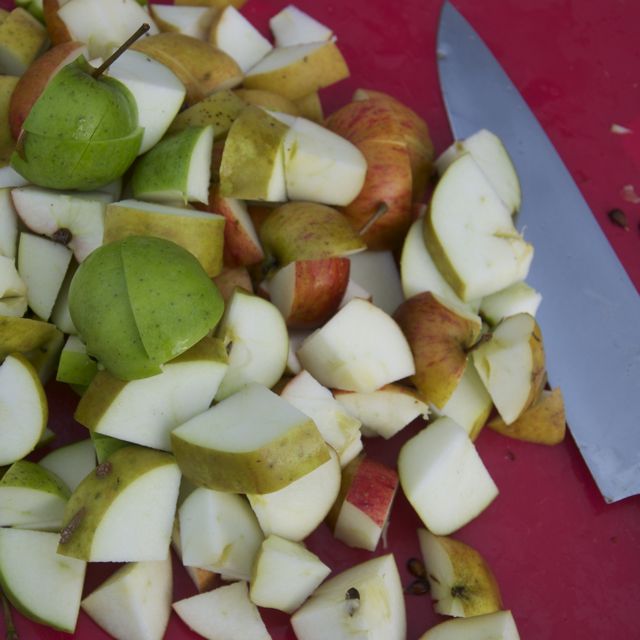
Chopping applesStart by washing your apples in the big bucket, you can do this quite a large batch at a time.  Then slice the apples up into quarters or eighths, discarding any obviously bruised or damaged areas.  Transfer these a batch at a time into your crushing bucket.

Crushing pole - end To crush you could use something like a new clean round-section piece of timber, we bodged a crusher together out of a small piece of inch-square timber we had and a plum-wood log, trimmed and stripped of it’s bark and formed into a blunt wedge at the end.  Avoid using anything which has been treated with timber preservative as it will be in intimate contact with your apples.  Make sure the pole is long enough that you can use it in a comfortable standing position above your bucket, or you’ll hurt your back and shoulders.

Crushing applesNow crush your apples to a rough pulp, until they’re making a wet squelching noise when the pole goes down and there’s just some free juice in the mixture.  The aim is to make it easy to extract the best juice yield you can from your precious apple harvest, so do put in the effort here, our first batch was definitely under-crushed and we got much less juice from this than from subsequent ones.
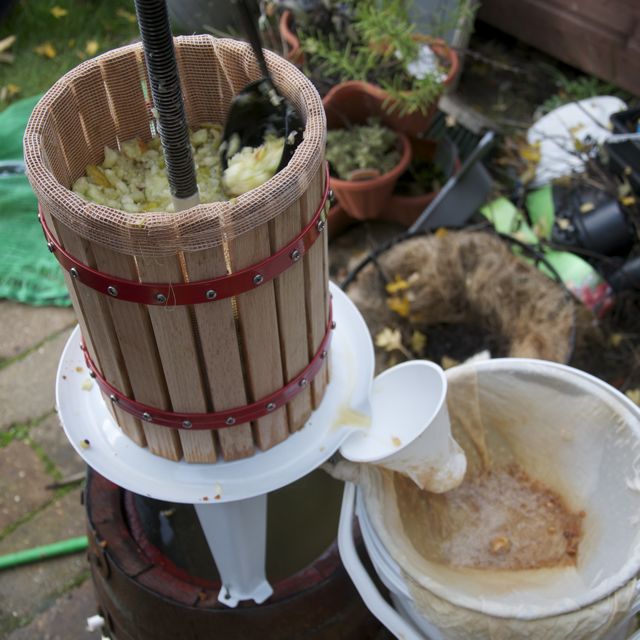
Loading cider pressNow load up your press.  Mine has a mashing bag to retain most of the solids within the press, some will use muslin cheeses or other approaches.  Once the press is loaded, apply pressure slowly, building it up over a few minutes, rather than trying to get the press as tight as possible straight away.

Cider press in useCollect your juice into a bucket through a  muslin to take more of the solids out.  It’s ok to taste some juice at this stage (and it should taste absolutely awesome!).  It will look… well, dirty brown coloured, probably.  This is a result of being hardly-filtered, and the tannins in the apple juice reacting with oxygen.  Don’t worry about this.  The leftover apple pulp (‘pommace’) can be fed to livestock, or composted.  My hens loved it, but be careful not to overdo it.  The rest can be composted.
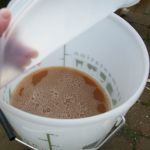
Pressed juiceAt some point you will run out of daylight, apples, or energy.  At this stage you’re done.  Admire the juicy product of your labours.  At the moment you have unprocessed, unfiltered, unpasteurised apple juice.  Smells marvellous, looks decidedly suspect.

Next time, we make the juice into cider – that’s proper, ‘hard cider’ to any Americans reading!

Scaling Up – second attempt at smoked salmon

Buoyed up by the success of my first attempt at curing and smoking a very small salmon tail fillet, and tempted by the whole sides of salmon that appear in the shops at this time of year, I thought ‘hey, why not?’ and asked my husband to pick one up when he was shopping.  Having got it home and looked at it, in all it’s 1.75kg glory, and about an inch and a half thick at it’s thickest point, I did wonder if I hadn’t perhaps bitten off a bit more than I could chew…  so like any sensible experimental cook, I put the thought firmly to the back of my mind and got on with it anyway.

Before curing I decided to add a bit of flavour to the fillet in the form of a bit of a whisky infusion, so a tot of Laphroaig went into the bag with the fillet for an hour or two.  In retrospect I should have got the fillet out, washed and dried it and deprived it of its pin bones before doing anything with whisky, as I’m pretty sure that most of the flavour I added got washed away at this slightly later preparation stage.   Lesson learned!

After that, I cut the fillet in half (none of my oven dishes is anything like long enough to take a whole fillet in one go, and my fish kettle is metal and not really suitable for curing) and rubbed it generously with the cure mix which, as last time, is 2/3rds table salt and 1/3rd golden caster sugar.  In aiming for a very short cure period (about 6 hours) I’m keen to make sure the pickle doesn’t become unsaturated, so I use a lot more cure mix than I probably need to in order to get maximum water extraction during the short contact time.  I made up about a pound of cure mix, though I didn’t use it all.

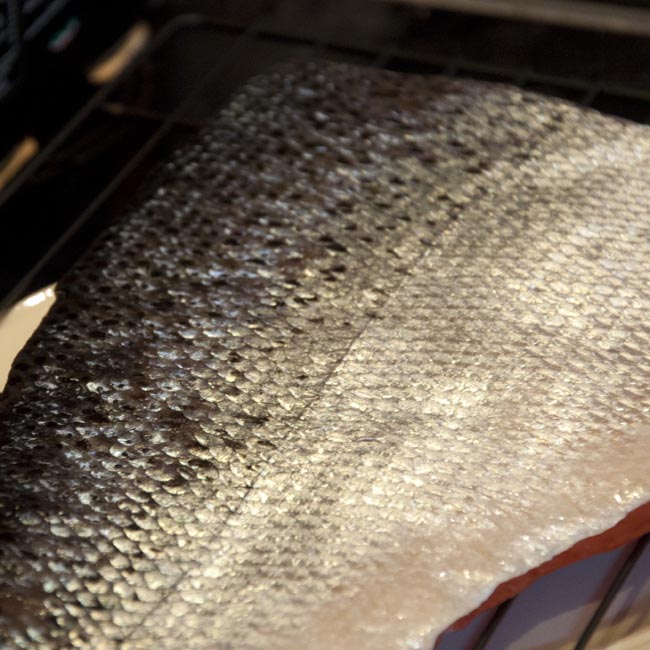
Cured salmon skinOnce rubbed in the cure, with a thin layer in the dish beneath the fish, I covered the fillet pieces with cling film and weighed them down with most of the canned goods in my larder!  I turned them every couple of hours.  At the end of the six hours a really quite striking amount of liquid had been drawn out of the fillet by the osmotic action of the salt and sugar.  More striking than that was the effect of the curing process on the salmon skin, which had reverted from the rather soft pliable texture you expect, to a firm, almost cardboard-like texture with the beautiful blue iridescence you would normally see only in the skin of a freshly caught fish.  More culinary alchemy, and quite beautiful!

Cured salmon before smokingAfter washing and drying, the salmon pieces went into my fridge on open racks overnight.

The next morning, they were part of the second smoker run, and smoked for 10 hours over a mix of oak and apple wood.

After smoking I portionned the fish for freezing, which also gave me a good chance to examine it in cross-section.  The thinner tail piece is perfect, I think.  I cut some slivers from the surface and tasted them fresh from the smoker, it’s some of the best smoked salmon I have ever tasted – a gentle saltiness and sweetness, the oiliness of the fish mixing with a soft smoky flavour and perhaps, with a little faith, even the faint bite of the whisky in the background.  In cross section it is an even translucent orange-pink all the way through and a nice firm texture.

The thicker head-end half of the fillet is not quite such an unmitigated success.  There is a clear visual and textural distinction between the skin 1/3rd of the piece and the rest, with the flesh nearest the skin softer, pinker, and with more distinct fat-lines visible.  In all respects, this part of the fish is much closer in appearance to a fresh fillet than to a cured and smoked one.  I can only assume that the cure mix was not able to penetrate well through the skin (which in retrospect I should have checked was properly scaled) and had not had the time in the cure to be reached from the other side.   It’s not a terrible disaster as these pieces are now frozen and will be perfect to use in dishes like the creamy smoked-salmon pasta, but I don’t think they’re suitable for eating raw.

The options for addressing this, as far as I can tell are –

  1. Skin the fillet – not appealing as a plan, as it will reduce the structural integrity of the fillet and make it harder to slice thinly as smoked salmon later, also I think skinned fillets are a lot less visually appealing!
  2. Cure the salmon for longer, perhaps 8 – 10 hours – also not very appealing, as the flavour of the salmon is, in my opinion, perfect as it is, and I would not like it any saltier
  3. Do something to the skin side to help it absorb the cure better – certainly making sure the skin is fully scaled may well help here, but I’m also tempted to do something in the way of shallow piercing / scarifying of the skin to help the cure penetrating.  I have ordered (Amazon to the rescue again) a device called a blade tenderiser, intended for making lots of stab incisions in steaks before cooking, which I think with some minor modification to control the stabbing-depth may well do exactly what I want to the skin on the thick end of the fillet without too much faff.

Watch this space for the third effort – I’m running out of time before Christmas now so the third time had better be the charm!

Tinker and Try Again – second burn of the DIY cold smoker

It was obvious on the first burn of the DIY cold smoker that despite my best woodworking efforts (I do *not* possess joinery skills!) it leaked like a sieve from almost every edge and corner.  It was always going to be an iterative design process, so we broke out the mastic and panel pins and sealed the sides as best we could.  Then I cut and fixed batons along the edges of the slate roof to improve the seal between this and the sides of the smoker box.   After leaving it overnight for the mastic to go off, it was time for the second burn.

The morning dawned unconvincingly, grey damp and foggy.  Even the hens seemed unimpressed when I opened their pop door before turning my attention to getting the smoker set up for its second outing.

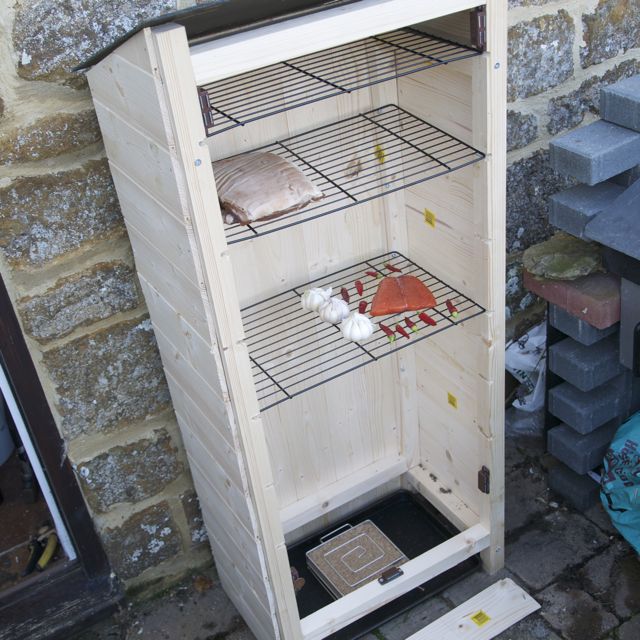
Smoker set for second burnI chose a mix of oak (~70%) and apple (~30%) dusts for my second burn.  In the smoker I had a whole side of cured salmon, my experimental Christmas bacon, a slab of cheddar, the bulb and a half of garlic from my first smoker run which hadn’t already been eaten, and a mix of already-smoked and unsmoked chillies.  Oh, and a little muslin bag of sea salt.  It was more or less full.

The smoker was greatly improved by the modifications, and breathed whisps of smoke out through the intended ventilation gap at the front steadily for about 11 hours.  The burn time was longer on this occasion, and I’m not sure whether that was due to the different mix of wood dusts or the weather (it stayed damp and foggy all day and never got above about 7 degrees celsius).  The apple smoke smelt wonderful, sweeter and softer than the 100% oak from the previous burn.

I plan to write more about the salmon in due course.  The bacon took the smoke very nicely and I’m very pleased with the results.  The garlic has definitely benefitted from a longer total time in the smoker, so I suspect I’ll batch garlic smoking to weekends I plan to run the smoker for two consecutive days to give a stronger smoke.

The cheese was a request from a friend, so we await the verdict!  As for the salt, it *smells* of smoke, though that may be the muslin.  I’m gratified that it doesn’t appear to smell of salmon at all.  It looks entirely unchanged – photos of caramel-brown smoked salt I’ve seen on other blogs aren’t the case here, though most of those have been hot-smoker efforts – but I look forward to tasting it soon!

Read more DIY Cold Smoker & Home-Curing posts >>

Read more from the Country Skills blog >>

Aromatics – experimenting with flavoured bacon cures

I’ve now made a couple of flavoured bacons, which I’ve then smoked in my DIY cold smoker.

Black pepper bacon – 

  • 770g piece of pork belly
  • Dry cure made up from 65g Supracure, 15g dark brown soft sugar (~10% total weight of the bacon in cure)
  • 3g of cracked black pepper added to the salt & sugar cure mix
  • Cured according to the Bringing Home the Bacon general instructions
  • Smoked for 10 hours using oak dust

This is a lovely eating bacon, and is likely to become one of our house staples.  The pepper adds mostly flavour, very little heat.  The sweet flavour from the sugar is subtle, but present, and adds nice balance.  It cooks well, too.  Highly recommended.  I think it would also be very nice unsmoked.

Christmas cure spicesChristmas bacon – first attempt

  • 530g piece of pork belly
  • 10% cure mix made up of 36g of Supracure and 17g of molasses sugar
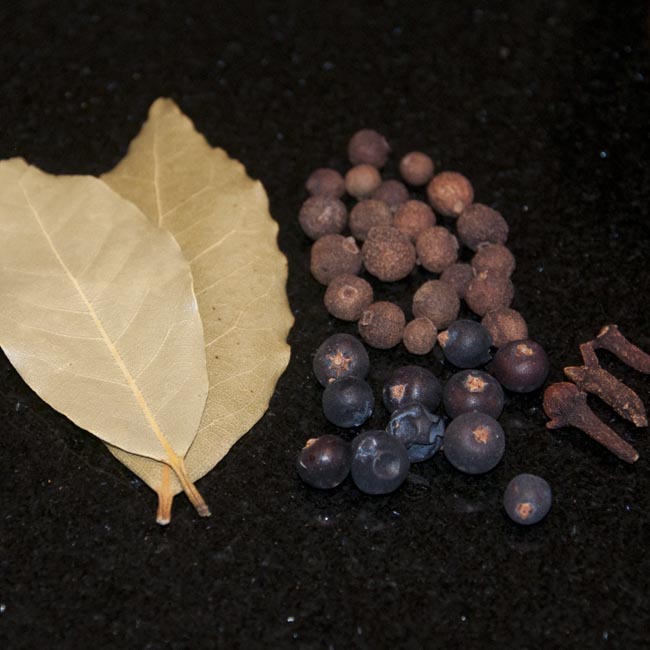
  • One bay leaf, 10 allspice berries, 4 juniper berries, and the berry of one clove (the small ball bit on top of the stem), ground in a spice grinder and mixed well with the sugar & salt
  • Cured in the usual way and then cold smoked for 10 hours in a mix of oak and apple smoke

While the cure did smell a bit medicinal, with a dominant smell of clove, despite the tiny quantity of clove added, it did at least smell convincingly of Christmas.  The molasses sugar gives the cured bacon a really distinctive dark colour to the flesh and to the rind.  Smoked over apple and oak wood dust, it has a lovely sweet complex slightly spiced flavour, and is almost exactly what I was looking for in a Christmas bacon.  It is probably more suited to a cooking bacon (and would make awesome ‘pigs in blankets’ for Christmas dinner) but does also eat very well, caramelising beautifully, if my lunch today was anything to go by!

Meddlesome creatures – the return of the bletted medlars

After two and a half week’s bletting in the spare bedroom, about half the medlars looked unchanged, the other half had softened and darkened in colour, with skins that look and felt a bit like nicely ripened passion fruit.

Bletted medlars

I was itching to get on and, in any case, had read in a couple of places that having some un-bletted medlars in the mix would help with setting the jelly, as they are higher in pectins. Brilliant then – time to get going!

Medlars in different stages of blettingFermenting medlarOf course, I had to taste the bletted medlars – I can report they’re a very unattractive mid-brown squishy substance, with a gentle sweet and slightly floral, perfumed flavour.  Not unpleassant but nothing to get really excited about.  One of my medlars had started fermenting, it’s skin was tight with gas and there were bubbles escaping from the calyx (the ‘dog’s bottom’ bit of the fruit).  In the spirit of experimentation (and so you don’t have to!) I did have a little taste of the liquid leaking from this – again not unpleasant, a little more citrussy than the bletted medlar.  I may have to look into medlar wine recipes!  There were also a couple of medlars which were dry and hard and black in the middle.  I threw those ones away.

Bletted medlars on a plateAfter consulting a few different sources (many recommended adding apples to the mix – something I wasn’t keen to do as I really want to see what medlars taste like!) I settled on a very simple recipe – medlars, sugar, and just a squeeze of lemon juice into the stewing water, using my almost-all-purpose fruit jelly recipe.

The liquor that drained from the jelly bag nearly had me giving up in disappointment.  It was distinctly cloudy with a rather insipid pale brown colour, a bit like too-weak milky tea.  A quick taste, and it was quite bland apart from a dominant flavour of tannin – like I’d been boiling up dry leaves and bark for an hour.  It almost went down the sink, but since I wasn’t sure what it was meant to taste like, I decided to persevere.

Medlar jellyThe result is a revelation – dark golden in colour, sweet/acid with a gentle floral top note and a soft tannin base flavour, quite unlike anything else you’ve ever eaten – my husband tried for several minutes to work out what it tasted ‘like’ before giving up on the exercise. The set of my jelly is a bit softer than I would have liked – to my pint and a half of liquor I added a pound of preserving sugar and half a pound of golden caster I had lying around. The jelly had been boiling for well over half an hour at this stage so I suspect the main problem was shortage of pectin from the quite well-bletted medlars.  I don’t think it really matters!

Almost-All-Purpose Any-Fruit Jelly

Time: about an hour – Patience: 4 or 5 hours – Difficulty: easy

Until this year I had never made fruit jellies, out of a misguided belief that the process was needlessly tedious and fiddly – but a bumper crop of crab apples scrumped from a hedge finally forced me to give it a go.  While there’s no escaping that it is a two-stage process – stewing fruit followed by straining and re-boiling with sugar – as hassle goes it’s certainly less trouble than taking stones out of plums for jam! Only the final boil and bottling requires your full attention, otherwise you can be getting on with other things – or putting your feet up with a well deserved cuppa!

Medlar jellies

You will require –

  • Fruit – single or mixed varieties – apples are a popular ‘base’ fruit with additions. A couple of kilos is a sensible quantity to try first time out and will probably make 6 jars or so.
  • Fresh herbs, chillies, spices… the only limit is your imagination
  • Juice of a lemon or orange, if you like
  • Sugar – I usually use preserving sugar for the additional pectin – this is particularly important for soft fruit which contain very little of their own pectins, apples and plums have quite a bit of their own and probably don’t really need supplementing. Still, it can’t hurt, right?
  • A saucepan with a bigger capacity than the volume of your fruit
  • A jelly bag / muslin strainer
  • Jam jars with lids, clean and dry. I like to re-use jam jars if I can, and save small pretty ones for jellies, to the eternal irritation of my husband who keeps finding empty jars all over the house. Jellies often have quite a delicate flavour, so do be careful the jars haven’t previously been used for pickles or curry sauce (give them a good suspicious sniff if in any doubt, and check the lids for staining – if so send them for recycling or use them for chutneys), as this could very easily taint your lovely jelly!

And this is how it’s done –

  • Stewing medlarsRoughly cut your fruit into pieces no more than about an inch square, removing any damaged / rotten areas (ignore this last detail in the case of bletted medlars, or you’ll have no fruit!)
  • Place the fruit in the saucepan and just cover with tap water. Add the citrus juice at this stage if desired.
  • Bring to the boil and then cover and simmer gently for an hour or so, stir from time to time but don’t mash.
  • Straining in the jelly bagSuspend your jelly bag over a bowl and spoon in your stewed fruit. A soup ladle is quite helpful here. A jelly bag is a really useful thing to have if you’re making jellies (who knew?) but can be a bit expensive. You can bodge your own with a tied muslin. Many jelly bags have stands, but I just tie mine to the handles of the eye-level kitchen cabinets.
  • The liquor that drains into the bowl will probably be cloudy. Don’t worry about this too much. You’ll see why in a bit.  Leave it to strain for at least a couple of hours.
  • When the flow of liquor from the jelly bag is almost exhausted, put the clean jam jars and lids in a cold oven and set the temperature to 150.
  • Now, when the dripping is essentially stopped, measure the volume of liquor you have, preferably in pints (please note this recipe uses UK Imperial weights and measures, not US ones).
  • Then weigh out the sugar you need, following the rule of thumb of one pound of sugar to one pint of liquid.
  • Return the liquor and the sugar to the (washed) pan, add any finely shredded herbs or spices (if you just want the flavour but not the pieces of herb or chilli etc in the jelly, you should have added them at the stewing stage so the pieces are filtered out – personally, I rather like the look of little nuggets of flavour in the final product), and bring gently up to the boil, stirring continuously.
  • You now have a pan of quite concentrated boiling sugar syrup, which you should under no circumstances leave unattended. It will probably froth a little and some scum may well rise to the surface. I’ve seen recommendations to skim this but I never bother.
  • At some point during the boiling process, with a bit of luck, the cloudiness will disappear entirely. No, I don’t know why, either. I think it’s that culinary alchemy again!
  • Keep stirring, and check for setting periodically. I put a couple of small saucers in the freezer ahead of time, then put a drop of the boiling syrup on the saucer, it will cool quickly and allow you to check the consistency. It’s ready when the cold jelly wrinkles when you push it with your finger.
  • Different jellies seem to reach setting point at very different rates, some will take as little as 10 minutes, so keep checking regularly. And tasting, of course.
  • Once your jelly has reached setting point, carefully get the hot sterilised jam jars out of the oven, fill with the hot jelly and tighten the lids fully. If you have any pieces in the jelly, watch to see if they’re trying to sink or float in the jars – if they are, then invert the jars every so often as they cool to mix the contents.
  • If you find, once they’re cold, that the jelly isn’t as set as you’d like, it’s perfectly alright to tip it back into the pan the next day, clean and re-sterilise the jars, and boil the jelly for a while longer. But assuming it’s mostly set, why would you bother unless you were planning an attempt on the local flower and produce show with it?
  • That’s it! Label, store, and enjoy at your leisure. They should keep at least a year in a cool dark place, but best to refrigerate after opening.

Doesn’t seem so hard, does it?  Now, don’t you want to know what happened to those medlars..?

Sugar and spice – Christmas baking, seasons and memories

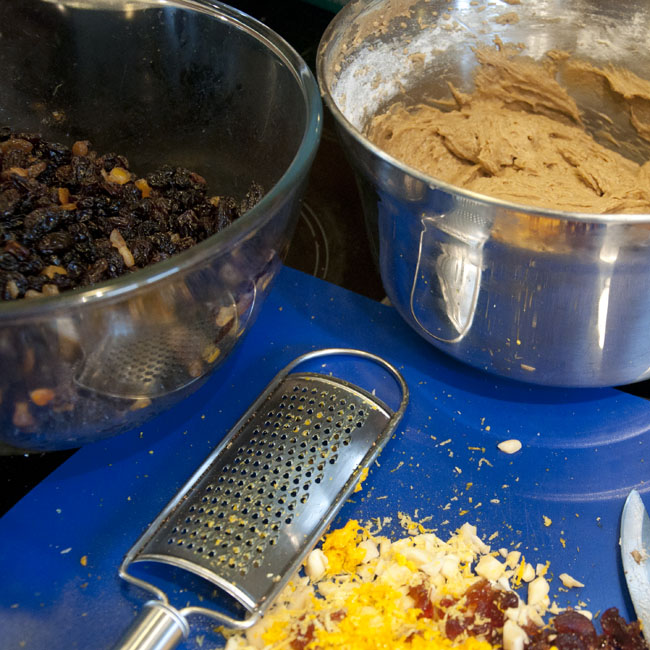
Christmas cake ingredientsToday I baked our Christmas cake.  I’m not going to insult your intelligence by claiming it’s my recipe – that credit goes to the great Delia Smith – but it is, in some sense, still a ‘family’ recipe.  It’s the cake my mother makes, and the one I made with my grandmother when I was growing up.  I still make it almost exactly like she did.

The smell of citrus zest, calvados, and freshly grated nutmeg can only mean Christmas isn’t far around the corner. Folding the fruit into the cake mixture, heady scents filling the kitchen, is a mix of excitement about the festive season to come, and remembrance of past Christmases, and those we spent them with.  Every year, when I bake my Christmas cake, I think of Grandma – I remember making this cake with her, in her kitchen, all those years ago.

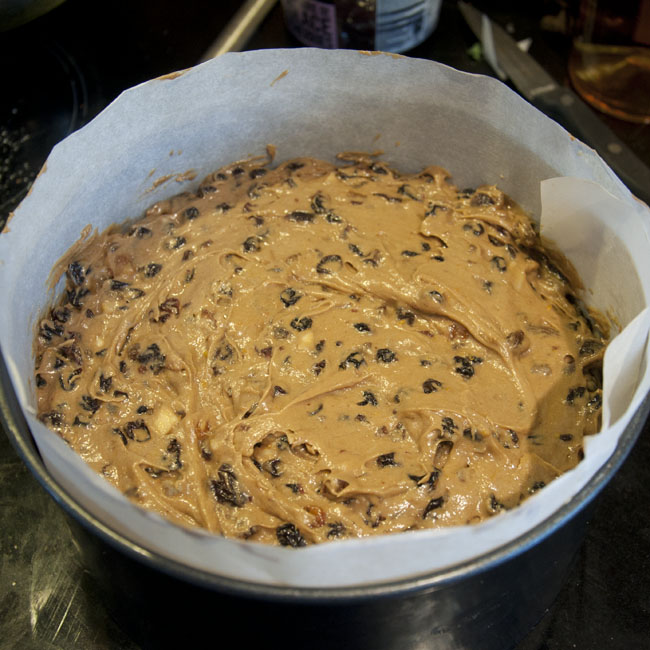
Cake in tinIn my first year at university, some time in November, I remember going into the big, academic bookshop, and digging out a copy of Delia’s Christmas cookbook.  That year, I made my own cake, and I’ve made one every year since then.

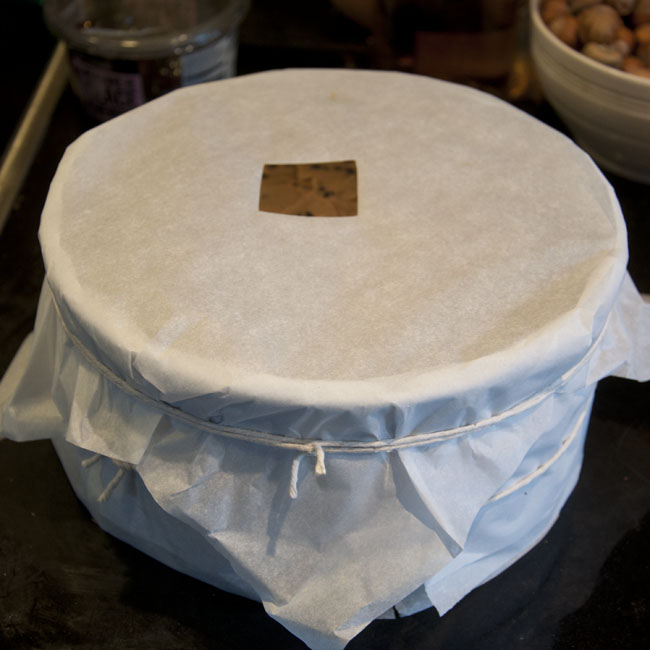
Wrapped and ready for the ovenIt still gets double-wrapped in baking parchment before going into the oven, just like my Grandma taught me.  And even though the fashion these days runs more to smooth white icing, it will still get covered in marzipan and then daubed roughly in a royal icing snow-scene and topped with a marzipan poinsettia, just like my Grandma’s used to.  Though of course I’ll probably only get around to it on Christmas Eve.  Grandma I think would have been better organised!

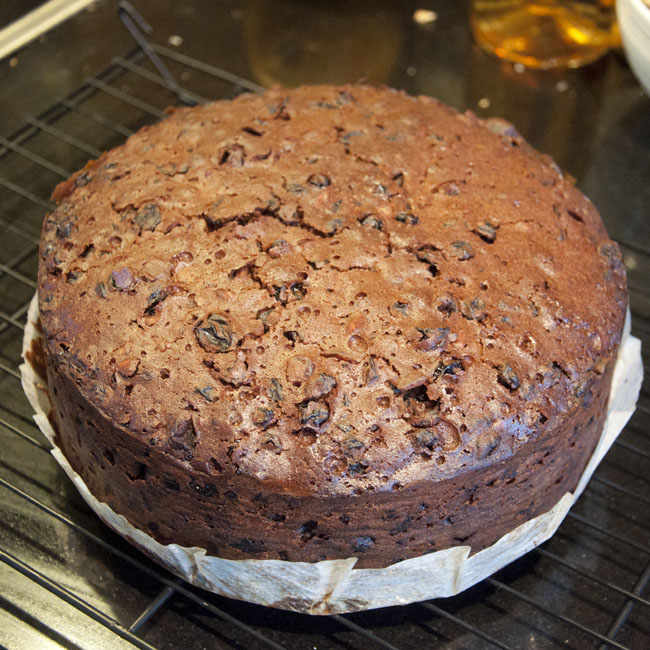
Cake coolingWe forget too often these days what our food says about us, about where we come from, and the people we’re connected to.  Seasonal foods – big obvious ones like Christmas cakes, as well as more modest ones like the first asparagus of summer – connect us with the turning of the seasons as well as back through our memories to previous years and previous feasts.

I hope you enjoy your festive preparations, and create some new, wonderful memories with people you love!

First smoke! Testing the DIY cold smoker

Time: 5 minutes – Patience: 10 hours – Difficulty: Trivial – Knackynes: Low

So I built a cold smoker, and then it was time to try it!

The items in my first smoke run were the cured salmon fillet, a piece of home-cured bacon, three garlic bulbs and about a dozen home-grown chillies.  These were loaded into the smoker on the racks – I considered hanging the bacon piece from a  hook but decided against this time.  The loaded smoker looks really empty so the first lesson is to have more items ready for smoking and do them all at once.

Smoker, loadedThe ProQ smoke generator lit very straightforwardly and behaved immaculately, smouldering gently without any noticeable heat output for almost exactly the advertised ten hours.  I used oak sawdust in the smoke generator for the first attempt, and the 100g pack I had was a little bit more than I needed.

ProQ cold smoke generator, litThe smoker itself leaked like a sieve from the junction between the roof and box, and also from the side of the magnetically-attached door panel.  I suspect this meant the smoke density inside the box was rather less than it might have been.  Before the next run, I plan to plug as many of these leaks as I can using silicone mastic and some batons, and we’ll see if I get a more concentrated smoke as a result.  I could conceivably run a second smoke generator, but this would increase my costs, so I’d rather not!

Overall, the salmon was a great success.  It was firm, glistened slightly with oil on the surface, and cooked wonderfully into the creamy home-smoked salmon pasta I made for dinner on Monday.  You can see photos and more discussion with the recipe.

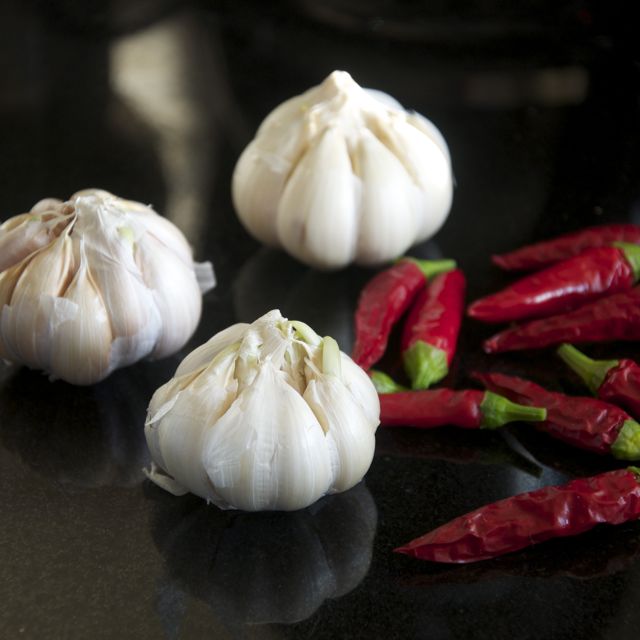
The garlic and chillies didn’t appreciably change in appearance during smoking – at odds with the smoked garlic I’ve seen before which was dark yellow to brown in colour.  I have seen recommendations for smoking times for garlic up to 36 hours, though, so 10 may not be enough to achieve this, especially in a leaky-smoker.  They smell wonderfully of oak smoke though and the flavour of the garlic is a treat – nice fresh flavour with a subtle but distinct note of oak smoke, not too obtrusive and lovely for general cooking.  I might re-smoke one of the bulbs next time I run the smoker, if I’ve not eaten it all by then.

Bacon, salmon, garlic and chillies after smokingThe bacon has a bit of smoke staining on the rind and has darkened on the meat side.  I think you might get more discolouration on the rind with the bacon hanging rather than sat rind-up on a rack.  Apart from that, it looks and smells as I would expect from good smoked streaky bacon.  I haven’t tasted it yet – but plan to have some for my lunch!

Read more DIY Cold Smoker & Home-Curing posts >>

Read more from the Country Skills blog >>