
So, now you’ve (hopefully!) received your pack of curing salt, have laid your hands on a promising looking piece of pork, and are raring to get going turning it into bacon.
 First of all you may need to do a bit of preparation with your pork. If it came as a tied ‘joint’, cut all the string and flatten it out. Rinse it under cold water before drying carefully with some paper towel if there’s any loose material on the surface left over from butchering, or if it seems ‘wet’ – this is more likely to be the case if it’s been vac-packed or previously frozen.
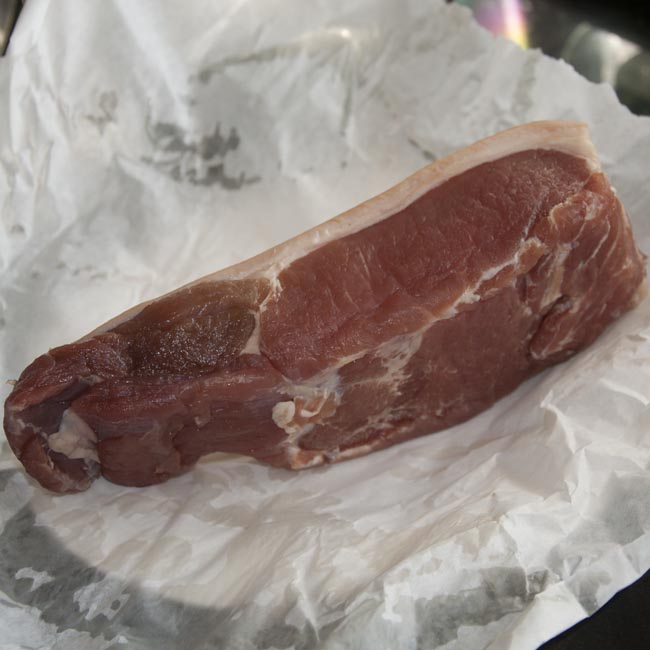
 A loin piece should require no further preparation, though you might want to trim away any really loose bits of meat. If your belly piece has come from a butcher or farm shop there may still be ribs on the inside surface. Trim these away from the rest of the meat, preserving as much flesh as possible. You also want the non-skin side to be able to absorb the cure as well as possible, so if there’s a thin layer of fat on this surface, you want to remove it. It should peel away carefully, or use a sharp knife.
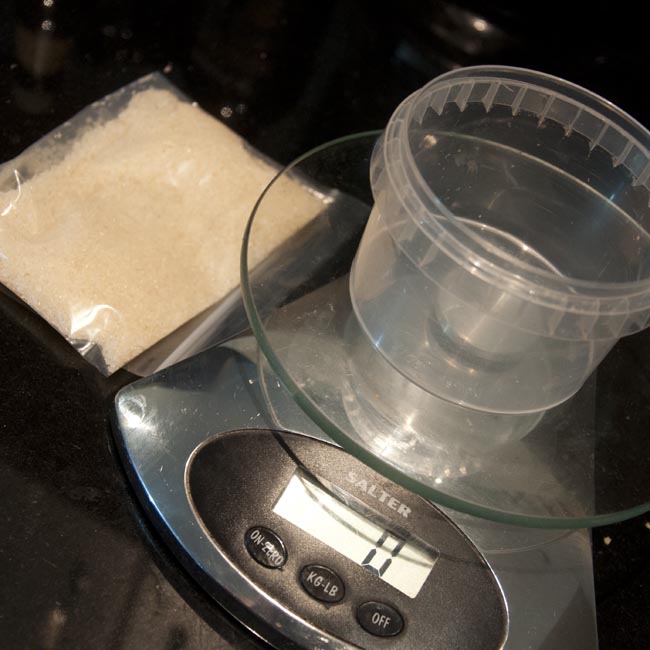
Now weigh your prepared meat and make a note of the weight in grams. Mine weighed very slightly under 600g.
 The total cure weight is going to be 10% of the weight of the meat – so for 600g I’m looking for a total weight of cure of 60g, which is going to be 80% curing salt and 20% sugar – so in my case 48g of salt and 12g of soft brown sugar. Mix these together thoroughly in your airtight container.
 You’re ready to take your first steps in the ancient culinary alchemy of curing!
 Take some of your dry cure and rub it all over all the surfaces of your meat. There’s no hard and fast rule about how much to use for this first application, but I tend to use about 1/3rd of the total cure mix. The cure will absorb least well through the skin, so while you should still rub some of the cure onto this surface, concentrate on getting the cure in to contact with the meat.
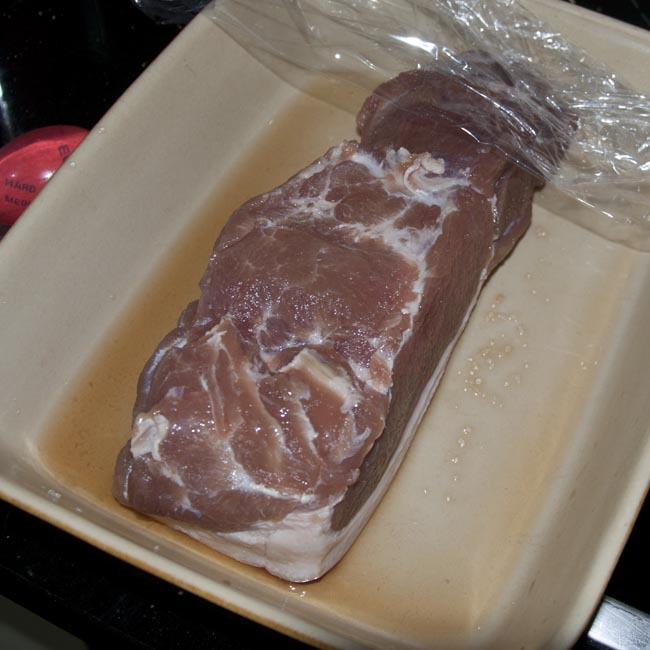
 Now place your cured pork into your non-metallic dish, cover loosely with cling film, and put it in the fridge until tomorrow. If you peek later, don’t worry if you start to see liquid in the bottom of the dish – this is quite normal and shows something’s happening!
Remember to seal the container with the rest of the cure in to keep the air and moisture out!
Please do keep me posted on your progress!
All the Big Bacon Challenge posts will be collected under the ‘BigBaconChallenge’ category heading – so go there to read them all!
Read more from the Country Skills blog >>









 Country Skills for Modern Life