Homemade Gifts – hyacinth bulb and hydrogel beads in a jar

Lovely, fragrant bulb flowers are one of the first signs of spring.  I especially love hyacinths, with their intoxicating perfume, and particularly growing indoors just a little bit out of season.  They’re like a floral promise that the end of winter *will* be along, just around the corner.
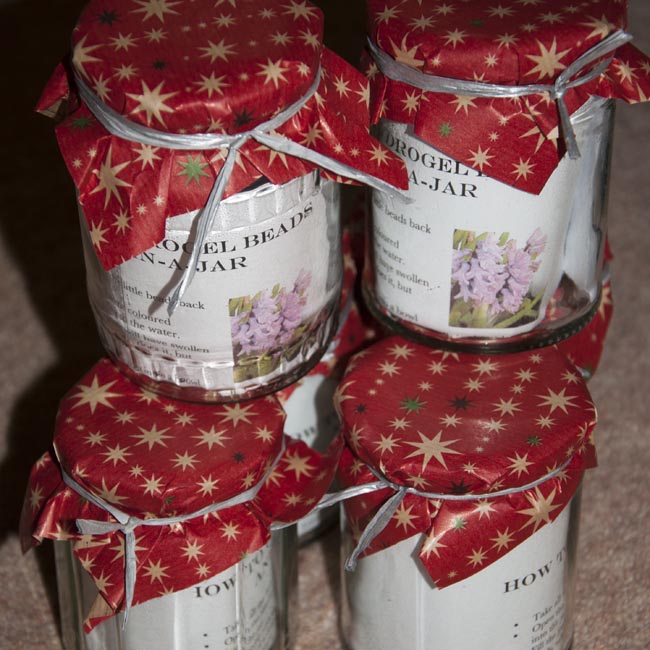
Hyacinth Jars, ready to give

Many of the gifts for my friends and family have been homemade this year – of course I couldn’t write about them before the big day, because that might have ruined the surprise! One of my favourites is a ‘prepared’ hyacinth bulb (heat/cold treated for indoor forcing – this is important, as unprepared ‘garden’ bulbs won’t flower if grown in this way) in a jam jar with hydrogel beads (sometimes called ‘water crystals’).  Hydrogel beads are one of the coolest, weirdest things I’ve come across in a long while.  They start out as a tiny little packet of small clear-plastic looking ballbearing things, but when soaked in water overnight, the contents of the tiny little packet will swell up to fill a whole jam jar.  Better still, the ‘reconstituted’ hydrogel has a refractive index so close to water that they’re essentially invisible if they’re below a fluid level, which, you have to concede, is very cool, in a geeky sort of way.

Once you’ve got over the excitement of the whole thing (I know, right?), how do you make them either into a gift or into a lovely spring treat for your own window ledge?

Hyacinth Jar - 'ingredients'For gifting, simply pack up the pouch of dry hydrogel beads and the prepared hyacinth bulb into a washed and dried recycled jam jar (I took the opportunity to use up some of the pickle jars with too much residual ‘taint’ to use as jam or jelly jars), with an instruction sheet (we’ll get to that).  Do up the lid (but don’t worry if you don’t have one) and top it with a pretty bonnet of fabric or Christmas wrapping paper tied on with ribbon.  What could be sweeter?

No, you can’t have my instruction sheet, write one yourself!  But the process is very straightforward.

  • First, you’ll need to reconstitute your hydrogel beads.  Do this in the jam jar, by emptying the tiny pack of beads into the jar and topping up with warm tap water.  I know it seems very very unlikely that this will work, but indulge me here, and leave them overnight.  The next morning, marvel as you discover the beads filling the jar.  It’s very cool.  If you wanted to be a bit psychedelic, you could add a drop or two of food dye to the water to start with, and this will be taken up by the beads.
  • Drain the beads, leaving them in the jar.  Marvel some more.
  • You want the fattest part of the bulb to sit in the ‘neck’ part of the jar, so work out if you need to remove some beads to get the level right, then place the hyacinth bulb on top of the beads.
  • Top up with water to just below the base of the bulb.
  • Now place the bulb in a cool dark place (a larder cupboard is ideal, an airing cupboard isn’t!).
  • Once there are roots growing and green growth is visible in the top of the bulb, move it into a bright place.  This will take a week or two.
  • Keep the water topped up every so often but avoid having water directly in contact with the base of the bulb as this will encourage mould to grow and may make the bulb rot.  The hydrogel beads will make it a lot more forgiving of marginal drying out than a traditional hyacinth bulb vase.
  • Wait for the hyacinth to flower, which will take another three or four weeks.  You may need to find some way to help keep it propped up, though usually they flower in quite a compact way so you might be lucky!
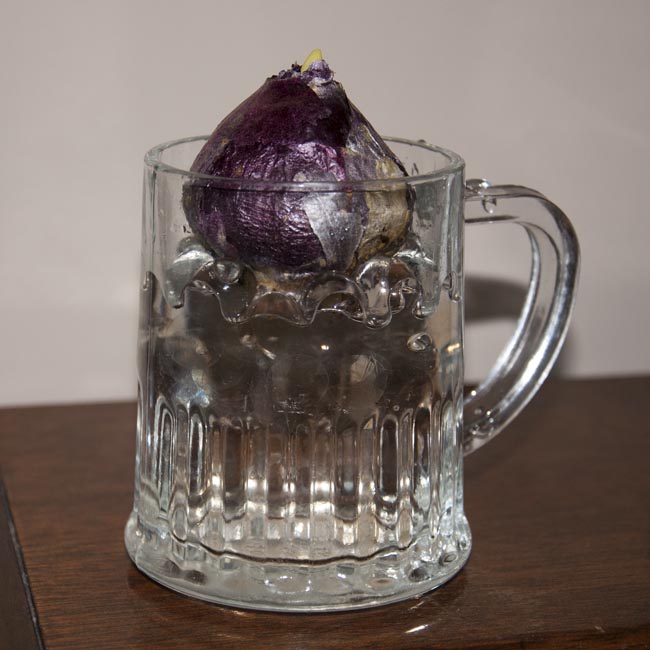
Hyacinth tankardOf course, you don’t need to restrict yourself to jam jars, all sorts of receptacles will do the trick!

These make a very original, eye catching and fun little gift – I used mine as stocking fillers and as part of hampers.  They cost very little, I sourced the bulbs for just under a pound each (in packs of twelve) and they hydrogel packs come in about £3 for ten.  I have three of the bulbs growing together on hydrogel in a small vase, which I started a couple of weeks ago, and they seem to be going well, with great root growth and a nice bit of green emerging!

‘Tis the season… Happy Advent, everyone!

Advent candle

We lit our advent candle this evening, which marks the real start of the Christmas season for me.  And this morning I had a chocolate Euro out of the ‘1’ pouch on the fabric advent calendar.  So, Happy Advent, everyone, and I hope your homemade Christmas plans are all coming along well!

Counting Down the Days – making an ‘everlasting’ fabric Advent calendar

Time: about 6 hours – Patience: how many sleeps is it ’till Christmas?? – Difficulty: a little fiddly in places

Advent calendars have always been such an important part of the countdown to Christmas for me.  But aren’t they often just a little bit of a disappointment?  The chocolate calendars so often contain the lowest grottiest grade of milk chocolate imaginable, and the plain card ones are, well, a bit plain!

Completed Advent Calendar

The last few years I’ve seen a few beautiful fabric advent calendars with pockets, which sadly have always been a bit rich for my wallet.  So after I’d got out my bits and pieces of Christmas fabric scraps for bunting making a couple of weeks ago, I thought, surely I might be able to make something of my own?

You will need –

  • A large piece of heavy fabric for the backing.  The piece I used was about 45 x 80 cm, but obviously this will vary according to your design.
  • Enough scrap Christmas-coloured fabric for 24 pockets and something pretty for the top of your tree.
  • Some way of applying numbers to your pockets (felt, paint, embroidery…)
  • A bamboo cane and some ribbon.
  • A sewing machine capable of straight and zig-zag stitch, matching and contrasting threads.

Backing fabricI was lucky to have some quite heavy, checked, gold-coloured fabric in my scraps bag which was big enough to use as backing fabric.  Even better, the approximately 1″ squares of the pattern made a fantastic layout grid for the advent calendar, saving me a huge amount of hassle.

Calendar doodle I doodled out some boxes, and realised with some pleasure that I could build up a stylised Christmas tree out of square pockets using a very convenient 24 squares – result.

Then I had a dive around the random collection of Christmas fabric scraps I’ve collected over the years, particularly the annoying-sized offcuts  I never seem to be able to bring myself to throw out on the basis they’ll come in handy some day!  Out of some card, I cut myself a pocket template based on the squares of the backing fabric, two boxes wide and two and a half boxes high.  I used this to mark up, and then cut out my 24 pockets out of a mix of fabrics, using pinking shears.

Layout patchesNow it’s time to play about with your pockets to decide on a pleasing arrangement of the different fabrics.  It took a few tries but I pretty quickly came up with an arrangement I was happy with.  It’s also the time to decide how you want to arrange your numbers.   I decided to count them down from 24 at the top of the tree, down to 1 in the pot, but you could arrange them randomly or in some other pattern of your choosing.

I was feeling really chuffed at having found 24 small felt numbers from a craft supplier to use on the calendar pockets.  I can in no way recommend that you do the same thing, and here’s why –  having decided on the layout of the patches, it’s time to number them.  The felt numbers were far too small and fiddly to sew on with my machine, so I hand stitched them to the pockets.  It took me a whole evening in front of the TV (not joking, it took over three hours – as much as the rest of the project put together!).  There must be faster ways – I suppose I could have used fabric glue but I didn’t have any.  Fabric paint or iron on numbers may be a solution.  Of course if you have a marvellous programmable embroidery machine, you could just embroider them on.  If you do, you should know that I’m extremely jealous!

Trimmed pocket

Hemming pocketOnce all your numbers are in place (or before, if you’re paining or ironing on) iron your pockets with the top hem folded over, and then just trim the corners of the fold with the pinking shears.  Then stitch the hem over with a closely matched colour of thread.  Now is the time to cut and hem your backing fabric, too.  I used a wide zig-zag stitch to do the hemming, which avoided having to do any other finishing.  Give yourself enough fabric top and bottom to hem a pocket big enough to thread a bamboo cane through later.

Now lay out all your prepared pockets.  Also cut yourself a star, or other decoration for the top of your tree, out of a suitably spangly fabric.  Now it’s time to sew the pockets onto the backing fabric, which you will have to do a row at a time starting at the top.  First pin your star in place and then, with an appropriate contrasting thread, appliqué it in place. I used zigzag stitch, because I like the effect, and a dark red / burgundy thread, but you should do whatever you like!

Applique starThen, a row at a time, do the same with the pockets, sewing the sides and bottom onto the backing fabric using a zigzag stitch.  Try to make sure you catch both sides of adjoining pockets in the stitch.  Obviously don’t stitch the tops of the pockets if you’re going to want to put anything in them!  Oh, and mind your fingers on the pins as you work – or at least, try not to stab yourself *too* often.
If you don’t quite manage to catch all the edges, you can correct this later by hand using matching rather than contrasting fabric to make the corrections.  It will look hand-made, which is the point, after all!

Once you’re all done, cut two lengths of bamboo, one a bit longer than the other, and some suitably coloured ribbon to hang the calendar with.  I used a spot of fabric glue (yes, I’d learnt my lesson and bought some by then!) on both ends of the top bamboo cane to stop the tied-on ribbon from slipping.  I also used a little scrap of ribbon to tie a jingle bell to a tiny peg to use as a marker to move along from pocket to pocket as December ticks away.

That’s it, sit back and admire your handiwork!  And perhaps pour yourself a nice beverage – go on, you’ve earned it!

Scaling Up – second attempt at smoked salmon

Buoyed up by the success of my first attempt at curing and smoking a very small salmon tail fillet, and tempted by the whole sides of salmon that appear in the shops at this time of year, I thought ‘hey, why not?’ and asked my husband to pick one up when he was shopping.  Having got it home and looked at it, in all it’s 1.75kg glory, and about an inch and a half thick at it’s thickest point, I did wonder if I hadn’t perhaps bitten off a bit more than I could chew…  so like any sensible experimental cook, I put the thought firmly to the back of my mind and got on with it anyway.

Before curing I decided to add a bit of flavour to the fillet in the form of a bit of a whisky infusion, so a tot of Laphroaig went into the bag with the fillet for an hour or two.  In retrospect I should have got the fillet out, washed and dried it and deprived it of its pin bones before doing anything with whisky, as I’m pretty sure that most of the flavour I added got washed away at this slightly later preparation stage.   Lesson learned!

After that, I cut the fillet in half (none of my oven dishes is anything like long enough to take a whole fillet in one go, and my fish kettle is metal and not really suitable for curing) and rubbed it generously with the cure mix which, as last time, is 2/3rds table salt and 1/3rd golden caster sugar.  In aiming for a very short cure period (about 6 hours) I’m keen to make sure the pickle doesn’t become unsaturated, so I use a lot more cure mix than I probably need to in order to get maximum water extraction during the short contact time.  I made up about a pound of cure mix, though I didn’t use it all.

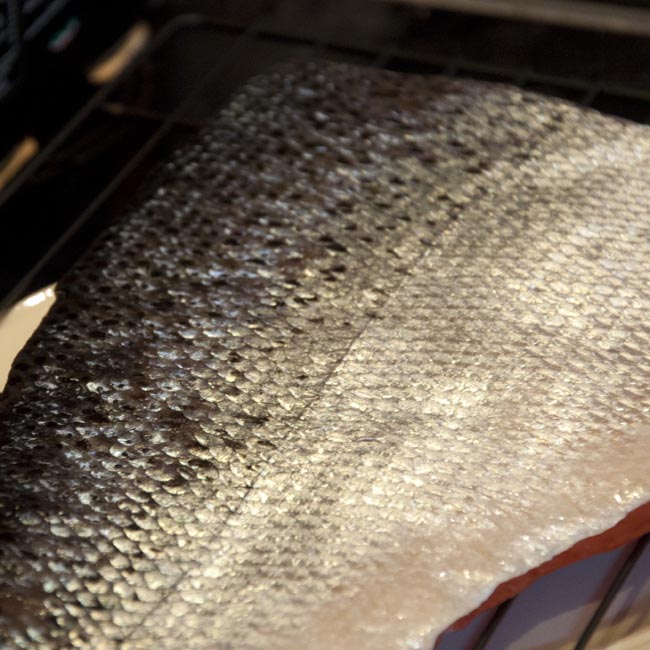
Cured salmon skinOnce rubbed in the cure, with a thin layer in the dish beneath the fish, I covered the fillet pieces with cling film and weighed them down with most of the canned goods in my larder!  I turned them every couple of hours.  At the end of the six hours a really quite striking amount of liquid had been drawn out of the fillet by the osmotic action of the salt and sugar.  More striking than that was the effect of the curing process on the salmon skin, which had reverted from the rather soft pliable texture you expect, to a firm, almost cardboard-like texture with the beautiful blue iridescence you would normally see only in the skin of a freshly caught fish.  More culinary alchemy, and quite beautiful!

Cured salmon before smokingAfter washing and drying, the salmon pieces went into my fridge on open racks overnight.

The next morning, they were part of the second smoker run, and smoked for 10 hours over a mix of oak and apple wood.

After smoking I portionned the fish for freezing, which also gave me a good chance to examine it in cross-section.  The thinner tail piece is perfect, I think.  I cut some slivers from the surface and tasted them fresh from the smoker, it’s some of the best smoked salmon I have ever tasted – a gentle saltiness and sweetness, the oiliness of the fish mixing with a soft smoky flavour and perhaps, with a little faith, even the faint bite of the whisky in the background.  In cross section it is an even translucent orange-pink all the way through and a nice firm texture.

The thicker head-end half of the fillet is not quite such an unmitigated success.  There is a clear visual and textural distinction between the skin 1/3rd of the piece and the rest, with the flesh nearest the skin softer, pinker, and with more distinct fat-lines visible.  In all respects, this part of the fish is much closer in appearance to a fresh fillet than to a cured and smoked one.  I can only assume that the cure mix was not able to penetrate well through the skin (which in retrospect I should have checked was properly scaled) and had not had the time in the cure to be reached from the other side.   It’s not a terrible disaster as these pieces are now frozen and will be perfect to use in dishes like the creamy smoked-salmon pasta, but I don’t think they’re suitable for eating raw.

The options for addressing this, as far as I can tell are –

  1. Skin the fillet – not appealing as a plan, as it will reduce the structural integrity of the fillet and make it harder to slice thinly as smoked salmon later, also I think skinned fillets are a lot less visually appealing!
  2. Cure the salmon for longer, perhaps 8 – 10 hours – also not very appealing, as the flavour of the salmon is, in my opinion, perfect as it is, and I would not like it any saltier
  3. Do something to the skin side to help it absorb the cure better – certainly making sure the skin is fully scaled may well help here, but I’m also tempted to do something in the way of shallow piercing / scarifying of the skin to help the cure penetrating.  I have ordered (Amazon to the rescue again) a device called a blade tenderiser, intended for making lots of stab incisions in steaks before cooking, which I think with some minor modification to control the stabbing-depth may well do exactly what I want to the skin on the thick end of the fillet without too much faff.

Watch this space for the third effort – I’m running out of time before Christmas now so the third time had better be the charm!

Sugar and spice – Christmas baking, seasons and memories

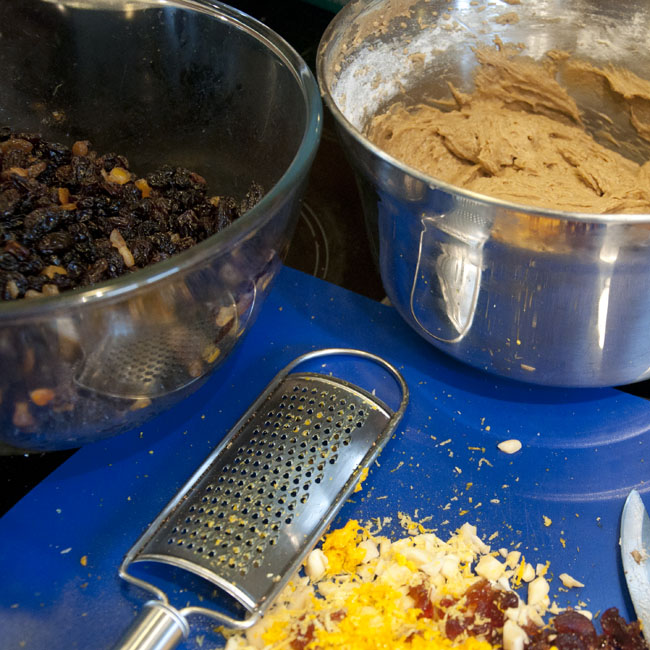
Christmas cake ingredientsToday I baked our Christmas cake.  I’m not going to insult your intelligence by claiming it’s my recipe – that credit goes to the great Delia Smith – but it is, in some sense, still a ‘family’ recipe.  It’s the cake my mother makes, and the one I made with my grandmother when I was growing up.  I still make it almost exactly like she did.

The smell of citrus zest, calvados, and freshly grated nutmeg can only mean Christmas isn’t far around the corner. Folding the fruit into the cake mixture, heady scents filling the kitchen, is a mix of excitement about the festive season to come, and remembrance of past Christmases, and those we spent them with.  Every year, when I bake my Christmas cake, I think of Grandma – I remember making this cake with her, in her kitchen, all those years ago.

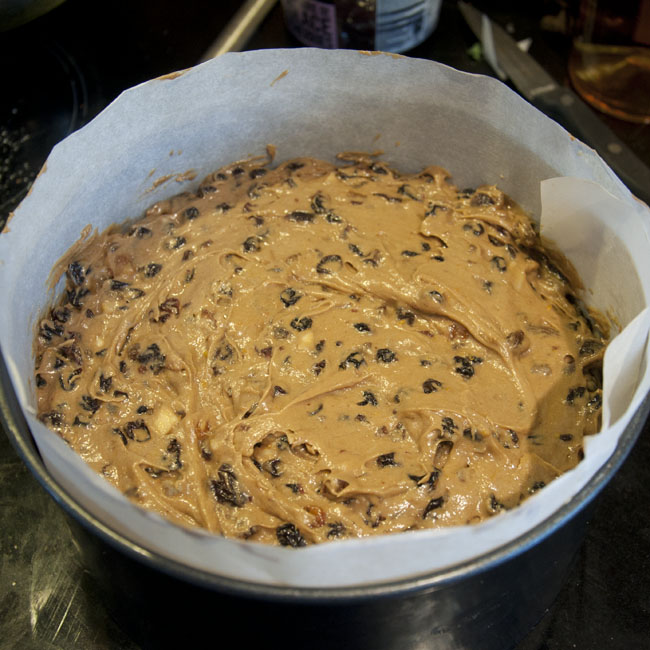
Cake in tinIn my first year at university, some time in November, I remember going into the big, academic bookshop, and digging out a copy of Delia’s Christmas cookbook.  That year, I made my own cake, and I’ve made one every year since then.

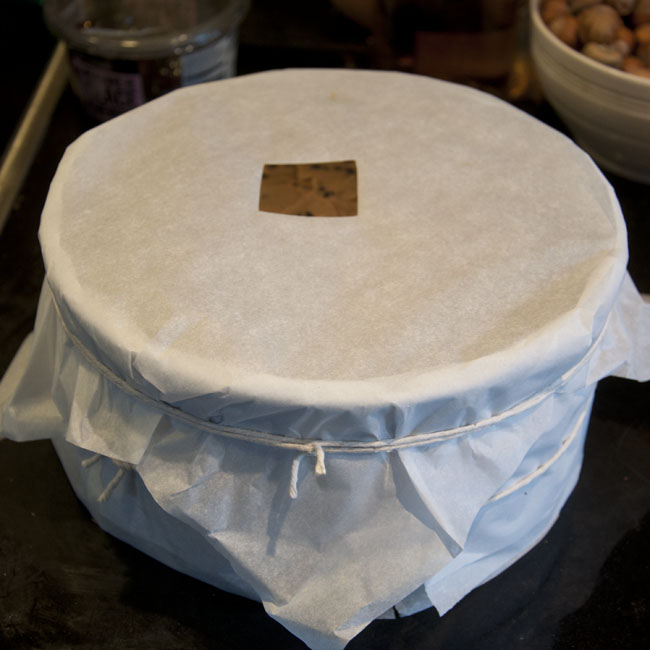
Wrapped and ready for the ovenIt still gets double-wrapped in baking parchment before going into the oven, just like my Grandma taught me.  And even though the fashion these days runs more to smooth white icing, it will still get covered in marzipan and then daubed roughly in a royal icing snow-scene and topped with a marzipan poinsettia, just like my Grandma’s used to.  Though of course I’ll probably only get around to it on Christmas Eve.  Grandma I think would have been better organised!

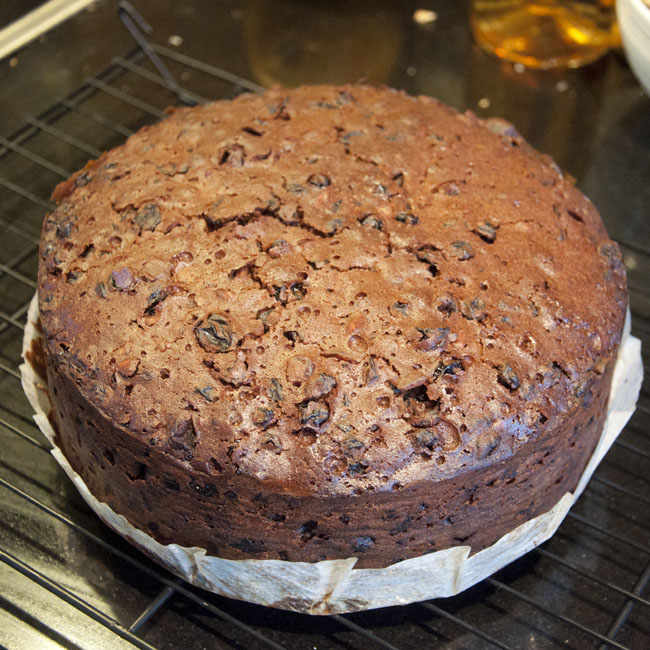
Cake coolingWe forget too often these days what our food says about us, about where we come from, and the people we’re connected to.  Seasonal foods – big obvious ones like Christmas cakes, as well as more modest ones like the first asparagus of summer – connect us with the turning of the seasons as well as back through our memories to previous years and previous feasts.

I hope you enjoy your festive preparations, and create some new, wonderful memories with people you love!

Deck the Halls – quick & easy Christmas bunting

Time: an hour or two – Difficulty: low (assuming you can use a sewing machine) – Cost: less than £5

Don’t you love bunting?  Not only is it very pretty, it seems to be bang on trend right now, if the smart interiors boutiques where I can’t afford to shop are anything to go by!

Christmas bunting

A while ago, I (maybe foolishly) volunteered to make a load of bunting to help decorate the village hall for my little sister’s wedding reception.  Before embarking on the epic effort, I thought it might be best to do a mini version to iron the kinks out of my process.  Christmas is coming, so what better than a bit of Christmas bunting for the hallway?

For this project, you will require –

  • A sewing machine (capable of straight stitch – so any sewing machine will do!)
  • Straight scissors and pinking shears
  • Scrap card for a template
  • Bias tape, as much as you want your bunting to be long, and the colour of your choice.  Double fold tape will save you the fold-and-iron process, but may not be as easy to get hold of.
  • Sewing thread to match or contrast with the bias tape.  I find if I’m trying to match a colour and I don’t have a really close match – as in this case, all my greens were too light or too yellow – it’s better to find a neutral colour which matches the tone.  I used a dark grey for this bunting.
  • Some suitably festive fabric.  I used mainly scraps left over from previous Christmas crafting.  If you want to use new fabric a single fat quarter should be enough to make 6m of bunting with quite modest 4″ x 6″ pennants spaced 6″ apart.

Bunting template

Realistically you probably have all of the non-consumables or none of them – 6m of bias tape cost me less than £2, and I had the leftover fabrics already.

This is a single-sided bunting, if you use printed fabrics like I have.  If you use fabrics which have two good sides, of course, you don’t need to worry about that.  I like the effect of the pinking-sheared edges, and it saves an awful lot of time over hemming.

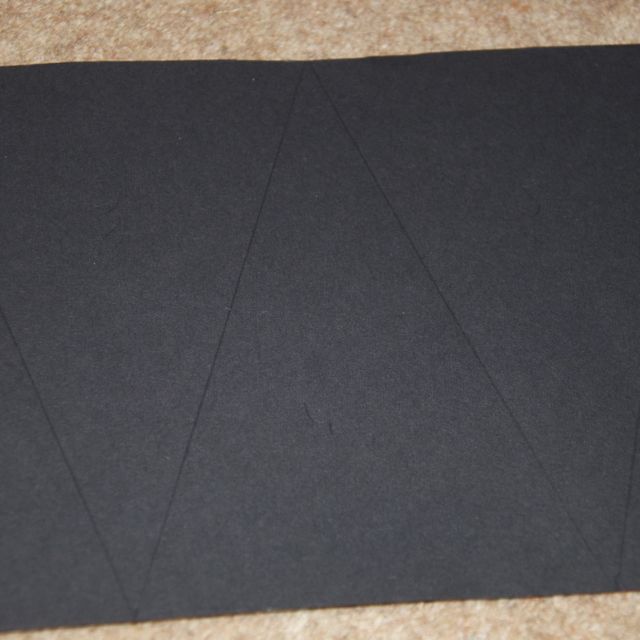
My bunting templateStart by making your template.  I drew mine out for triangular pennants 6″ long and 4″ wide at the top (the whole template is 20″ x 6″).   If you’re using lots of small fabric scraps, you may also make to want a template for a single or a pair of pennants.  Give some thought to what spacing you’re going to want to have between your pennants.  I went for 6″ – the same as the length of the pennant.  Any more than this I think looks a bit sparse, closer and you’ll need more time and fabric to make extra pennants – at the end of the day it’s up to your taste!  Work out how may pennants you’re going to need by applying some basic primary school maths to the problem.   Remember to leave a bit more bias tape at the ends to give you enough to tie the bunting by.

Bunting pennantsUsing your template, mark up your fabric.  I used a biro to mark up the back of the fabric.  You might want to use something a little less crude, if you have it!  Then cut the top of the pennants with the straight scissors, and the sides with the pinking shears.  You’ll notice the lines I’ve cut aren’t quite strictly straight, because my pinking shears aren’t long enough to cut the side in a single action.  I don’t think it matters!

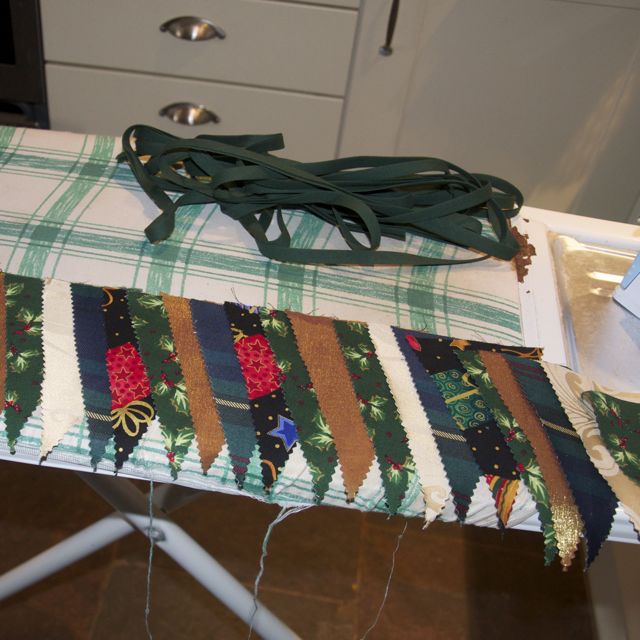
After ironingOnce you’ve cut all your pennants, it’s probably a good time to iron them.  At the same time, if you’ve bought single fold bias tape (bias tape which has the two edges folded in but isn’t yet folded in half) then use the iron to fold this in half and set the fold. Then decide how you want your pennants ordered, if they’re not all the same.

Pinning pennants in placeNow, starting from the centre to ensure they’ll be evenly distributed, start pinning your pennants into the bias tape.  I marked my 6″ gap onto the edge of a piece of card to help me space them consistently – it’s quicker than using a measuring tape or a ruler every time.  Try to be reasonably accurate but don’t stress over it.

Sewing buntingOnce all your pennants are placed, it’s time to sew.  I just used a single row of straight-stitch as close to the open edge of the bias tape as it was practical to do quite quickly.  You could also use a zig-zag stitch, if you prefer.  As you get to each pennant, just make sure the top is placed as far into the fold of the tape as possible, and lying nice and flat, before you sew it in place.

Bunting, folded for storageChristmas bunting - completedThat’s it, keep sewing until you’ve reached the end of your tape and all the pennants are secured in place.

Doesn’t it look pretty?  I can’t wait for Christmas now!

Read more from the Country Skills blog >>