Big Bacon Challenge: Day Two – carry on as before!

This is where it all starts to get a little bit repetitive.  Today – just like yesterday – take the bacon out of the fridge, pour off the pickle, re-apply the dry cure (another quarter or fifth depending on whether you’ve got belly or loin) turning the bacon the other way up, and put it back into the fridge.

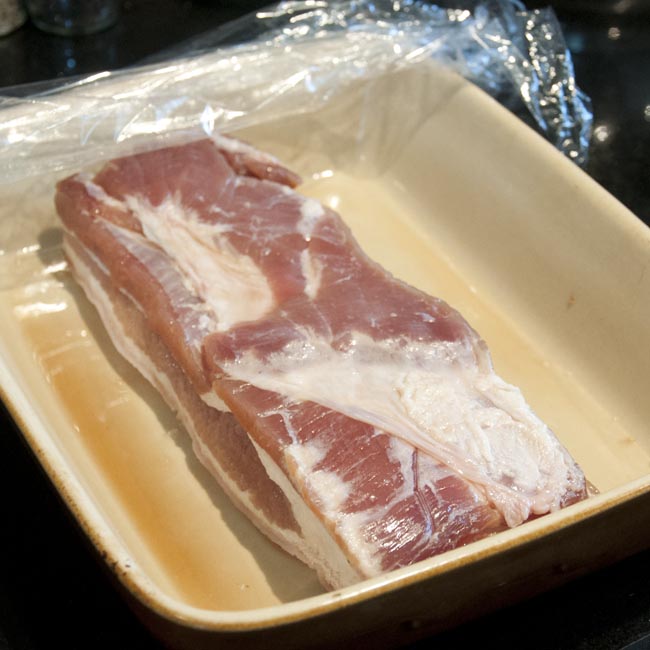
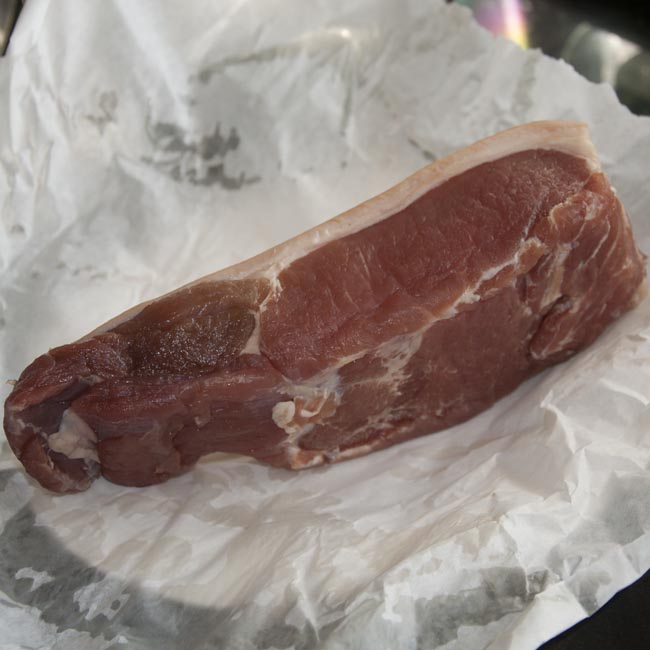
Bacon - day 2There’s something special today, though – you should start to notice a change in the appearance and texture of your meat – already it’s less like pork and more like bacon, it may be visibly darker pink in colour than it was, and will certainly be starting to feel firmer, all of which is evidence that the cure is being absorbed, water is being removed, and the character of the meat is changing as a result – it’s the alchemy of curing, and it’s exciting to see each and every time.

All the Big Bacon Challenge posts will be collected under the ‘BigBaconChallenge’ category heading – so go there to read them all!

Read more from the Country Skills blog >>

Big Bacon Challenge: Day One – getting into the swing of things!

What you do with your bacon today is the template for the next few days, really.

Bacon with pickle aroundGet your container out of the fridge.  You’ll notice the liquid in the bottom – its  probably a brown colour from the sugar in your cure.  This is called the pickle and is completely normal – it’s made up of salt and sugar from the cure, and liquid being drawn out of the meat – but we want to get rid of it, or our dry cure will turn into a brine cure pretty quickly.  So hold onto your bacon securely while you pour the pickle away.  Don’t bother trying to dry the meat or the dish or anything like that, though.  You might also notice, like mine, that the skin of your bacon has gone a bit blotchy.  This is because of uneven distribution of the cure at this stage, and isn’t anything to worry about.

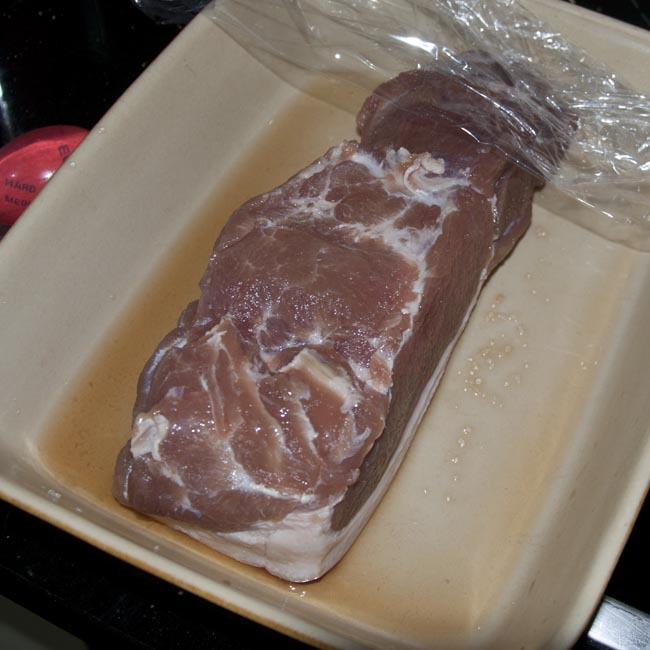
1-day bacon, with dry cureNow look at the dry cure you have left over and roughly divide it into four parts (or five, if you’re making back bacon).  Accuracy isn’t important here, just more-or-less.  Now rub your quarter (or fifth) of cure all over the bacon like you did yesterday, leaving the bacon the other way up in the dish – so if it was skin-up yesterday, skin-down today.

Bacon with cure re-applied, after first 24hrsThat’s it, about a minute’s work. Just replace your clingfilm and put the dish back in the fridge.

All the Big Bacon Challenge posts will be collected under the ‘BigBaconChallenge’ category heading – so go there to read them all!

Read more from the Country Skills blog >>

Big Bacon Challenge: Day Zero – time to begin!

So, now you’ve (hopefully!) received your pack of curing salt, have laid your hands on a promising looking piece of pork, and are raring to get going turning it into bacon.

Belly pork, skin side upFirst of all you may need to do a bit of preparation with your pork.  If it came as a tied ‘joint’, cut all the string and flatten it out.  Rinse it under cold water before drying carefully with some paper towel if there’s any loose material on the surface left over from butchering, or if it seems ‘wet’ – this is more likely to be the case if it’s been vac-packed or previously frozen.

Belly Pork Piece - trimmed with skin-side downA loin piece should require no further preparation, though you might want to trim away any really loose bits of meat.  If your belly piece has come from a butcher or farm shop there may still be ribs on the inside surface.  Trim these away from the rest of the meat, preserving as much flesh as possible.  You also want the non-skin side to be able to absorb the cure as well as possible, so if there’s a thin layer of fat on this surface, you want to remove it.  It should peel away carefully, or use a sharp knife.

Now weigh your prepared meat and make a note of the weight in grams. Mine weighed very slightly under 600g.

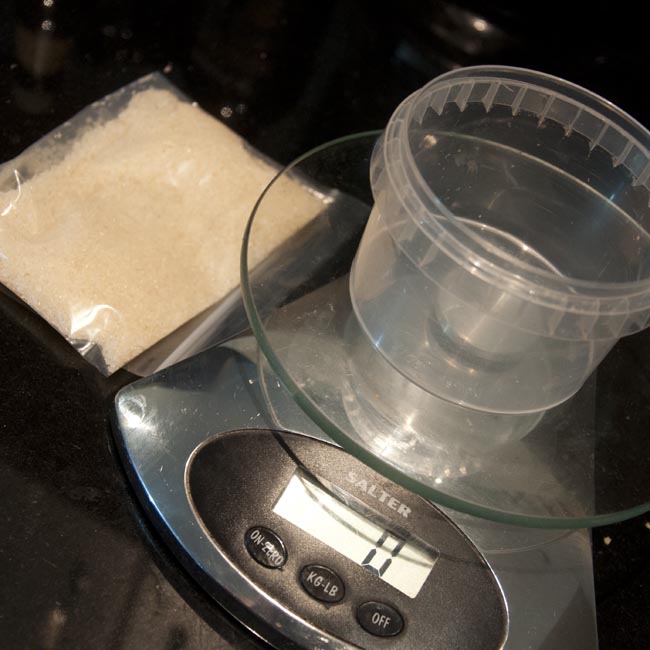
Weighed-out curing saltThe total cure weight is going to be 10% of the weight of the meat – so for 600g I’m looking for a total weight of cure of 60g, which is going to be 80% curing salt and 20% sugar – so in my case 48g of salt and 12g of soft brown sugar.  Mix these together thoroughly in your airtight container.

Weighed-out cure mixYou’re ready to take your first steps in the ancient culinary alchemy of curing!

Belly pork with cure applied - skin-sideTake some of your dry cure and rub it all over all the surfaces of your meat.  There’s no hard and fast rule about how much to use for this first application, but I tend to use about 1/3rd of the total cure mix.  The cure will absorb least well through the skin, so while you should still rub some of the cure onto this surface, concentrate on getting the cure in to contact with the meat.

First batch of cure applied, skin-side downNow place your cured pork into your non-metallic dish, cover loosely with cling film, and put it in the fridge until tomorrow.  If you peek later, don’t worry if you start to see liquid in the bottom of the dish – this is quite normal and shows something’s happening!

Remember to seal the container with the rest of the cure in to keep the air and moisture out!

Please do keep me posted on your progress!

All the Big Bacon Challenge posts will be collected under the ‘BigBaconChallenge’ category heading – so go there to read them all!

Read more from the Country Skills blog >>

Big Bacon Challenge: Day Minus One – getting ahead!

So, welcome all to the first post of the Big Bacon Challenge series – I’m so excited!   I put the curing salts in the first class post today to those of you who have asked for them, so I hope they should arrive with you in the next day or two.  In the mean time, there are a few things you can do do get ahead – and I’ve already had one request for starting instructions!

Belly Pork PieceIf you haven’t already found it, start looking for a piece of pork to cure.  Pork belly will make streaky bacon in five days, and a piece of pork loin will make back bacon in six.  I suggest looking for a piece about 500g in weight for your first attempt (and this will leave you enough left-over cure to make another piece afterwards, possibly with some different flavours in the mix!).

You’re looking for a nice quality piece of pork, ideally with the skin still on.  It’s not a problem if the skin has already been scored – as it often will be on a piece ‘intended’ for roasting – in fact I think it helps the cure penetrate more evenly.  In a perfect world it would be gorgeous free-range pork from your local farm shop or butcher, but even a bargain piece of belly from the ‘value’ meats section of the supermarket will produce better bacon than you can imagine, so don’t fret too much – it’s just an experiment, after all!  The important thing is that it should be nice and fresh, so buy it as close as possible to starting the curing process.

Now’s a good time to assemble all the extra bits, too.  You’ll be needing:

  • Scales and curing saltA non-metallic dish for curing your bacon in.  I generally use a stoneware or pyrex oven dish, as this can be covered without the cling film coming into contact with the meat so the air can circulate.  Mind you, I’ve seen variations on dry curing that suggest packing all the cure and the meat in a plastic bag for a week, so I’m not sure the vessel makes all that much difference!
  • Some nice dark sugar – between 20 and 40g depending on the weight of your pork, soft dark brown is ideal, or try muscovado or even molasses sugar for a really dark intense flavour hit.  
  • Something airtight to hold your made up cure – I use a small recycled plastic tub with a snap-on lid, but a ziplock bag would also be fine. 
  • Kitchen scales.
  • Cling film.

If you’re getting so excited you just can’t wait, you can get going already following the older posts on making streaky bacon and back bacon.  Or, if you can bear to wait until tomorrow, we’ll start the series of day-by-day instructions, in much more detail!

I can’t wait to hear how all my volunteers are getting along, so please do comment as we go!

All the Big Bacon Challenge posts will be collected under the ‘BigBaconChallenge’ category heading – so go there to read them all!

Read more from the Country Skills blog >>

Bloggers – Your Country (Skills Blog) Needs You!

I’m still looking for a handful of volunteers for Kate’s Big Country Skills Bacon Challenge!

If you want to try something new and very cool – making your own bacon at home – and have a UK postal address, get in touch, and I’ll provide the curing salt.  Then, just brag about your bacon wherever you blog and to whoever will listen!

Thank you everyone, I now have a full set of volunteers!  Instructions, and hopefully feedback, coming soon!

Finally – Kate’s Big Country Skills Bacon Challenge is here!

I love home-cured bacon, and I think you will too!  The experience of making streaky bacon for the first time was one of the main motivations behind setting up this blog, and more recently I’ve had great success with home-cured back bacon, too.  And yet despite how simple it is, and how wonderful the final product, the most common reaction I get is ‘Oh but that sounds very complicated, you’re braver than me!’.

Home-cured back bacon

In order encourage as many people as possible to try this simplest of all foody experiences, I’ve come up with the following, very simple plan.  I’m calling it ‘Kate’s Big Country Skills Bacon Challenge’.

I will post an 80g pack of ‘Supracure’ curing salt (enough to cure up to 1kg of bacon) to the first 10 people to send me their UK postal address.

Then, I’ll post day-by-day instructions to follow.

Thank you everyone, I now have a full set of volunteers!  Instructions, and hopefully feedback, coming soon!

That’s it, simple as that!  All I want from you in return is to make your bacon, and to write about it, take photos of it, tweet about it, post to facebook about it and generally brag to anyone who’ll listen about how awesome, easy and worthwhile it is!  With any luck, for some of you it may even become a habit of a lifetime.

In order to make your very own bacon, you will need to provide a piece of fresh pork belly or pork loin up to 1kg in weight (ideally with the skin on), a non-metallic dish big enough to hold the meat, ~20g of sugar (soft dark sugar is best), some cling film, a refrigerator, and a couple of minutes a day for five consecutive days.

Read more from the Country Skills blog >>

Back To Basics – home cured back bacon from start to delicious end

Home cured streaky bacon has been a constant fixture in my house since I first made it back in October – in fact I’ve not bought any ‘commercial’ bacon since.  Back bacon used to be our house favourite though, before I started curing.  A couple of weeks ago I saw a tied pork loin ‘roasting’ joint for sale half-price in the local co-op, and it seemed to good to refuse.

Home-cured back bacon

For home-cured back bacon, you will require –

  • Ingredients for home-cured back baconA piece of pork loin.  The roasting joint was a bit big so I cut it in half to give me a piece about 650g in weight.
  • Curing salt such as Supracure (see the Suppliers List for details), 8% of the total weight of the meat, and
  • Sugar (soft brown sugar is ideal) 2% of the total weight of the meat, to make a total cure weight of 10%
  • A non-metallic dish big enough to contain the meat, and some cling film to cover.
That’s it – I wanted to keep the first effort as simple as possible!

First day - dry-cure rubbed in

Weigh out the cure ingredients and mix them together well.  Now rub about a quarter of the cure mix all over the pork, including on the skin.  You can see it start to draw out moisture from the meat straight away.  Cover the dish loosely with some cling film, and put it in the fridge until tomorrow.

Second day - with 'pickle' in dishThe next day, there will be some liquid in the bottom of the dish.  This is the ‘pickle’ and is made up of some of the curing mix dissolved in the liquid that’s been drawn out of the meat.  It’s completely normal, so don’t worry.  Pour it away, or your dry-cure will pretty quickly turn into a brine cure.  Now take about a quarter of the remaining cure and rub it all over the meat again.  Put it back in the dish the other way up to last time (so skin side up, if you started skin-side down).

Third day - the bacon should be changing texture by this timeRepeat this process for another three days (so that you’ve rubbed cure into the bacon five days running).  By day 3 you should notice a distinct difference in the texture of the meat, it will be firmer in consistency and a bit darker pink in colour.

Finished back bacon, ready to sliceOn the sixth day (so one day longer than the streaky bacon process – this is because the meat is thicker than belly pork), remove the bacon from the dish, rinse it under the tap, dry it carefully with kitchen towel, wrap it loosely with greaseproof paper and put it back in the fridge.  Ideally, wait a couple of days before you start eating it, do let it rest at least overnight.

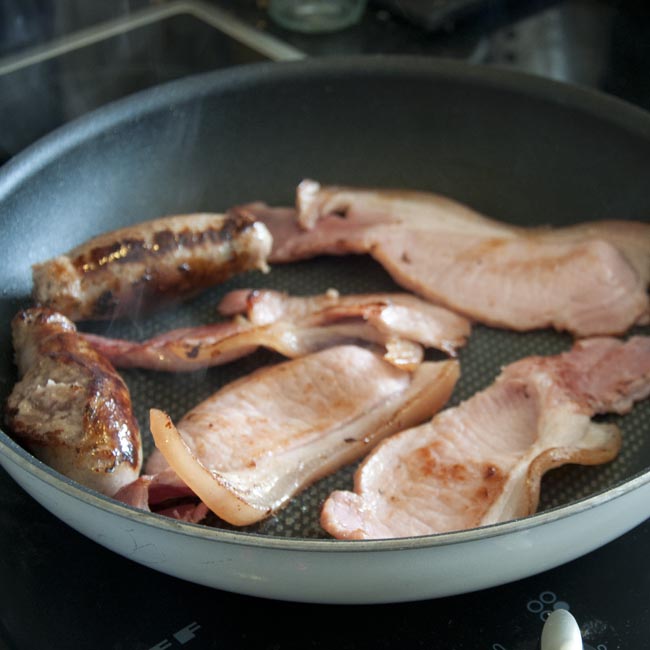
Home-cured bacon, fryingThen slice your amazing bacon with a sharp knife, and cook however you prefer.  I like to pan-fry my back bacon.  This one is gorgeous and I can only heartily recommend you make some for yourself!

Read more from the Country Skills blog >>


Banner320-260

A little egg-centricity – all about the chicken and the egg

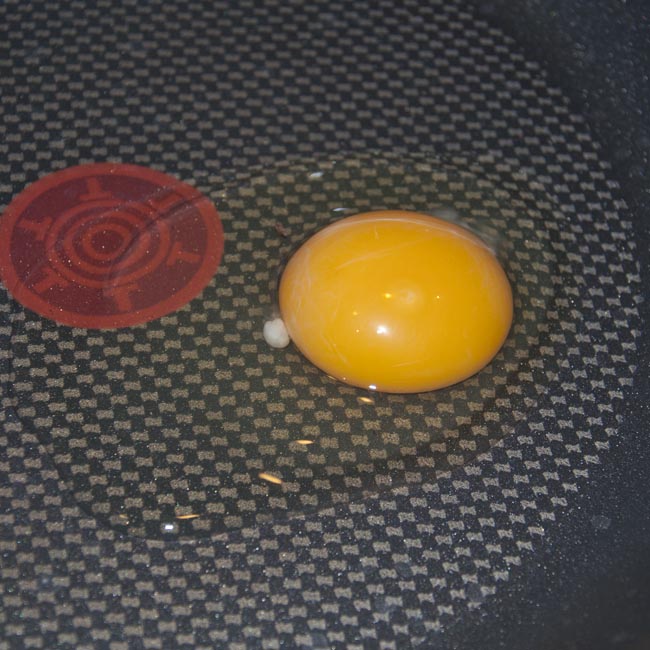
Nothing beats a really fresh free range egg.  For breakfast, fried or poached, boiled or scrambled, or for lunch in an omelette, a really fresh egg – preferably laid this morning – is head and shoulders above any other egg you’ve ever tasted.  You can see the difference straight away, even before you crack it – the shell may well be a bit grubby, and a slightly funny shape, an unexpected or uneven colour.  When you crack it open, the egg white is firm and ‘sits up’ in the pan, and the yolk is a deep orange, and bigger than you expected – if beaten, the raw egg is a rich dark yellow, rather than off-white.  In your mouth the yolk is velvety and rich, creamy and almost sweet with a luxuriant almost-custard quality and the white is firm but never rubbery – a million miles away from the flaccid anaemic and tasteless output of battery cages and the supermarket supply chain.
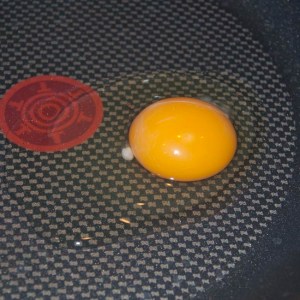
Fresh egg

It’s a sad fact that in the supermarket dominated, urban West, most people have probably never tasted a really good, fresh egg.  We think of eggs as being uniform, sized and graded, cheap and frankly, dull.  But they’re a natural product, and they vary – in size, colour and shape – and from the very firmest, freshest example, to the end of their storage life when the egg white is watery and the best of the flavour is gone.

I said nothing beats a very fresh egg, but of course that depends what you’re doing with it. If you want to beat the egg and use it to help with raising – in baking, or a soufflé – or you want hard boiled eggs peeled for a Salade Niçoise, then the very freshest eggs aren’t for you.  The egg white – the albumen – is actually in two parts.  The outer albumen is quite watery, you can see it spread out in the pan in the photo above.  The inner albumen is much more firm in a very fresh egg (but in an egg which has been stored for some time you probably won’t be able to see a distinction between the two).  In a very fresh egg this inner albumen has too much structure and tends to want to hold together, which doesn’t allow the batter to rise properly.  Furthermore, if you hard boil a really fresh egg and then remove the shell, the outer albumen will come away with the shell, which is a waste and makes for a scruffy-looking boiled egg.  Eggs about a week old are best for baking and hard boiling – realistically you won’t get eggs much fresher than this from the supermarket, though.
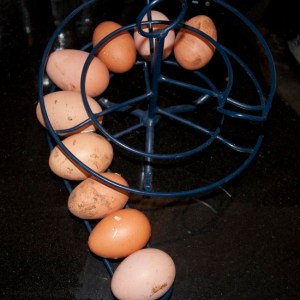
Egg storage

These are my eggs, and three things are obvious – first the range of shapes and sizes, secondly that they’re in some sort of wire device (it’s called an Egg Skelter, and I wouldn’t be without it) and not in the fridge, and thirdly that, frankly, they’re a bit grubby!

The size variability is something that you have to make adjustments for with ungraded eggs.  My approach is to weigh them and then adjust according to standard size references.  The Lion Egg Scheme people have a size guide here.

Fresh eggs will keep safely at room temperature for 3 weeks (it’s no coincidence that this is the length of time they have to stay ‘fresh’ under a warm hen if being hatched!), but if you do put them in the fridge, then you need to leave them there.  If eggs are removed from refrigeration, moisture condenses on the outside of the shell and can then be drawn through into the inside of the egg by osmosis, potentially pulling pathogens from outside the shell into the egg itself and increasing the risk of food poisoning.  My eggs don’t sit around for anything like three weeks (if I have a glut I know plenty of people who are happy to help me deal with it!) so storage at room temperature is ideal.  Better still, the egg skelter enforces first-in-first-out use, which is trickier with other storage systems.

So you’d think washing the dirt from the outside of the egg would be a good idea, right?  In fact dissolving these contaminants in water, and disrupting the outside surface of the shell, also increase the risk of pathogen entry.  Much better to leave grubby eggs as they are, and rub off any loose dirt and mud from the surface just before use.  Egg washing is not permitted in the production chain for commercial shell eggs in the UK, on a risk assessment basis, though it is common practice in other countries including the US (they tend to wash in a chlorine solution – because bleach is what you want in your eggs!).  This goes some way to explaining the obsession with clean eggs in intensive production systems – and the resulting battery cages (improved, but not yet gone), as ‘dirty’ eggs are downgraded.

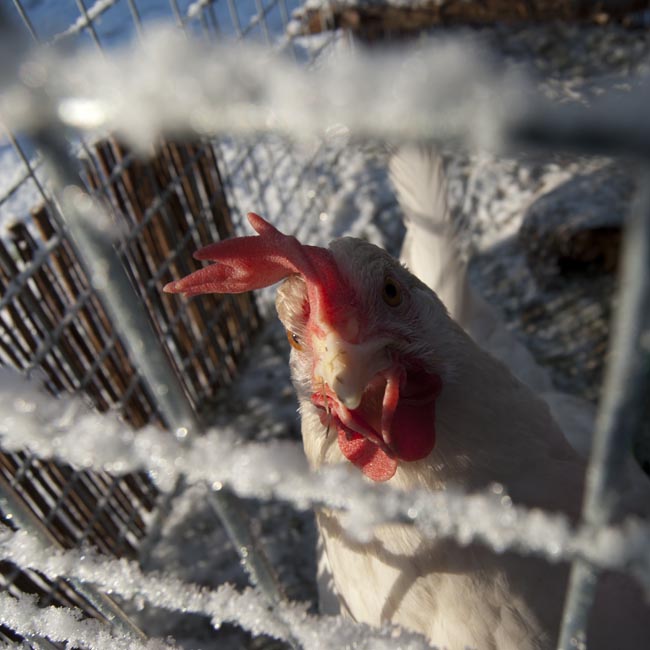
I’ve kept hens for two and a half years now.  I wasn’t expecting get as attached to them as I have, they’re fascinating animals.  Funny feathery little dinosaur-descendants they certainly are, they’re inquisitive, social (and not always sociable!) little creatures.  Only when you’ve watched hens scratch around for bugs, enjoy a bit of a flap and a wing stretch, and then settle down into a well-earned and apparently thoroughly indulgent dust bath, can you really start to understand how inhumane intensive cost-led egg production systems are.  This is Gertie, by the way, my ‘top hen’, being a bit confused by her first sight of snow, and wondering what I’m doing with that camera.

Outdoor hen

You may not be able to keep your own poultry, but if only for the sake of your palate (never mind the quality of life of the poor intensive egg-producing bird) it’s worth seeking out the best and freshest outdoor reared eggs you can find – farmers markets and farm shops are a great place to start – or ask around, you may be surprised to find a colleague keeps backyard hens, and if you’re really super nice to them, they may be prepared to share! Then, enjoy your wonderful, freshest eggs, with the best home cured bacon for the most amazing breakfast fry-up you’ve ever tasted.

Read more from the Country Skills blog >>

Scaling Up – second attempt at smoked salmon

Buoyed up by the success of my first attempt at curing and smoking a very small salmon tail fillet, and tempted by the whole sides of salmon that appear in the shops at this time of year, I thought ‘hey, why not?’ and asked my husband to pick one up when he was shopping.  Having got it home and looked at it, in all it’s 1.75kg glory, and about an inch and a half thick at it’s thickest point, I did wonder if I hadn’t perhaps bitten off a bit more than I could chew…  so like any sensible experimental cook, I put the thought firmly to the back of my mind and got on with it anyway.

Before curing I decided to add a bit of flavour to the fillet in the form of a bit of a whisky infusion, so a tot of Laphroaig went into the bag with the fillet for an hour or two.  In retrospect I should have got the fillet out, washed and dried it and deprived it of its pin bones before doing anything with whisky, as I’m pretty sure that most of the flavour I added got washed away at this slightly later preparation stage.   Lesson learned!

After that, I cut the fillet in half (none of my oven dishes is anything like long enough to take a whole fillet in one go, and my fish kettle is metal and not really suitable for curing) and rubbed it generously with the cure mix which, as last time, is 2/3rds table salt and 1/3rd golden caster sugar.  In aiming for a very short cure period (about 6 hours) I’m keen to make sure the pickle doesn’t become unsaturated, so I use a lot more cure mix than I probably need to in order to get maximum water extraction during the short contact time.  I made up about a pound of cure mix, though I didn’t use it all.

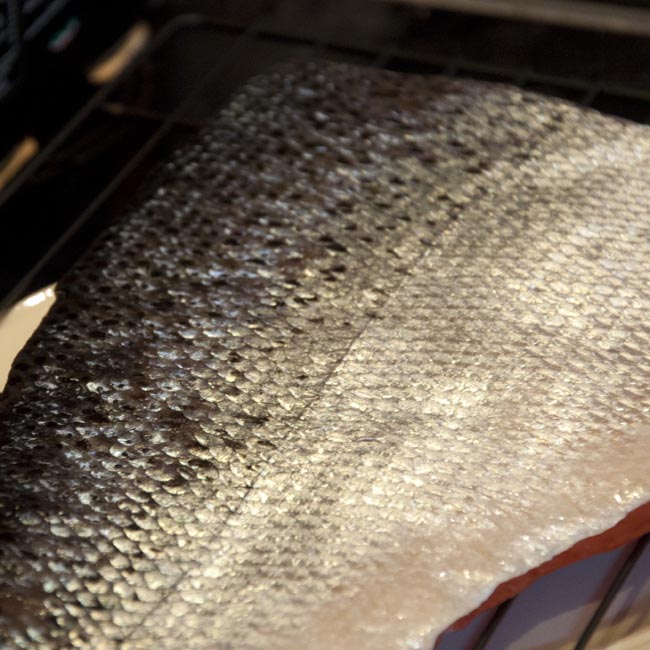
Cured salmon skinOnce rubbed in the cure, with a thin layer in the dish beneath the fish, I covered the fillet pieces with cling film and weighed them down with most of the canned goods in my larder!  I turned them every couple of hours.  At the end of the six hours a really quite striking amount of liquid had been drawn out of the fillet by the osmotic action of the salt and sugar.  More striking than that was the effect of the curing process on the salmon skin, which had reverted from the rather soft pliable texture you expect, to a firm, almost cardboard-like texture with the beautiful blue iridescence you would normally see only in the skin of a freshly caught fish.  More culinary alchemy, and quite beautiful!

Cured salmon before smokingAfter washing and drying, the salmon pieces went into my fridge on open racks overnight.

The next morning, they were part of the second smoker run, and smoked for 10 hours over a mix of oak and apple wood.

After smoking I portionned the fish for freezing, which also gave me a good chance to examine it in cross-section.  The thinner tail piece is perfect, I think.  I cut some slivers from the surface and tasted them fresh from the smoker, it’s some of the best smoked salmon I have ever tasted – a gentle saltiness and sweetness, the oiliness of the fish mixing with a soft smoky flavour and perhaps, with a little faith, even the faint bite of the whisky in the background.  In cross section it is an even translucent orange-pink all the way through and a nice firm texture.

The thicker head-end half of the fillet is not quite such an unmitigated success.  There is a clear visual and textural distinction between the skin 1/3rd of the piece and the rest, with the flesh nearest the skin softer, pinker, and with more distinct fat-lines visible.  In all respects, this part of the fish is much closer in appearance to a fresh fillet than to a cured and smoked one.  I can only assume that the cure mix was not able to penetrate well through the skin (which in retrospect I should have checked was properly scaled) and had not had the time in the cure to be reached from the other side.   It’s not a terrible disaster as these pieces are now frozen and will be perfect to use in dishes like the creamy smoked-salmon pasta, but I don’t think they’re suitable for eating raw.

The options for addressing this, as far as I can tell are –

  1. Skin the fillet – not appealing as a plan, as it will reduce the structural integrity of the fillet and make it harder to slice thinly as smoked salmon later, also I think skinned fillets are a lot less visually appealing!
  2. Cure the salmon for longer, perhaps 8 – 10 hours – also not very appealing, as the flavour of the salmon is, in my opinion, perfect as it is, and I would not like it any saltier
  3. Do something to the skin side to help it absorb the cure better – certainly making sure the skin is fully scaled may well help here, but I’m also tempted to do something in the way of shallow piercing / scarifying of the skin to help the cure penetrating.  I have ordered (Amazon to the rescue again) a device called a blade tenderiser, intended for making lots of stab incisions in steaks before cooking, which I think with some minor modification to control the stabbing-depth may well do exactly what I want to the skin on the thick end of the fillet without too much faff.

Watch this space for the third effort – I’m running out of time before Christmas now so the third time had better be the charm!

Aromatics – experimenting with flavoured bacon cures

I’ve now made a couple of flavoured bacons, which I’ve then smoked in my DIY cold smoker.

Black pepper bacon – 

  • 770g piece of pork belly
  • Dry cure made up from 65g Supracure, 15g dark brown soft sugar (~10% total weight of the bacon in cure)
  • 3g of cracked black pepper added to the salt & sugar cure mix
  • Cured according to the Bringing Home the Bacon general instructions
  • Smoked for 10 hours using oak dust

This is a lovely eating bacon, and is likely to become one of our house staples.  The pepper adds mostly flavour, very little heat.  The sweet flavour from the sugar is subtle, but present, and adds nice balance.  It cooks well, too.  Highly recommended.  I think it would also be very nice unsmoked.

Christmas cure spicesChristmas bacon – first attempt

  • 530g piece of pork belly
  • 10% cure mix made up of 36g of Supracure and 17g of molasses sugar
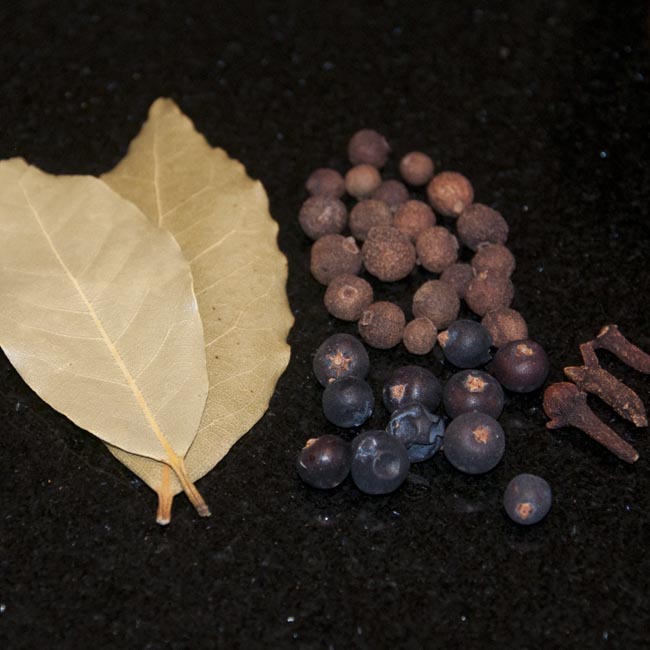
  • One bay leaf, 10 allspice berries, 4 juniper berries, and the berry of one clove (the small ball bit on top of the stem), ground in a spice grinder and mixed well with the sugar & salt
  • Cured in the usual way and then cold smoked for 10 hours in a mix of oak and apple smoke

While the cure did smell a bit medicinal, with a dominant smell of clove, despite the tiny quantity of clove added, it did at least smell convincingly of Christmas.  The molasses sugar gives the cured bacon a really distinctive dark colour to the flesh and to the rind.  Smoked over apple and oak wood dust, it has a lovely sweet complex slightly spiced flavour, and is almost exactly what I was looking for in a Christmas bacon.  It is probably more suited to a cooking bacon (and would make awesome ‘pigs in blankets’ for Christmas dinner) but does also eat very well, caramelising beautifully, if my lunch today was anything to go by!