Last of the Harvest – elderflower ‘champagne’

Elderflower champagne is one of the tastes of summer for me.  It’s quite unlike anything else, and doesn’t keep well, so it’s there, and then it’s gone.  This a really feisty brew which breaks all the rules of home-brewing.  Please, whatever you do, don’t try and generalise from this brew to any other country wines you might like to make!

For a batch of elderflower champagne, you’ll need the following ingredients and equipment –

  • 30-40 good quality elderflowers (depending on the size of the blooms)
  • 2.5kg of unrefined ‘golden’ granulated or caster sugar
  • 5 lemons (unwaxed if possible, otherwise carefully washed in detergent and rinsed before use)
  • 1 lime (as above)
  • 2 tbsp of white wine or cider vinegar
  • 3 – 4 litres of boiling water, plus extra cold
  • Wine yeast & nutrient (optional)
  • Brewing bucket, at least 12l in volume (and a second is very useful – this can double with your spare vessel for the cordial, though!) with lid, or a clean muslin to cover
  • Enough screw-top plastic fizzy drink bottles to contain your brew (10 – 12 litres in total).  Don’t even think about using glass bottles for this brew.

The first rule that gets broken here is sterilisation.  I don’t sterilise my buckets for elderflower brews – I figure I’m about to throw half a hedgerow into it, so sterility is a bit moot!  But do wash and rinse it very very carefully, and if you have any doubt about contamination from a previous dodgy brew then definitely break out the steriliser!

Put all the sugar in the bucket and add enough boiling water from the kettle to dissolve it fully.  Then top the bucket up to about 8l with cold water.  The result should be a blood-warm sugar solution.

Zested citrus & elderflowers

Peel the zest from the lemons and lime with a potato peeler, as thinly as possible (leaving the bitter white pith behind).  Then juice them, and add the zest and juice to the bucket.  Add the two tablespoons of vinegar.

What's left behindNow to the elderflowers.  You’ve selected them carefully, so they’re all lovely and full of nectar and pollen.  You want to add the flowers – but, unlike the elderflower cordial, you don’t just get to shake the bugs off and throw them in, I’m afraid!  This time, you want to add as little of the green stems as you can.  There are several ways of doing this.  I favour just plucking the flowers off pretty roughly with my fingertips.  You could use a fork to ‘comb’ through the little sprigs and pull the flowers off, but you will tend to take quite a lot of fine stem with you.  Or you could snip the flowers off with scissors.

The reason for this bit of faff is to do with a nasty bitter flavour that the stems can impart to your brew, which is what will make it undrinkable, eventually, with storage.  If you’re planning to drink all your elderflower champagne within a couple of weeks of bottling, you probably needn’t bother, but if you’re hoping to get a month or so of drinking out of them, some of the compounds extracted during brewing from the green stems will eventually be converted (by the yeast?  By oxidation? I don’t really know I’m afraid!) into an overpowering bitter note that will make your champagne entirely undrinkable.  If you minimise the stem, you should minimise the taint.
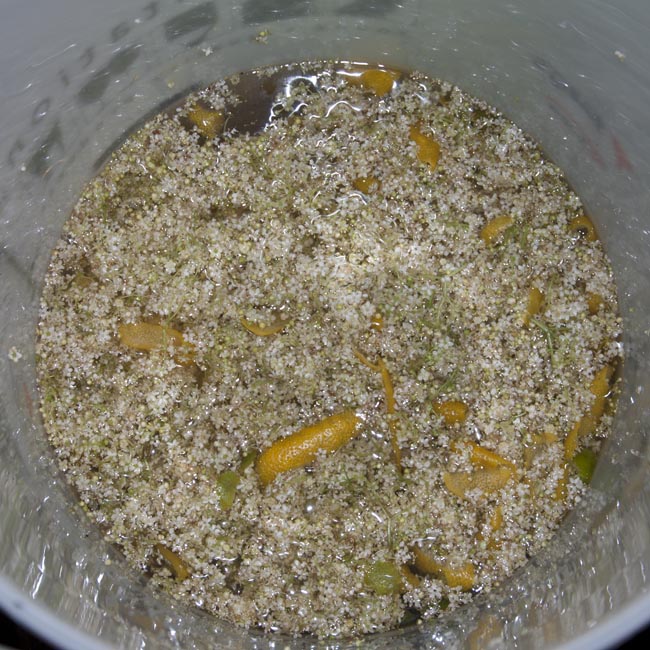
Ready to ferment - elderflower champagne in the bucket

Add all your flowers, then, and you should have an amazing smelling bucket full of flowers & citrus peel.  Top it up to about 11l.  Now add a teaspoon each of yeast and nutrient (if you have some).  Traditionally elderflower champagne is allowed to go on it’s own with the wild yeasts that are expected to be present on the flowers.  I find this unreliable, and want a good predictable outcome.  Loosely cover it with its lid or a double layer of muslin. This is home-brew faux-pas 2 – sorry, no airlock for me!

Signs of fermentation should be evident within a day or so, in the form of bubbles visibly rising to the surface (you may also get a froth, depending on how vigorous your fermentation is).  Watch for a bit, you’ll keep missing them and catching just a little movement in your peripheral vision.  You may also notice the slightly sharp smell of the carbon dioxide.

Leave your champagne to ferment for about five to seven days.  As if we haven’t broken enough rules already, this is where the whole process goes horribly ‘wrong’.  We’re going to make no effort to wait until our brew has ‘fermented out’ (see this cider-making post for discussion if you’re interested), so the brew is still actively fermenting, with the yeasts consuming sugars and producing alcohol and carbon dioxide, when it goes into the bottles.  This ‘quick and dirty’ short cut allows us to go from flowers-into-bucket to drinkable-brew in about a fortnight, which is quite remarkable.  It does however carry a pretty serious risk of producing ‘bottle bombs’ – a quick google for ‘elderflower champagne exploding bottles’ will illustrate how widespread a problem this is.

For this reason, I only use screw-top plastic fizzy drink bottles for my elderflower champagne.  Make sure they’re fizzy drink bottles – the 1 litre and half litre bottles seem most ‘stable’ though you can use the 2l cola or lemonade bottles if you like.  Don’t use bottles from non-sparkling water or fruit juices.  Do sterilise these with home-brew steriliser or milton solution, and rinse carefully before use.

After your brew’s been frothing for a week, filter it through a jelly bag or muslin-lined sieve into the second bucket to remove the solids, and syphon into your bottles (or use a jug and funnel, though this is another breach of ‘protocol’!) and screw the lids down tightly.  I was reminded when doing this this year that the filtration process is can be slow and frustrating – the yeast and pollens clog the jelly bag to a remarkable degree – and in future I suspect I’m going to use a much more open filter – I may even experiment with a nylon sieve (the sort you’d use to sift flour for baking) or something similar.  Using the jelly bag to filter my ~10kg batch took well over two hours, which frankly I could have done without!

Bottled elderflower champagneOnce your champagne is *finally* in your bottles, put them at room temperature somewhere secure where you can keep an eye on them (I tend to store the filled bottles in the washed and dried brewing buckets).

Every day or so, give the bottles a squeeze.  As the brew continues to ferment, the bottles will become harder and harder, and may even start to bulge alarmingly.  If you notice this starting to happen, release the pressure by very gently opening the lid a crack to let the carbon dioxide escape.  You may need to do this about once a day for the first week or so!

Under Pressure!You can see from the photo on the right the extent to which pressure can build up in these bottles – for comparison, the ‘donor’ bottle in it’s original state – the elderflower champagne bottles were filled to just below the neck, and the gas produced has inflated the bottles like balloons, producing a really large volume of extra head-room in the process.  Really, folks, don’t risk glass bottles with this brew!

As soon as you have pressure in the bottles, you can start drinking it – though I suggest waiting a week from bottling before taking your first sip.  As time goes by, the champagne will become ‘drier’ in flavour, and higher in alcohol as the sugars are consumed.  Don’t try to store this brew long-term – once you like the flavour of it, drink it and enjoy it!  I find that even with care, after four or five weeks the flavour is starting to deteriorate.
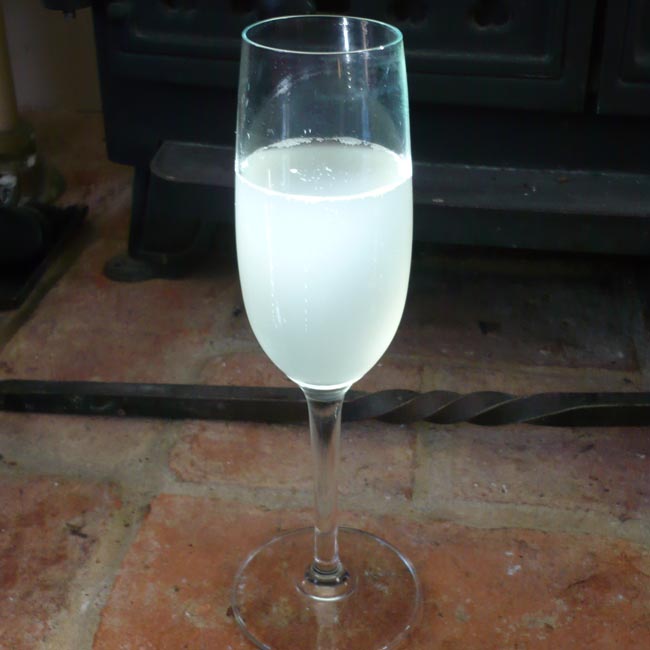
Ready to drink!

Pour, and enjoy this beautiful ephemeral effervescent flavour of summer!

Read more from the Country Skills blog >>
Last of the Harvest – home-made elderflower cordial

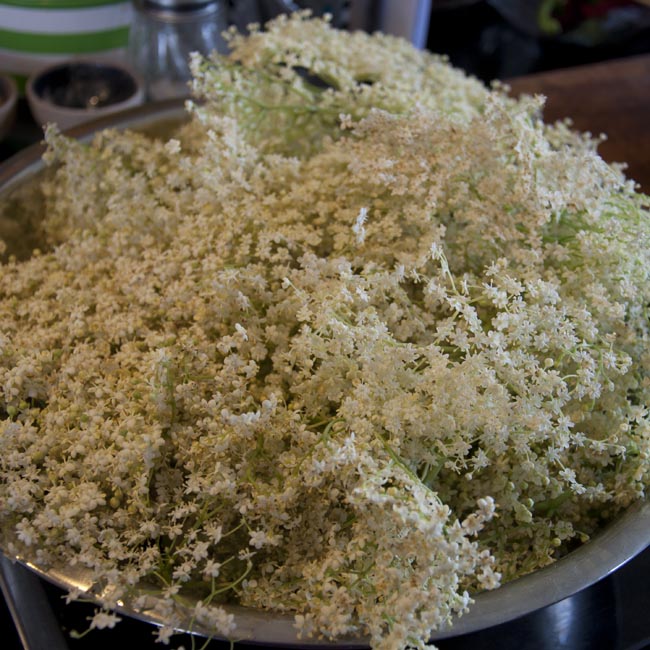
After you’ve picked your elderflowers, it’s time to make some gorgeous drinks with them.  Give them a good look over, and sort through.  Throw out any browning flowers.  Shake out any bugs but do not be tempted to wash them – you’ll wash all the flavour away!  You’ll be straining the ‘bits’ out later anyway, so don’t worry about the odd aphid making it through!

Freshly picked elderflowers

These are the ingredients and equipment you’ll need for the elderflower cordial.  You can scale these quantities up or down to suit yourself, but when I’ve gone to the effort of harvesting the flowers I can’t see the point in making much less than this at a time. –

  • About 70 nice elderflowers
  • 6lb (2.7kg) of un-refined ‘golden’ granulated or caster sugar
  • 6 UK pints (3.4l) of boiling water
  • 4 lemons (ideally unwaxed, failing that washed carefully in detergent & rinsed)
  • 4 oranges (likewise)
  • 4oz / 100g of citric acid (get this from a home-brew supplier, or a chemist’s)
  • Large stainless steel pan or food-grade plastic bucket big enough to hold all the ingredients (if you have a second one of these, this will also come in useful), with lid
  • Jug, jelly bag / fine strainer and muslin
  • Enough bottles to hold your cordial – I use recycled screw-top wine bottles, plastic bottles are also fine and you can freeze cordial in them.
  • Campden tablets / powder (optional – if you’re a wine-maker you probably have these anyway – they’ll allow you to store your cordial for long periods at room temperature, which is very useful!)

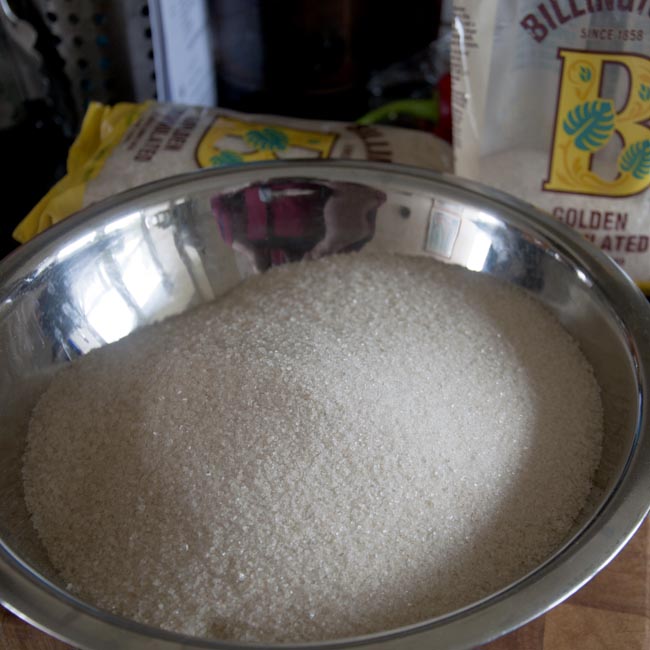
3lb of golden granulated sugarWeigh out all your sugar – I know there’s a lot of it, on the plus side you’ll be drinking this watered down so it’s not quite as bad as it looks (hey, who am I kidding?).  I’ve seen it asserted you can make this with ‘Splenda’ rather than sugar if you insist, but I haven’t tried it so can’t vouch for the results!

Dissolve your sugar in the boiling water, and add the citric acid.  Stir until it’s all fully dissolved.  Now wait until it’s cooled down (immersing your pan or bucket carefully in a sink full of cold water can speed this process up greatly).

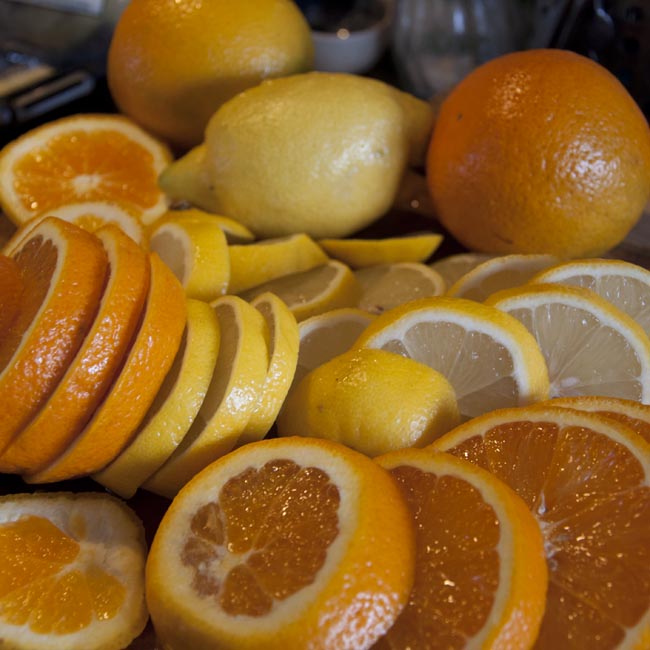
Sliced lemons and orangesSlice up your citrus fruit into thick slices (about 1cm thick), and add these to the cool sugar syrup.  Then add the elderflowers, one at a time so you can give them a good shake to dislodge any debris or creepy crawlies and discard any substandard flowers.

The smell will be amazing.  Steep for two or three days, covered, at room temperature.

Elderflower cordial, steeping

Straining the cordialOnce all the flavours have infused, it’s time to strain and bottle.  First, strain the cordial through the jelly bag or sieve lined with a layer of muslin.  I was about to discard the fruit with the elderflowers but couldn’t bring myself to do it – instead, I made a batch of ‘accidental’ marmalade, which is really very good!

Check your volume, then crush and add your campden (if using) at the doseage given on the pack – usually 1 tablet per gallon.  For me, the ingredients yielded just over a gallon (or 4.5l) of cordial, which was convenient for bottles, at a smidgen over six full wine bottles worth.

Stir well to dissolve, then allow your strained cordial to settle for at least 3 – 4 hours (or overnight) so that some of the sediment that’s survived the filtering – this will mostly be pollen, which is very small – will settle to the bottom of the bucket.  If you use a good fine jelly bag, there’ll be very little sediment to worry about.

Filling bottlesSterilise your bottles using home-brew steriliser (or in the oven like jam jars, but if so make sure you let them cool completely before filling – cold liquid into hot bottles is a recipe for disaster!).  Then fill them using a jug & funnel – you could use a syphon, and this might reduce your sediment a little, but it seems a lot of faff to me!

Filled bottlesWith campden, the bottles should store for a long while at room temperature (at least until next year’s elderflowers are ready – though I challenge you to save any that long!).  Without, they should keep in the fridge for a month or two, without refrigeration, there’s a significant risk that they start to ferment!  If you’re using plastic bottles, you can always stash them in the bottom of the deep freeze – they’ll keep for ages like that.

It looks lovely in a clear glass bottle, like fresh bottled sunshine (and we’ve had precious little of that this year!).  My favourite way to enjoy this cordial is with plenty of ice, a slice of lemon or lime, and sparkling water, in a tall glass on a hot summer’s afternoon.  But I also cherish it as an amazing taste of summer to remind you of the warmer, brighter days in the depths of a cold damp dark winter!

Read more from the Country Skills blog >>
Last of the Harvest – finally foraged the elderflowers!

I nearly missed this year’s elderflower season!  We’ve been having mad weather in the UK this year – a late, cold Spring and then so much rain in the past three months.  The elderflowers started late, and then meteorology managed to conspire with work and family commitments to leave me without a warm sunny day to go picking until today.  We’ve had a few heavy downpours in the past few days, with another one yesterday evening, and I was a bit worried there would be nothing left for me to pick.  A 5 mile, two hour foraging walk around the local lanes and byways eventually yielded the hundred good elderflower heads I needed.  They have never been so hard won!

I can’t remember when I started making elderflower cordial – it’s been well over a decade certainly (and before that – elderflower drinks are one of the things I really did learn from my grandmother!).  The desire to make my own elderflower champagne a couple of years ago drove the acquisition of my first small set of home-brew equipment – and what a great hobby (or can of worms, depending on your point of view!) that turned out to be.  Brewing came before curing and smoking and put me on the path to wanting to learn as much as I could about country skills – and hence, in the end, this blog.  So elderflowers and I go way back – they’ve had quite an influence on my life, one way and another!

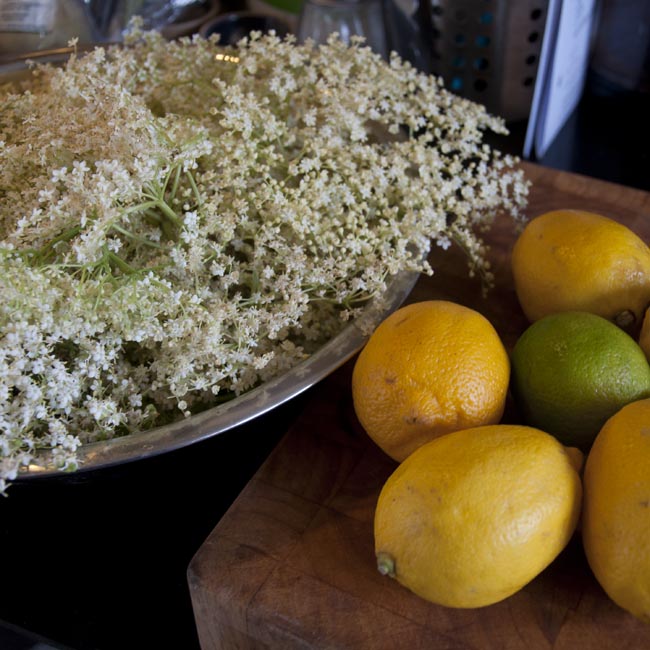
Elderflowers and citrus fruit

These days I make a batch each of elderflower cordial and champagne, at the same time.  In a good year I’ll do this a couple or three times, but sadly this year it’s a one-shot deal, so I’d better make the best of it!  To make both, in the quantities I make, you need about 100 good blooms.

Different quality elderflowersAn ideal quality elderflower is one where all the little flower heads are open, the petals pure white with a lovely buttery-yellow bloom of pollen on it.  As the blooms age, the pollen (and nectar, and the best of the flavour and scent) dissipates.  The flowers then start to appear whiter – still ok to use, but not quite as flavoursome.  Then they start to brown.  Browning blooms will not contribute the flavour you want, and should not be used.  The photo to the left shows great quality blooms at the back, adequate to front left and sub-standard (discard) to the front right.   There were too many adequate and poor flowers today – earlier in the flowering season it’s much easier to get nice flowers!

Now you’ve picked your flowers, you’ll want the recipes.  Here they are –

Read more from the Country Skills blog >>
Signs of Summer – hedgerow posy

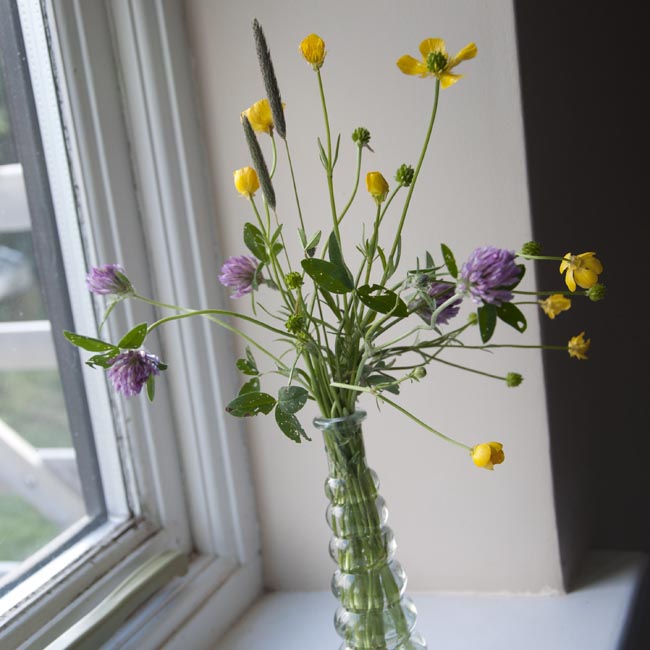
It’s great to see the field margins and roadsides crowded with flowers at this time of year, isn’t it?  I couldn’t resist, and picked a small posy from our paddock – red clover, buttercups and grasses.  It looks a treat on my window sill.

Hedgerow posy

Go and pick one of your own – it’s a little bit of summer, for you to enjoy indoors!  Beautiful, and best of all, completely free!

Read more from the Country Skills blog >>

Signs of Summer – if you can believe it!

No one in the UK (or probably elsewhere!) can have missed the fact that today marks the peak of the Diamond Jubilee celebrations for Dear Queen Lizzie.  It’s June!  The British weather is a vexatious, tricky beast at the best of times (why else would we all spend so much time talking about it?), and of course it’s done its thing and provided the cold grey drizzle to put the lie to the gorgeous hot sunny spell we were enjoying not a week ago.  But despite all of this (10 degrees centigrade!  In June! I ask you?) and the cheerful, if slightly damp collection of people crowded into the village hall this lunchtime for beer, bunting, and a cracking hog roast, I know summer’s here.  How?

Elderflower buds, just breaking

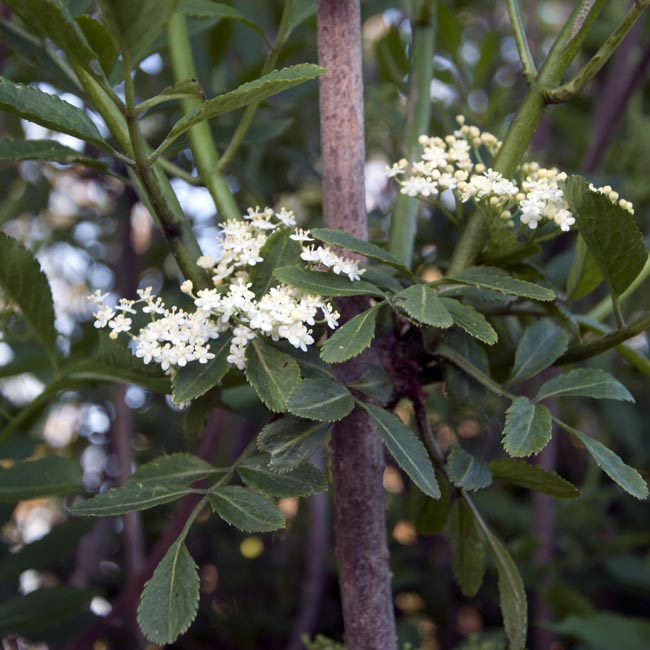
That’s how!  The elderflowers are opening!

Elderflowers in the hedgerowSome of you will have some sense of how exciting this is, perhaps.  The scent of them is just so glorious, and the excitement starts to build towards the elderflower cordial and champagne brewing that the next few weeks will hopefully bring!

Keep your eyes open for these now, and look forward to a couple of great recipes over the next few weeks!  In the meantime, I hope the bad-weather plans in place have allowed everyone with jubilee parties to get a bit of fun, despite the grotty conditions!

Read more from the Country Skills blog >>

Foraging Skills – blossom watch

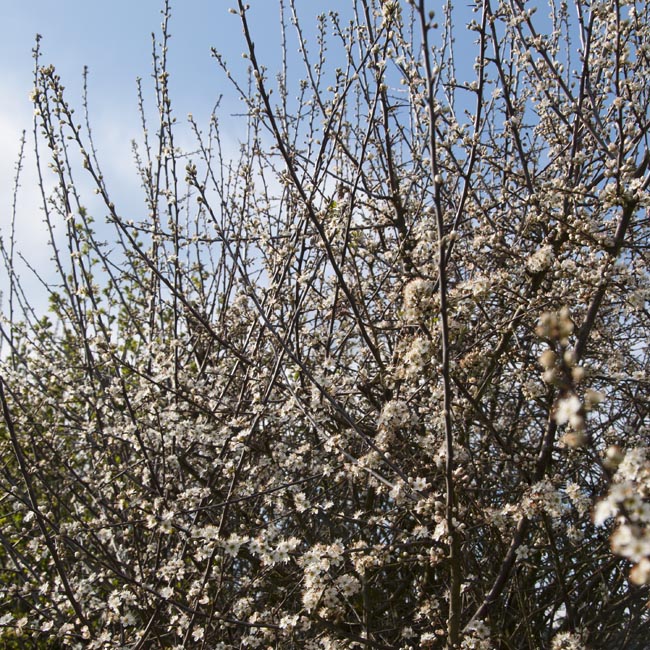
Spring is in full flood now, with bulb flowers and that lovely acid spring green colour of young leaves appearing everywhere.  You’re likely to be seeing lots of frothy white blossom in the hedges, and that’s worth keeping your eyes out for.  The sort you’re looking for is on otherwise naked branches, and spread evenly over the bush rather than forming clusters.

Blackthorn blossom

This is the blackthorn (the name is no coincidence!) or sloe bush.  So if you’re a fan of sloe gin (and let’s face it, isn’t everyone?) and fancy making some this autumn, make a note of any really good stands of blossom you see in the next week or two.  Final identification takes a slightly closer look – single small white flowers, armed with some nasty spikes on dark coloured wood.  The leaves, when they appear, will be small and rounded.

Blackthorn blossom - close up

You’ll notice that the blossom extends quite a long way inside the bush – this is one of the things that’s going to make picking, when you get to it, a bit of a challenge!

Read more from the Country Skills blog >>

Foraging Skills – how to get ahead!

I’ve been thinking about foraging recently.  There’s very little quite as special as a lovely – and free! – treat garnered from a hedge.  I’m thinking about a wild mushroom risotto, pots of crab apple jelly, a steaming blackberry crumble or a bubbling demijohn of rosehip wine.  Foraging is really an autumn sport, though, borne from the season of mists and mellow fruitfulness, so why am I writing about it now?

The thing that makes a really good forager isn’t being able to spot a laden crab apple tree at three hundred paces  – it’s knowing where that tree is in the first place.  Being a successful forager depends on keeping your eyes open all year round – if you notice things now, and remember them, you’re well on target for a bumper summer and autumn foraging season.

So just now, keep your eyes open for these, and make a mental note –

Hazel catkins in hedge

They’re hazel catkins, and where they’re hanging in profusion from the naked branches of hedges and shrubby trees now, there should be some lovely cob nuts in the autumn – they’ll be much harder to see then, when there are leaves on the tree, and hazels growing in mixed planting aren’t especially distinctive looking.  Watch like a hawk though, come autumn, and pick them slightly green and sweet – because the mice will want them too!

A little note on the legality of foraging – if the item is being grown as a crop, then it’s not foraging, it’s scrumping (or stealing!).  It’s very unlikely that cob nuts or blackberries growing in a field hedge are intended as a food crop, but the nuts and sloes in my garden hedge definitely are!  So if it looks like someone’s caring for a tree or a hedge, it’s in an orchard or garden or looks intentionally planted, tread with care!  That said, there at lots of edible crops grown incidentally on trees planted ornamentally, on streets and in council amenity spaces, particularly in urban areas – foraging doesn’t have to be just a country pursuit! – look out for apples, plums and cherries, too!

Read more from the Country Skills blog >>