Signs of Summer – if you can believe it!

No one in the UK (or probably elsewhere!) can have missed the fact that today marks the peak of the Diamond Jubilee celebrations for Dear Queen Lizzie.  It’s June!  The British weather is a vexatious, tricky beast at the best of times (why else would we all spend so much time talking about it?), and of course it’s done its thing and provided the cold grey drizzle to put the lie to the gorgeous hot sunny spell we were enjoying not a week ago.  But despite all of this (10 degrees centigrade!  In June! I ask you?) and the cheerful, if slightly damp collection of people crowded into the village hall this lunchtime for beer, bunting, and a cracking hog roast, I know summer’s here.  How?

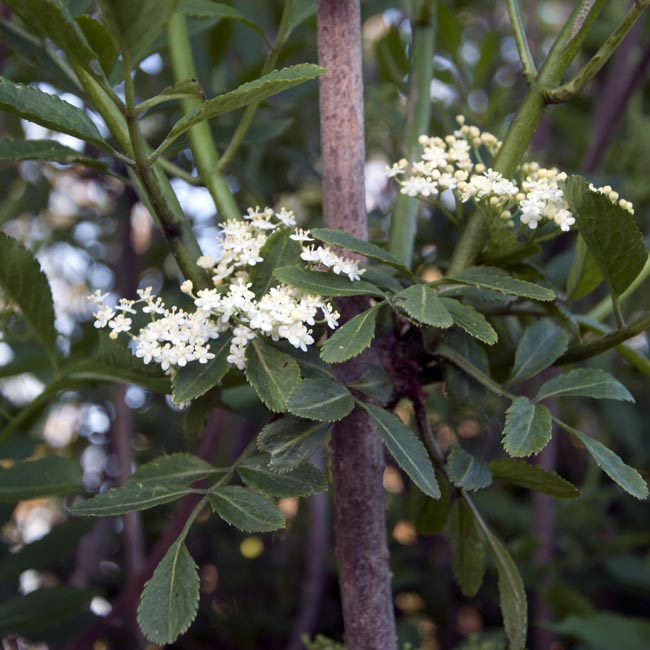
Elderflower buds, just breaking

That’s how!  The elderflowers are opening!

Elderflowers in the hedgerowSome of you will have some sense of how exciting this is, perhaps.  The scent of them is just so glorious, and the excitement starts to build towards the elderflower cordial and champagne brewing that the next few weeks will hopefully bring!

Keep your eyes open for these now, and look forward to a couple of great recipes over the next few weeks!  In the meantime, I hope the bad-weather plans in place have allowed everyone with jubilee parties to get a bit of fun, despite the grotty conditions!

Read more from the Country Skills blog >>

Ice and a Slice – a great little tip for your summer drinks!

Summer is finally here – what could be nicer on a sunny afternoon than a lovely long drink over ice, with a slice or two of lemon or lime?  And how often does half a citrus fruit end up mouldering in the door of the fridge until it’s completely useless and inedible?  Even worse perhaps, how frustrating is it when there’s no edible lime in the fruit bowl just when you really really fancy that G&T?

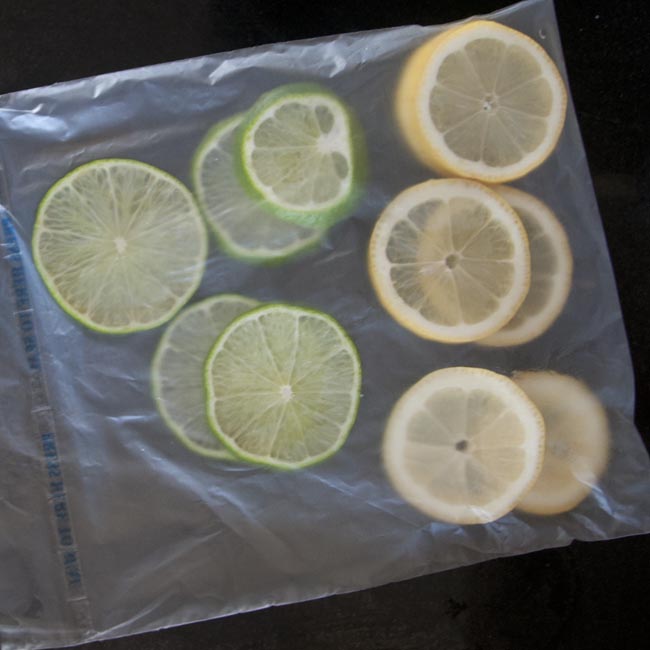
Sliced lemon and lime

Here’s my top tip to save waste and avoid citrus fruit frustration this summer – freeze them!

Sliced lemon and lime, bagged for freezingWhen you’ve sliced what you want, keep going, and finish slicing the whole fruit.  Pack them in a bag (I like using ziplock sandwich bags, if I have them, because I can re-use them time and time again).  I lay them in the bag in twos, if I can, since that’s how I tend to use them in drinks.  Put them in the top of the freezer with the ice-cube trays, job done!  Couldn’t be much simpler, could it, really?

Citrus fruit portions from the freezerHere are a couple of bags of frozen lemon and orange segments I pulled out of my freezer just now.  I freeze all sorts of pieces – half lemons can be defrosted in the microwave (a few 10s blasts should do the trick) and used in cooking and baking (microwaving fresh citrus fruits briefly before juicing is also a useful tip and greatly increases the juice extraction!).  The slices go in drinks, of course (or into the cavity of whole fish before baking!) and the segments are multi purpose – great in a long drink or squeezed over whatever you like.

No need to defrost before using, if it’s a long cold one you’re after.  Just toss the slice or segment into your glass with the ice, and pour over your drink of choice.  The citrus flavour will take a little longer to diffuse into your drink than a fresh slice, but it will all happen as the lemon thaws – which is almost instantaneous for a slice, slightly longer for a segment perhaps but patience is a virtue!  Sit back, and enjoy – and never waste a lime, or go without your wedge of lemon again!

Your long cold drink, ready to go!

Read more from the Country Skills blog >>

Foraging Skills – blossom watch

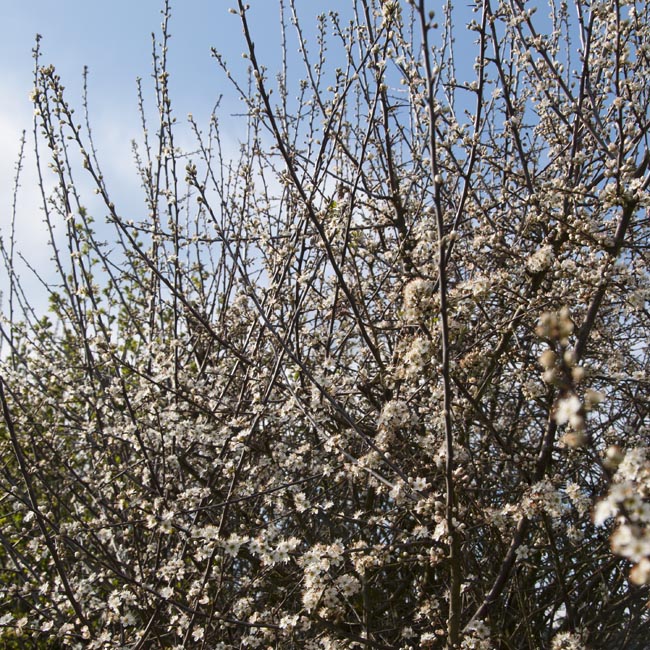
Spring is in full flood now, with bulb flowers and that lovely acid spring green colour of young leaves appearing everywhere.  You’re likely to be seeing lots of frothy white blossom in the hedges, and that’s worth keeping your eyes out for.  The sort you’re looking for is on otherwise naked branches, and spread evenly over the bush rather than forming clusters.

Blackthorn blossom

This is the blackthorn (the name is no coincidence!) or sloe bush.  So if you’re a fan of sloe gin (and let’s face it, isn’t everyone?) and fancy making some this autumn, make a note of any really good stands of blossom you see in the next week or two.  Final identification takes a slightly closer look – single small white flowers, armed with some nasty spikes on dark coloured wood.  The leaves, when they appear, will be small and rounded.

Blackthorn blossom - close up

You’ll notice that the blossom extends quite a long way inside the bush – this is one of the things that’s going to make picking, when you get to it, a bit of a challenge!

Read more from the Country Skills blog >>

Happy New Year!

Here’s wishing all of you a very happy 2012, and hoping your new year’s celebrations went with a bang!  I should have written this yesterday, of course, but timeliness has never been one of my more natural talents (as people still waiting on Christmas cards from me will attest)!

Fireworks

I’m ambitious to do experiment with even more creative, country skills and crafts next year, and write about them too!  On my list is more brewing (cider, beer, and of course country wines), more curing and smoking, and experiments with sewing, crafting, recycling and thrift.  More food and recipes, of course, as well as some fruit & veg growing as the season starts to get warmer.  I also plan to write a little about my hens and poultry keeping, and to try some new crafts – at the moment I’m reading about candle and soap making, so watch this space.  Perhaps this year my Advent candle might even be homemade!

Thank you to all of you who have been reading the blog since it started back in October 2011 – both here on WordPress and in the syndicated feeds – your comments and feedback mean a lot to me and are very helpful, so please keep them coming!  I’d love to hear of any suggestions you might have for things I should be looking into and trying, too!

Handmade Christmas – cracking crackers!

Christmas crackers are great, and an essential part of Christmas dinner in my house.  I mean, what’s not to like about adults wearing silly paper hats after a lovely meal and plenty of wine?  But the ones I’ve bought always seem to contain absolute rubbish which no one would ever want.  How about making your own, with the traditional silly paper hat and motto, but with the added bonus of a small, thoughtful gift, an after dinner chocolate, or both?  Well, it’s simple and fun, here’s how!

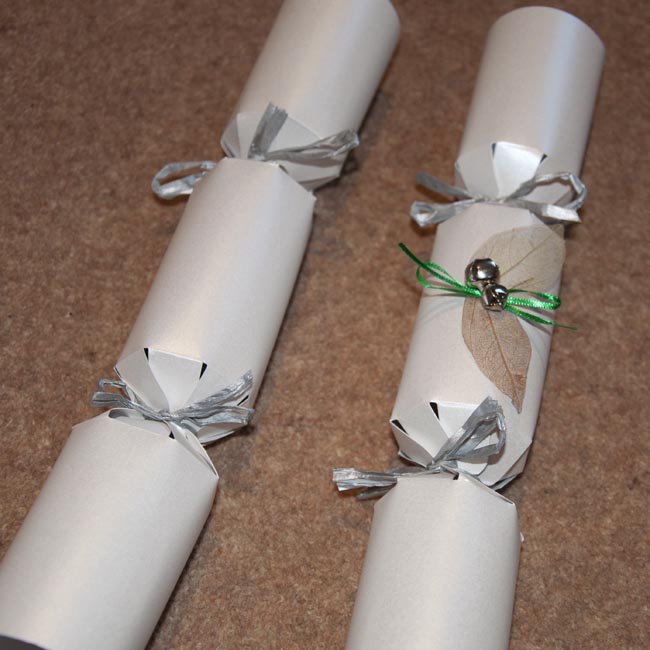
Handmade Christmas crackers

You will need:

  • Some cracker ‘blanks’, these are widely available from craft shops and on the internet in various sizes, colours and pack sizes.  I chose plain silver ones.
  • Cracker ‘snaps’, if these aren’t included with the blanks, one for each cracker you plan to make.
  • Ribbon, wool, raffia or string, for tying the crackers up, as decorative as you like.
  • Decorations for your crackers, if you want.  I used metallic leaf skeletons, some ribbon and a couple of small jingle-bells, all glued in place, but be creative, anything from the card making section of the craft shop is a good place to start, or how about some decoupage with last year’s Christmas cards?
  • Finally, cracker gifts!  I found some quite cute keyring gadgets of various kinds and also added a nice after-dinner chocolate.  If the gifts are for specific guests, put name-labels on the crackers.
  • Scissors, sticky tape, and clear glue.
  • Make hats and mottos yourself!

Making them couldn’t be easier and is a crafty relaxing way to spend a dark December evening.

First three steps of cracker constructionStart by sticking one end of the cracker snap onto the cracker blank with sticky tape.  Then roll the cracker blank using the tabs (cracker blanks have slightly varying designs, so follow the instructions that come with yours!).  Pinch, twist and tie up one end of the cracker with the string, ribbon, or other thread you’re using – I used silver paper raffia.

Decorating the finished crackersNow fill your cracker with all the bits and pieces, and tie up the other end of the barrel in the same way.  Once you’ve tied this up, stick the second end of the cracker snap into place.  You can decorate the crackers now however you like!

‘But what about my hat and motto’, you may be thinking?  I did see hat-and-motto sets for sale, but they’re awfully expensive considering what you get, a cheap tissue paper crown and a small slip of paper.

Making the hats couldn’t be simpler.  Get some Christmas wrapping paper, I used the end of a roll of white and silver metallic paper which I had knocking around.  First, measure the circumference of your head (unless it’s unusually large or small, in which case perhaps find someone with a more ‘representative’ head to measure – then again, you’ve made them, so perhaps it’s only fair to claim the perk of a cracker hat which fits for once!).  Now cut some pieces of wrapping paper twice as wide as the finished hat you want, and about 1cm longer than the circumference you’ve measured.  Using clear sticky tape, stick the paper into a loop.

Making paper crowns for crackers

Now fold the loop flat (image 1), then in half, then fold each of the halves into three, so that you’re now on the central panel of the film-strip above.  Now fold this in half one last time, then make a single diagonal cut half-way up the paper.  Unfold your two zig-zag topped crowns.  It’s like being back in primary school!  And since they’re neatly folded, tie them that way with ribbon or a small elastic band.

For the mottos, anything goes!  Good (or bad!) jokes, limericks (or haikus?), brain teasers, interesting facts, or even thoughts for the season or personal wishes for your family and friends’ year to come – make them pretty in a word processing package, print them out, cut into strips and fold them up with your paper hats.

Crackers needn’t just be for Christmas – they’re a lovely creative way to package small, special gifts.  An unusual way to wrap a special piece of jewellery, perhaps even a surprise ring?  Or consider using crackers to package wedding favours?

In Fermentation We Trust – apple juice turns into cider

On a lovely bright November weekend, I pressed a load of apples for cider-making.

For the next part of the process, you need to put together the following bits and bobs:

  • Your apple juice (which is already in a fermenting bucket with any luck – you’ll need the lid, if it’s one with a hole for an airlock, so much the better – if so, you’ll also need an airlock)
  • Wine or cider yeast, and yeast nutrient
  • A nice warm location at about 18 – 21 degrees celsius
  • Enough demijohns (plus stoppers and airlocks) to contain the volume of apple juice you’ve collected.  All my demijohns have come from Freecycle, so it’s worth keeping your eyes open.  For recommendations of UK homebewing equipment suppliers, see the suppliers list.
  • A syphon
  • Homebrewing steriliser solution

Now, time to turn your wonderful juice into cider (for any Americans who might be reading, we mean hard cider – the traditional alcoholic sort).  Traditional ‘real cider’ makers would do nothing with it at this stage, and wait for the natural yeasts which you hope are already present on the apples to do their job and get fermenting.  There is an alternative approach which involves using campden (sulphite) tablets to kill off the wild yeasts and then adding some wine or cider yeast of your own, which with any luck should guaranteed a ‘clean’ culture of your chosen yeast strain.  I decided to go a third route, didn’t use any campden, but did add wine yeast and yeast nutrient to give the process a ‘kick-start’ and make sure that an appropriate culture was at least in there with a fighting chance!

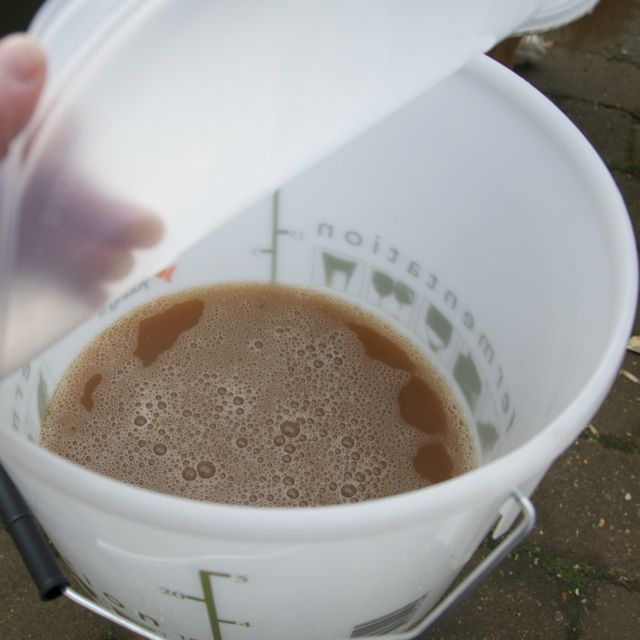
Apple juice before fermentation

You should probably take the specific gravity of your apple juice before you start fermenting, as this will tell you something quite important – with a bit of arithmetic (or there are online SG to ABV calculators out there you could avail yourself of) you should be able to work out how alcoholic your cider ends up.  This is relevant both for keeping your driving licence, and for making sure your cider contains enough sugar, and therefore after fermentation, enough alcohol, to keep well.  You’re aiming for a minimum of about 3.5% ABV, real ciders can easily get up to about 8%.

I didn’t test my juice (do as I say not as I do, right?), but it tasted nice and sweet so I think it’s likely my cider is about the 6% mark. Invest in a glass hydrometer (they’re cheap, easy to use with a bit of practice, and ever such pretty bits of old-fashioned looking laboratory glassware), you won’t regret it!

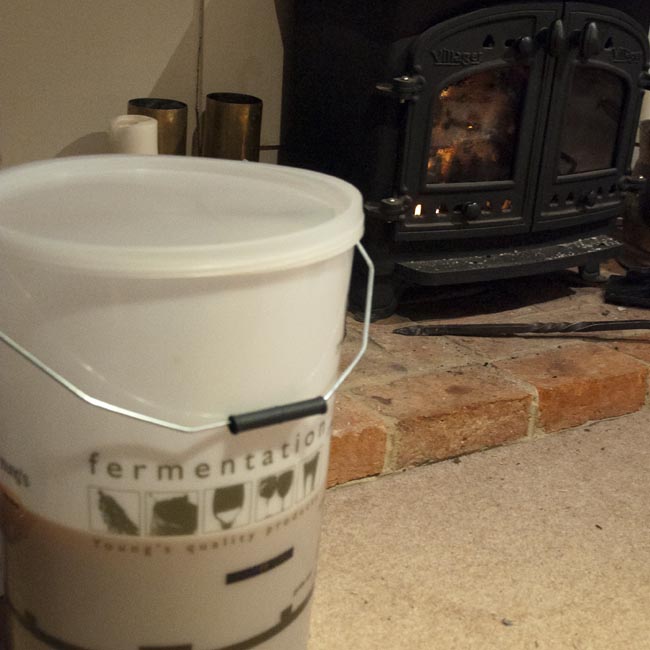
Fermenting by the fireThere is lots of advice that you should ferment your cider under lock.  I didn’t have an airlock capable bucket available so just kept the lid loosely on.  My experience from beer brewing is that the CO2 produced during fermentation will give a good blanket over the brewing liquor, being heavier than air, and oxidation shouldn’t be a problem at this stage as long as you don’t disturb the fermenting juice.  If your bucket does have an airlock, after adding the yeast and nutrient close the lid tightly and set up the airlock.  If it doesn’t, just fit the lid loosely so that the gas produced during fermentation will be able to escape without blowing the lid off!  Put your bucket in a nice warm place and try to avoid peeping.  Mine went by the fire in the living room for the first few days, as we were having a bit of a cold-snap.

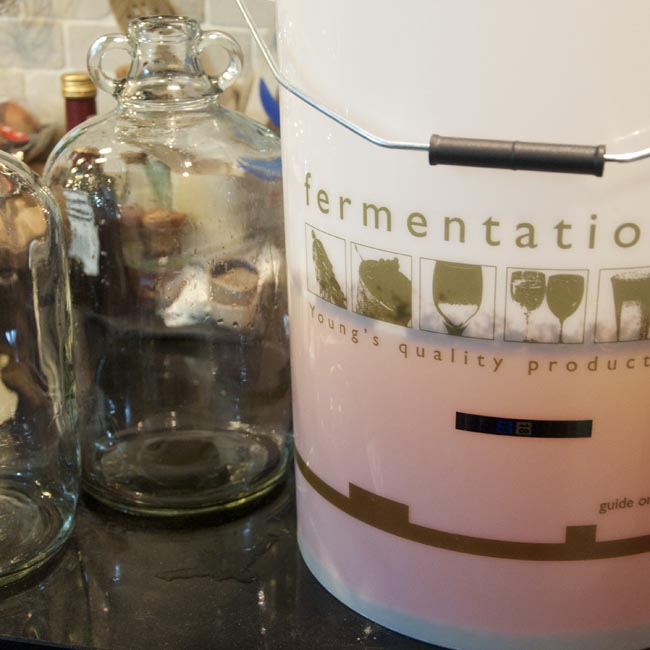
Ready for rackingYou’ll be able to tell fermentation has started when you see bubbles through your airlock, or when a nice loose foam starts to form on top of your apple juice (because you’re not peeping, right?).  During fermentation, the dead yeast and quite a bit of the solids from the apple juice will settle out in the bottom of the bucket, and the colour of the juice changes from brown to a yellow-orange.  In general, the cider will not clear completely, but it will be brighter than it was before.

Top fermenting yeastOnce fermentation seems to have stopped (I gave mine a generous month), you’ll have a nice thick layer of debris on the bottom of the bucket with cider above it.  Now it’s time to ‘rack’ the cider into demijohns for bulk conditioning.  When I opened the bucket, I found rather an alarming-looking layer of yeast floating on the surface of the cider.  I can only assume that this was a wild, top-fermenting yeast strain, as it seems to have done nothing awful to the cider so far!

Clean and sterilise your equipment (demijohns, syphon, stoppers & airlocks) carefully this time, following the directions on your steriliser.  Now the cider has fermented you risk accidentally making cider vinegar if acetobacter bacteria were to get in.  It’s also important to avoid introducing oxygen into the cider at this stage – acetobacter need oxygen to make vinegar from alcohol, so even if there’s some contamination they’ll struggle to get going if the cider stays free of air.  Syphon carefully, keeping the outlet of the syphon below the level of the liquid and avoiding introducing bubbles.  Then fit your stoppers and airlocks and put the cider in a cool dark place to mature for a few months before bottling. Keep an occasional eye on your airlocks to make sure they’re not drying out.  I expect to leave mine in the demijohns until spring, and will then bottle into champagne bottles with a bit of priming sugar to make sparkling cider.

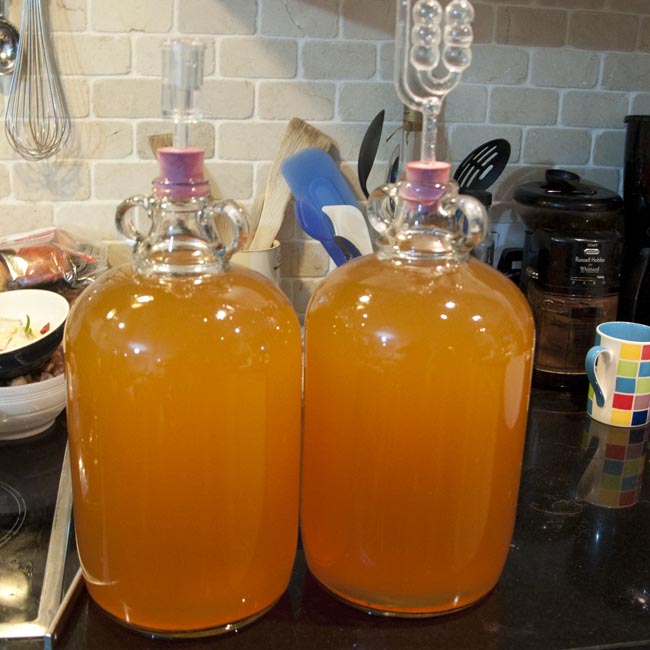
Filled demijohnsWe had a couple of pints more cider than fitted in the demijohns, and it would have been inconceivable to waste it – I can report that it is, already at this stage, definitely cider.  It’s a bit rough around the edges with quite a hard tannin that hopefully will mellow a bit with maturation, but has a lovely fresh apple aroma and definitely shows promise!

If you’re going to try it, I would recommend having a bit more of a read about the process before you start.  Some of my favourite books on home-brewing are listed in the library.

And if all that seems a bit complicated and labour-intensive, I’ll give you my directions for the quickest and easiest (and remarkably tasty!) home-brewed cider in the world very soon!

Hard Pressed – making real cider, the old fashioned way

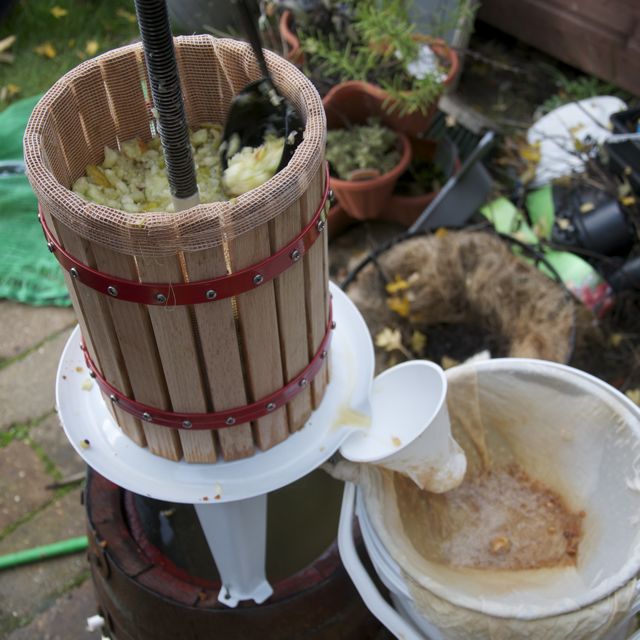
Apple harvestAt the end of October, a lovely holiday in Cornwall yielded an unexpected bonus – three sacks of apples from the orchard where we stayed.  There was only one thing to do – make cider!  Only one problem – I didn’t have a cider press.  We’ve been faffing about building one for the last couple of years, but hadn’t got round to it.  A bit of pleading and cajoling later, and I’d managed to score a brand new apple press for an early Christmas present – what a result!

Ben's Red applesOf course, apples don’t just press themselves.  Real cider making – unlike most of the country skills in this blog – is time consuming (and good exercise!).  Set aside a nice sunny autumn day, and if you can talk some friends into coming around to help, so much the better.

For an idea of how much apple juice you’re likely to produce, we got a yield of just over a gallon per bag of apples – the bags are the sort you buy logs in.  It’s possible that with more practice and different equipment we may have done slightly better, but I doubt there was much waste.

As well as apples – lots of apples, all different sorts if possible – you will require:

  • a cider press – bought or home-built
  • a robust bucket, and a crushing pole (or a proper scratter, but they’re expensive) – we did try a cheap plastic bucket from B&Q but caved the bottom in very quickly, so ended up using a carefully washed old metal wastepaper bin
  • a large bucket for washing apples in – I used a big garden trug – and clean water
  • knife and chopping board
  • sieve / colander and muslin for straining
  • bucket or demijohn for collecting the juice
  • wine yeast and yeast nutrient (optional)

A quick note on sterility, first.  Home-brewers are obsessed with sterilising things.  I am not washing my apples in camden to kill off wild yeasts, my ingredients (the apples) and tools (wooden equipment and press components) will not be sterile.  But do wash everything very carefully in hot soapy water (not the apples, obviously), and rinse them carefully before using.  There is general advice to avoid metal tools and receptacles when cider pressing – we used a metal bin for crushing in the absence of any alternative – it was enamelled and in good condition, and does not appear to have caused any obvious problems, I suspect because the apples and juice were not in contact with it for very long.

Washing applesIf you have time (and let’s face it, if you’re planning for next year, time is on your side!) there are various plans for DIY presses on the internet, or have a look at some old-fashionned presses, they’re quite simple things really.  I was going to build something using a car jack for the pressing mechanism.  My lovely bought press has a 6l capacity which seems about right for domestic production – the bottleneck on our two-man production process was the crushing stage.

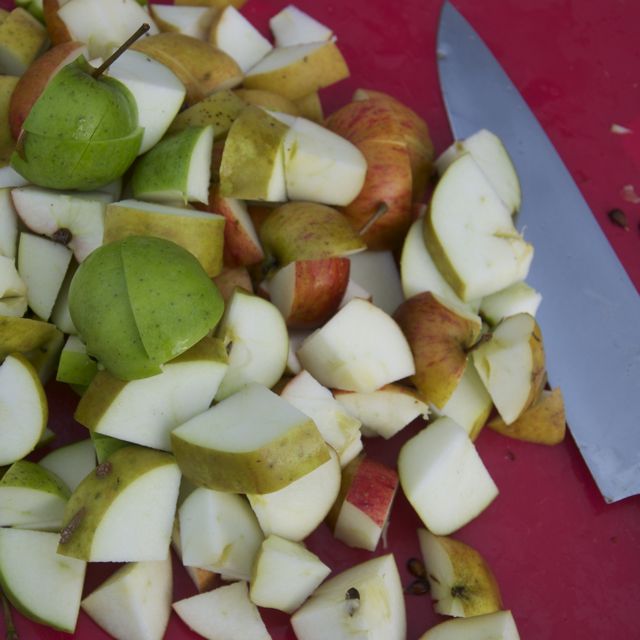
Chopping applesStart by washing your apples in the big bucket, you can do this quite a large batch at a time.  Then slice the apples up into quarters or eighths, discarding any obviously bruised or damaged areas.  Transfer these a batch at a time into your crushing bucket.

Crushing pole - end To crush you could use something like a new clean round-section piece of timber, we bodged a crusher together out of a small piece of inch-square timber we had and a plum-wood log, trimmed and stripped of it’s bark and formed into a blunt wedge at the end.  Avoid using anything which has been treated with timber preservative as it will be in intimate contact with your apples.  Make sure the pole is long enough that you can use it in a comfortable standing position above your bucket, or you’ll hurt your back and shoulders.

Crushing applesNow crush your apples to a rough pulp, until they’re making a wet squelching noise when the pole goes down and there’s just some free juice in the mixture.  The aim is to make it easy to extract the best juice yield you can from your precious apple harvest, so do put in the effort here, our first batch was definitely under-crushed and we got much less juice from this than from subsequent ones.
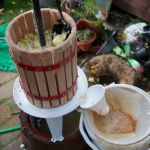
Loading cider pressNow load up your press.  Mine has a mashing bag to retain most of the solids within the press, some will use muslin cheeses or other approaches.  Once the press is loaded, apply pressure slowly, building it up over a few minutes, rather than trying to get the press as tight as possible straight away.

Cider press in useCollect your juice into a bucket through a  muslin to take more of the solids out.  It’s ok to taste some juice at this stage (and it should taste absolutely awesome!).  It will look… well, dirty brown coloured, probably.  This is a result of being hardly-filtered, and the tannins in the apple juice reacting with oxygen.  Don’t worry about this.  The leftover apple pulp (‘pommace’) can be fed to livestock, or composted.  My hens loved it, but be careful not to overdo it.  The rest can be composted.
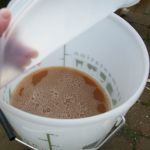
Pressed juiceAt some point you will run out of daylight, apples, or energy.  At this stage you’re done.  Admire the juicy product of your labours.  At the moment you have unprocessed, unfiltered, unpasteurised apple juice.  Smells marvellous, looks decidedly suspect.

Next time, we make the juice into cider – that’s proper, ‘hard cider’ to any Americans reading!

Christmas is coming, the gin is getting pink!

Time: 1hr — Patience: 2 – 3 months — Difficulty: Low — Knackyness: Low

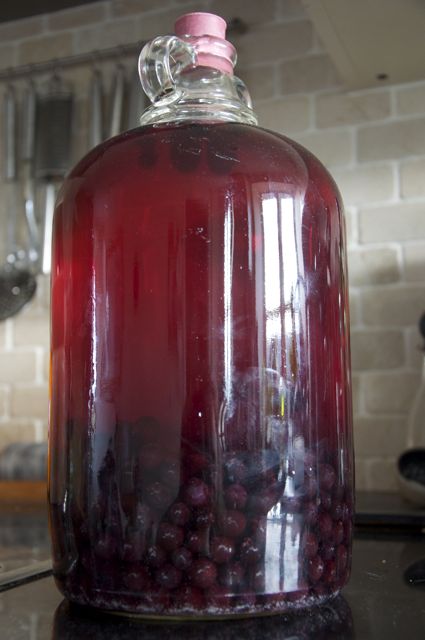
Sloe Gin maturing in demijohn

Sloe gin is a traditional country Christmastime treat, and is a liqueur made by flavouring gin with sloes (the fruit of the blackthorn bush) and sugar.  The traditional time to pick sloes is just after the first frost (so right now, for most of the UK!) as this both damages the cell walls of the sloes and changes their flavour, sweetening them.  You can make sloe gin very successfully with sloes picked before the first frost, but it’s wise to freeze them at least overnight before proceeding.

BE AWARE – Blackthorn isn’t called blackthorn for nothing!  The bushes are armed with vicious spikes, so proceed carefully and consider wearing gloves to pick with.  Personally I don’t, but as a result I give a blood sacrifice for my sloes every year.

This gin is very simple, and is sweetened to my taste.  You might find your palate runs to more or less sugar.  I’ve also seen gin recipes with spice additions such as a cinnamon stick, vanilla pods, and so on – so go ahead and experiment!

You will require –

  • A 1.5l bottle of cheap gin
  • 750g of sugar.  I like to use golden caster sugar, but you could experiment with other sugars
  • About a pint to a pint and a half of sloes, washed, dried (and frozen overnight if required)
  • An empty 1l glass screw-top bottle.
  • Kitchen scales, a measuring jug and, if available, a funnel.

Transfer 600ml of the gin from the 1.5l bottle to the clean 1l bottle, leaving 900ml behind.

Using the dry funnel, add 300g of sugar to the small bottle and 450g to the large one.

Fill up the remaining space in the bottles with the sloes.  Put any extras back in the freezer.

That’s it, really!

Give the bottles a good shake several times a day until all the sugar dissolves.  By this time it should have a similar appearance to the photo above, with colour starting to come into the gin.  Then put it in a cool dark place and forget about it for at least two months.

After that, strain the gin from the sloes and store in clean bottles.  In the past I’ve bought some pretty-looking 250ml bottles and used these for Christmas presents, which seem to be popular!  Add a couple of the excess sloes you put in the deep freeze to each bottle for that extra decorative touch.