Signs of Summer – if you can believe it!

No one in the UK (or probably elsewhere!) can have missed the fact that today marks the peak of the Diamond Jubilee celebrations for Dear Queen Lizzie.  It’s June!  The British weather is a vexatious, tricky beast at the best of times (why else would we all spend so much time talking about it?), and of course it’s done its thing and provided the cold grey drizzle to put the lie to the gorgeous hot sunny spell we were enjoying not a week ago.  But despite all of this (10 degrees centigrade!  In June! I ask you?) and the cheerful, if slightly damp collection of people crowded into the village hall this lunchtime for beer, bunting, and a cracking hog roast, I know summer’s here.  How?

Elderflower buds, just breaking

That’s how!  The elderflowers are opening!
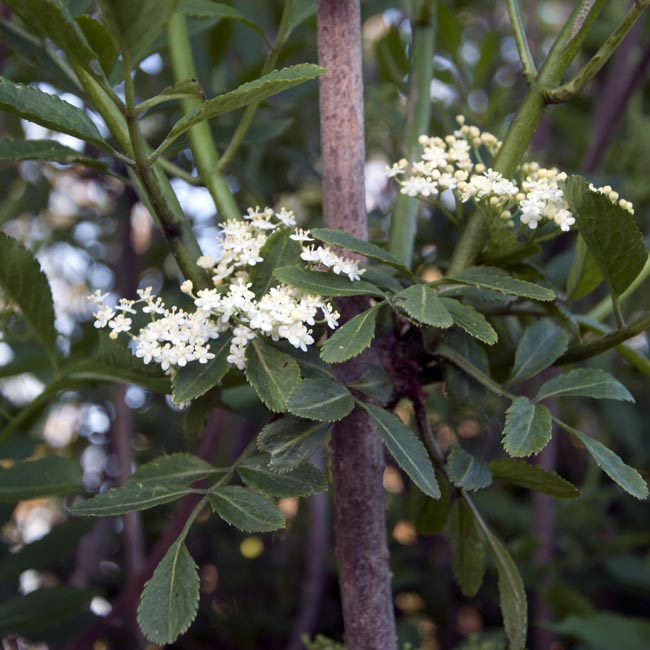
Elderflowers in the hedgerowSome of you will have some sense of how exciting this is, perhaps.  The scent of them is just so glorious, and the excitement starts to build towards the elderflower cordial and champagne brewing that the next few weeks will hopefully bring!

Keep your eyes open for these now, and look forward to a couple of great recipes over the next few weeks!  In the meantime, I hope the bad-weather plans in place have allowed everyone with jubilee parties to get a bit of fun, despite the grotty conditions!

Read more from the Country Skills blog >>
Foraging Skills – blossom watch

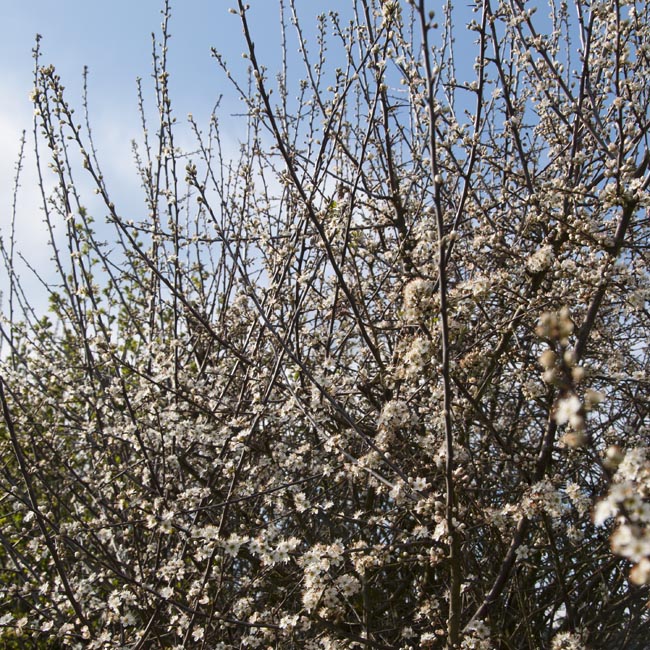
Spring is in full flood now, with bulb flowers and that lovely acid spring green colour of young leaves appearing everywhere.  You’re likely to be seeing lots of frothy white blossom in the hedges, and that’s worth keeping your eyes out for.  The sort you’re looking for is on otherwise naked branches, and spread evenly over the bush rather than forming clusters.

Blackthorn blossom

This is the blackthorn (the name is no coincidence!) or sloe bush.  So if you’re a fan of sloe gin (and let’s face it, isn’t everyone?) and fancy making some this autumn, make a note of any really good stands of blossom you see in the next week or two.  Final identification takes a slightly closer look – single small white flowers, armed with some nasty spikes on dark coloured wood.  The leaves, when they appear, will be small and rounded.

Blackthorn blossom - close up

You’ll notice that the blossom extends quite a long way inside the bush – this is one of the things that’s going to make picking, when you get to it, a bit of a challenge!

Read more from the Country Skills blog >>

Foraging Skills – how to get ahead!

I’ve been thinking about foraging recently.  There’s very little quite as special as a lovely – and free! – treat garnered from a hedge.  I’m thinking about a wild mushroom risotto, pots of crab apple jelly, a steaming blackberry crumble or a bubbling demijohn of rosehip wine.  Foraging is really an autumn sport, though, borne from the season of mists and mellow fruitfulness, so why am I writing about it now?

The thing that makes a really good forager isn’t being able to spot a laden crab apple tree at three hundred paces  – it’s knowing where that tree is in the first place.  Being a successful forager depends on keeping your eyes open all year round – if you notice things now, and remember them, you’re well on target for a bumper summer and autumn foraging season.

So just now, keep your eyes open for these, and make a mental note –

Hazel catkins in hedge

They’re hazel catkins, and where they’re hanging in profusion from the naked branches of hedges and shrubby trees now, there should be some lovely cob nuts in the autumn – they’ll be much harder to see then, when there are leaves on the tree, and hazels growing in mixed planting aren’t especially distinctive looking.  Watch like a hawk though, come autumn, and pick them slightly green and sweet – because the mice will want them too!

A little note on the legality of foraging – if the item is being grown as a crop, then it’s not foraging, it’s scrumping (or stealing!).  It’s very unlikely that cob nuts or blackberries growing in a field hedge are intended as a food crop, but the nuts and sloes in my garden hedge definitely are!  So if it looks like someone’s caring for a tree or a hedge, it’s in an orchard or garden or looks intentionally planted, tread with care!  That said, there at lots of edible crops grown incidentally on trees planted ornamentally, on streets and in council amenity spaces, particularly in urban areas – foraging doesn’t have to be just a country pursuit! – look out for apples, plums and cherries, too!

Read more from the Country Skills blog >>

Medlars – an experiment with strange fruit

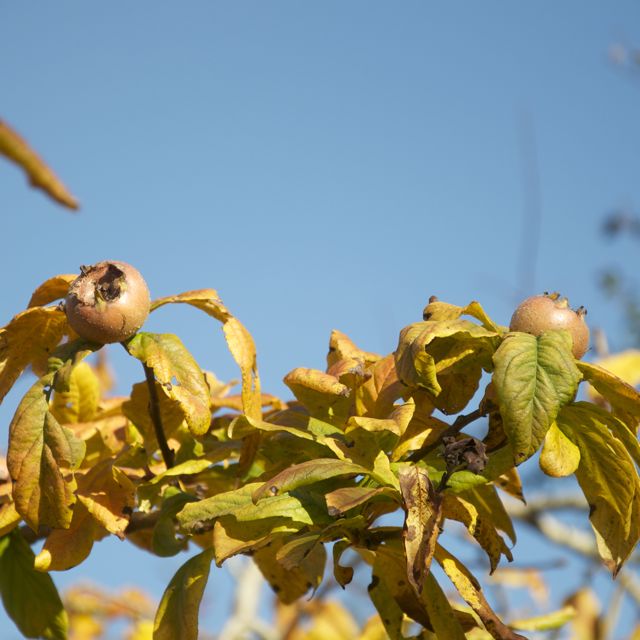
Have you met a Medlar?  Medlars on tree

The Medlar is known less politely as the ‘dog’s bottom fruit’ (and other related and even less polite descriptive names, discovery of which is left as an exercise for the reader!), and was once very popular, these days it seems to have been more or less forgotten, at least as a culinary fruit.  The Royal Horticultural Society describes Medlars by reference to their flowers and habit before their fruit.  They’re in the same horticultural family as roses, filed somewhere between pears and hawthorn.

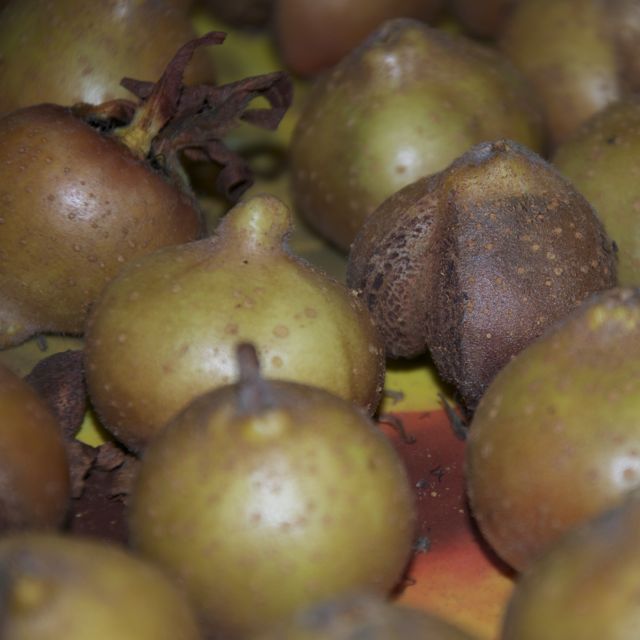
Bletting medlarsI was lucky enough to be able to harvest a lovely little medlar tree, which yielded about a third of a carrier-bag full of fruit.  While late October / early November is the right time to pick medlars, they aren’t actually ripe and need to go through a process of ‘bletting’, where they are allowed to ripen fully in a frost-free, cool dark place.  The only place I have for a tray of fruit is the spare room, which while dark-ish and undoubtedly frost-free, is at house temperature.  Bletting is supposed to take 2 – 3 weeks, during which the fruit will soften and become a dark brown to black colour.  If it all goes well, I plan to make some medlar jelly, so I’ll be back in due course to let you know!

Christmas is coming, the gin is getting pink!

Time: 1hr — Patience: 2 – 3 months — Difficulty: Low — Knackyness: Low

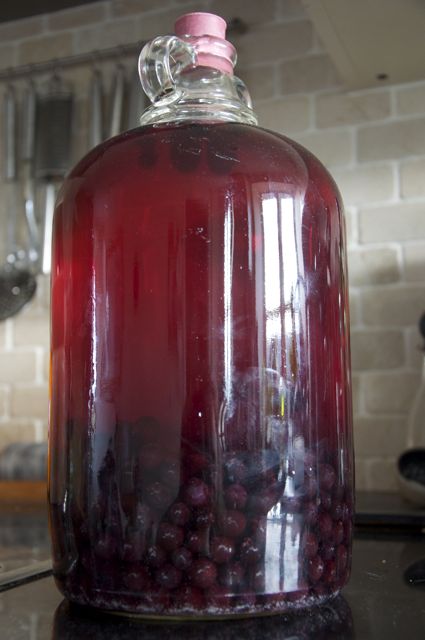
Sloe Gin maturing in demijohn

Sloe gin is a traditional country Christmastime treat, and is a liqueur made by flavouring gin with sloes (the fruit of the blackthorn bush) and sugar.  The traditional time to pick sloes is just after the first frost (so right now, for most of the UK!) as this both damages the cell walls of the sloes and changes their flavour, sweetening them.  You can make sloe gin very successfully with sloes picked before the first frost, but it’s wise to freeze them at least overnight before proceeding.

BE AWARE – Blackthorn isn’t called blackthorn for nothing!  The bushes are armed with vicious spikes, so proceed carefully and consider wearing gloves to pick with.  Personally I don’t, but as a result I give a blood sacrifice for my sloes every year.

This gin is very simple, and is sweetened to my taste.  You might find your palate runs to more or less sugar.  I’ve also seen gin recipes with spice additions such as a cinnamon stick, vanilla pods, and so on – so go ahead and experiment!

You will require –

  • A 1.5l bottle of cheap gin
  • 750g of sugar.  I like to use golden caster sugar, but you could experiment with other sugars
  • About a pint to a pint and a half of sloes, washed, dried (and frozen overnight if required)
  • An empty 1l glass screw-top bottle.
  • Kitchen scales, a measuring jug and, if available, a funnel.

Transfer 600ml of the gin from the 1.5l bottle to the clean 1l bottle, leaving 900ml behind.

Using the dry funnel, add 300g of sugar to the small bottle and 450g to the large one.

Fill up the remaining space in the bottles with the sloes.  Put any extras back in the freezer.

That’s it, really!

Give the bottles a good shake several times a day until all the sugar dissolves.  By this time it should have a similar appearance to the photo above, with colour starting to come into the gin.  Then put it in a cool dark place and forget about it for at least two months.

After that, strain the gin from the sloes and store in clean bottles.  In the past I’ve bought some pretty-looking 250ml bottles and used these for Christmas presents, which seem to be popular!  Add a couple of the excess sloes you put in the deep freeze to each bottle for that extra decorative touch.