Taming the Tomato Glut – Part 2: tomato and chilli chutney

The home-grown tomato glut continues apace, and after yesterday’s harvest, I had over 1.5kg (about 3lb) of lovely ripe tomatoes in bowls on my kitchen counter. Obviously even the most energetic eater of fried tomatoes couldn’t make much of a dent in that with their full English breakfast (though, believe me, I tried!). I wasn’t planning to do any preserving today, but the idea of them going to waste was more than I could bear – so I decided to whip up a batch of tomato chutney, with chillies, since I have a few of those from the greenhouse, too!

This is a bit of a chutney of opportunity / necessity, made out of what I had in the fridge and cupboard, loosely based on this recipe for ‘sweet chilli and tomato chutney‘ from the Pink Whisk blog.

To make this chutney, you’ll need to get together:
  • Fresh ingredients1.5kg of fresh, ripe (home-grown) tomatoes – all shapes and sizes are fine
  • 5 onions (varying sizes)
  • 2 red peppers
  • 4 cloves of garlic (I used half smoked, half fresh)
  • 1 rather over-grown courgette (optional – I had one that had ‘got away’ a bit in the vegetable garden)
  • A few fresh chillies. I chose four large mild red ones (variety ‘Vampire’) and two small-but-fiesty ones (variety ‘Twilight’) which I’ve been growing this year. If you’re in doubt about the properties of a particular chilli, for goodness sake slice off a very small piece and taste it before cooking with them!
  • 800ml of malt vinegar (I used what I had in the cupboard, which was about 400ml dark malt vinegar, 200ml of white malt vinegar and 200ml of spiced preserving vinegar left-over from pickling beetroot – use whatever you have / fancy. Wine or cider vinegar would also be fine, but probably a bit of a waste of money.)
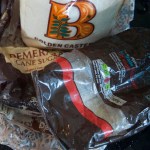
  • Variety of sugars600g of dark sugar (again, this was a cupboard-clearing effort, I used a mixture of demerera, soft dark sugar and golden caster sugar)
  • 4 tsp of whole yellow mustard seeds
  • 1 tsp cayenne pepper
  • 1 tsp paprika
  • 2 tsp sea salt
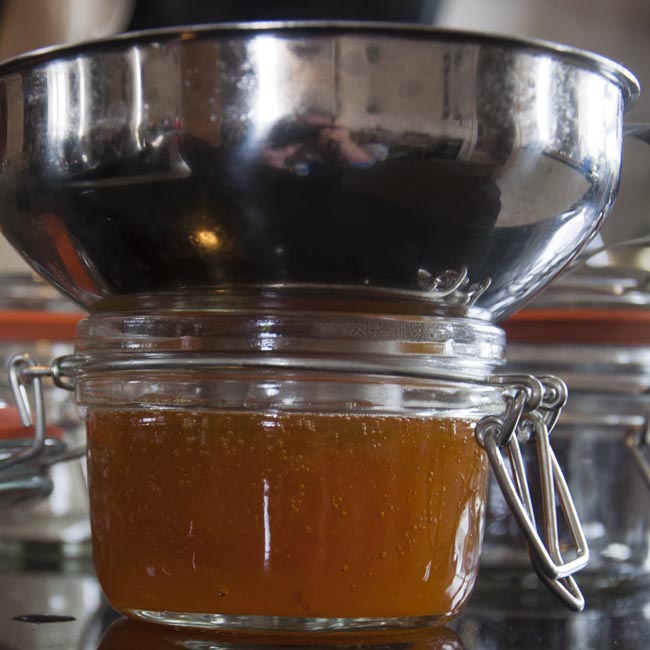
  • A chopping board, good sharp knife, large stainless steel cooking pot and enough jars to contain your chutney. Also helpful, a ladle and a bottling funnel.

Now, there are a few strongly held beliefs that I try to live by, and not least of these, I’m afraid, is the view that life is far to short to spend it peeling tomatoes – particularly when there’s 1.5kg of them, and many of them are tiny, sub-cherry size. I looked up my grandmother’s green tomato chutney recipe this afternoon, just to check (more on which later, with a little luck!), and it turns out she didn’t peel her tomatoes either. Well, if it was good enough for Grandma, it’s good enough for me! Of course, if you find the idea of tomato skin in your chutney offensive, do feel free to blanch and peel them before you start.

Wash your tomatoes and chop them into roughly even pieces (halves, quarters, or smaller portions depending on the size of the tomato). I left the tiniest toms – those smaller than 1cm – whole. Chuck these into the pan, then chop your onions and peppers (deseeded, and with the white pith removed) into smallish pieces and add them, too.

Peel the courgette and slice it up as finely as you can – I chopped mine pretty roughly, expecting that it would break down to a nice soft pulp during cooking, but it didn’t – probably because the sugar and vinegar in the mix firmed it up nicely! – and I ended up fishing the bigger bits back out to chop them up more finely towards the end of cooking, which is a task I’m sure you can all live without!
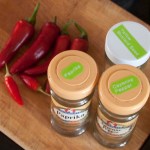
Chillies and spicesChop up your fresh chillies very finely (you may want to remove the pith and seeds, where some of the heat is hiding!) and remember to wash your hands very carefully afterwards, including under your fingernails!

Add your chopped chillies to the pan with the sugar, vinegar, crushed garlic and dry spices. Get some heat under it and bring it to a good rolling boil before turning it down a little. Leave it simmering gently, uncovered, and stir occasionally.
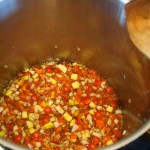
Chutney at start of cookingNow, you have time to sort out your jam jars and lids. Wash them carefully in hot soapy water, dry them, then lay them out in a cold oven and set it to 150 degrees C. Make sure that the lids you’re planning to use are plastic-coated, as the vinegar in the chutney will corrode exposed metal. I tend to turn the oven off once it’s been up to temperature for about 20 minutes, and just leave the door closed until I need the jars.

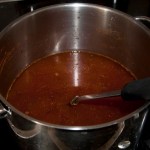
It will take about an hour and a half to cook the chutney – mine took a bit longer than that, so follow your judgement. It’s ready when you can catch a glimpse of the shiny bottom of the pan when you stir the mixture. It will have lost a fair bit of volume (perhaps up to half) and darkened to a rich dark red colour, with no watery liquid left. Once you’re happy it’s done, bottle directly into your hot sterilised jars. These quantities made a little under 2 litres for me, but this will vary depending on your precise ingredients – how watery your tomatoes are and so on. And please, don’t be too hung-up on the details of the recipe – be creative and use what you have, or vary it to your own taste!

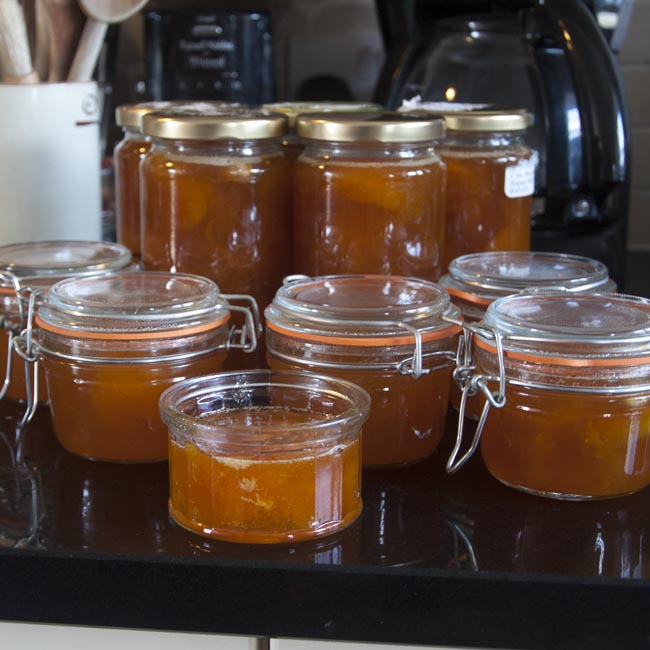
My quantities filled whole jars just perfectly (six small ones, and three larger ones), so I haven’t got any ‘left overs’ to enjoy in the next few days from the fridge – a bit of a shame, as I was looking forward to some with a nice cheese sandwich! But this will just heighten the anticipation as the flavours develop over the next month or so. The sneaky tastes I took during cooking (quality control, right?) certainly promise very good things – a lovely sweet-sour background with a gentle chilli heat.
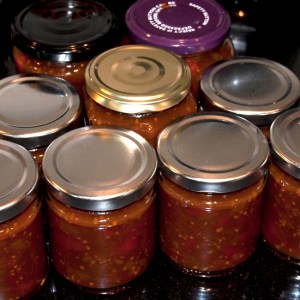
Lovely jars of chutney

Chutney will keep in a cool dark place for ages (I’ve opened – and eaten, and lived to tell the tale – jars of home-made chutney with dates that would make some people’s eyes come out on stalks!). It’s probably best, though, to aim to let it mature it for a month, and then eat it at it’s best within a year. As with all home-made preserves, it’s best to keep it in the fridge after opening. And of course, like any home-made jam or preserve, they will make great gifts!

Read more from the Country Skills blog >>

Elderflorescence – it’s not too late for elderflower cordial, champagne, and how about vinegar?

The scent of an elder tree or shrub, in full flower on a hot sunny afternoon, is one of the heady, intoxicating, unmistakeable aromas of high summer.  This year the elders seem to be making up for last season’s poor showing – they’re simply smothered with elderflowers right now, dressed up from tip to toe in ivory flowers like a fairytale bride.

Elderflower buds, just breaking

Last year, we really struggled to harvest the elderflowers I needed to make my traditional annual batch of elderflower cordial and champagne. I blogged at the time about the ritual of gathering my elderflowers, and what it means for me. Well, this year, the elderflowers are in abundance – what took several hours and a five mile walk last year, we achieved in ten minutes on a short length of our country lane on Sunday. That’s one of the things about foraging – it’s never ever the same!

A chilled fizzy glass of summer!I adore elderflower ‘champagne’. My grandmother used to make it, and it was my gateway to home brewing, I suppose! My favourite recipe is here, with full instructions. It’s a great and rewarding introduction to home brewing, so even if you’ve never tried to brew before, do consider giving it a whirl. It’s not as scary as it seems, I promise, and the result is a fun summer tipple, fantastic for bbqs and parties, and which costs very little.

Under Pressure!Unfortunately for us, it’s really bad timing for starting a batch of elderflower champagne just now – but you most definitely should! Just be aware, it’s a lively beast, and I would under no circumstances advise trying to store it in glass bottles – even those tempting-looking pop top Grolsch-style ones. Just look what it did to the stout small plastic bottles I used last year!  With a little luck there will still be enough flowers around that I can get a late batch on the go in a few weeks time! Otherwise – and this would be nothing short of a minor tragedy – we’ll have to go without this year!

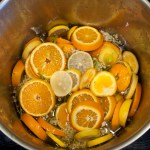
Elderflower cordial, steepingBut – thank goodness – I have found time to make my elderflower cordial, and it  is steeping in the kitchen as I write – I’ve made it this way for a few years now (full instructions & photos blogged last year), and the results are always amazing. If you’re not a brewer, or don’t want to use campden (sulphite) to stabilise the cordial for storage at room temperature, how about freezing it in carefully washed out milk bottles or juice cartons?

Filled marlalade jarsAnd don’t neglect the lemon and orange slices from the cordial once it’s finished – they make really great marmalade!

Those of you who read the blog regularly know that I’m always up for trying something different! So, considering the success of the chive blossom vinegar, I’ve started an experimental batch of elderflower vinegar.

Stripped elderflowersFor this, I’ve stripped the elderflowers off their stems – I finally found a technique that works for me, which is closer to rubbing the flowers and stamens off the green stems than it is to picking off the tips, and gives flowers almost entirely without green material.  Give the flower bunches a good sharp shake first, to dislodge any ‘passengers’ who might be hitching a ride.

You will probably find, despite this, there are some tiny little insects in amongst your flowers once you’ve picked them. Just ignore these (certainly don’t be tempted to wash the flowers as you’ll wash away much of the lovely flavour!). The vinegar will be filtered through fine muslin later, in any case, and if that still doesn’t reassure you, consider that you eat large numbers of insects and associated material every day already – just take a look at the US Food & Drug Administration’s pamphlet on allowable levels of insect and other contaminants in different foodstuffs if you don’t believe me!

Elderflowers steeping in vinegarI filled about half a 1 litre kilner jar with loose flowers, and then filled it up with cider vinegar. In retrospect, I may have used something with less aroma of its own, like rice wine vinegar, but cider vinegar was what I had, and hopefully the fruity note of the cider vinegar will complement the elderflowers beautifully. Put the filled jar somewhere warm to infuse – unlike the chive flower vinegar, there’s no need to keep it out of the light as there’s no problem with colour fading.  I expect to leave it for a couple of weeks before straining and bottling.

This vinegar smells beautiful after only 24 hours,  with a gorgeous fresh elderflower fragrance. So does the cordial, actually, so my kitchen is a sweetly-scented haven right now, and with my living room full of little posies of gorgeous sweet peas from the garden, the house smells nicer than a perfumery!

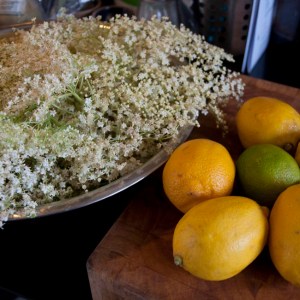
Elderflowers and citrus fruit

So, if you do nothing else this week, seize the opportunity to capture – even if just in a small batch of cordial or vinegar – one of the ephemeral scents and flavours of high summer.  During the long dark winter months, it’s amazing what a taste and smell of elderflower can do to lift my spirits!
And of course, with elderflowers so abundant this year, we can only hope for a great elderberry season to come!

Read more from the Country Skills blog >>

The Key, The Secret? – spicy pickled ash keys

I first came across the idea of pickled ash keys in Adele Nozedar’s lovely book ‘The Hedgerow Handbook, which I reviewed last year. I was intrigued at the time, but it was the wrong time of year to forage nice young ash keys (actually, I think I may have been a little late this year, too, but more of that later).

A lovely veteran ash treeAsh trees have been in the news lately, at least in the UK, with the arrival last year of ash dieback, a fungal disease now threatening some of the great, veteran trees of the British landscape. Historically, oak, elm and ash were the ‘big three’ trees in these parts, majestic and long-lived, our elms sadly disappeared for the most part several decades ago, succumbing to Dutch elm disease, and it seems now as if the ash, too, may be at risk of all but disappearing from our landscape.

Ash keysBefore too long, ash keys (the twisted seeds of the ash tree, which hang in luxurious bunches from the branches of some – but not all – ash trees at this time of year) may be a vanishing treat, the caviar of the forager’s larder. So why not try them now, before it’s too late? Incidentally, don’t confuse the common ash with the mountain ash, or rowan tree, which produces clusters of (also highly forageable!) bright orange or red berries in autumn.

So, you’ve found a local ash tree positively dripping with lovely young, green ash keys. What now?

After pickingWell, first, you’ll need to pick some, obviously. I made rather a large batch of pickled ash keys, starting with about 800g (approximately a mean couple of pounds). The older they get, the tougher and stringier they will become, so pick them as young and tender as you can.

As well as your ash keys, you will require –

  • 1.5l / 3 UK pints of white distilled malt vinegar (spirit vinegar)
  • 3 tbsp of paprika
  • 3 tbsp of curry powder (I used a medium madras powder, because it was what I had on the shelf)
  • 1.5 tbsp of cayenne pepper
  • 4 tbsp sea salt
  • a heaped teaspoon of whole mixed peppercorns
  • a level teaspoon of whole yellow mustard seed
  • 6 – 8 garlic cloves
  • 12 small hot dried red chillies (I used my own home-grown and dried little chillies left over from last year)
  • A large stainless steel or enamel saucepan or stockpot, a smaller pan (also non-reactive), large colander, a fine sieve and a piece of muslin, and enough jam jars for your batch.

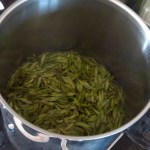
Washed ash keysPick all the ash keys free from their bunches, and wash them carefully. The first part of the process involves gently simmering your ash keys for about an hour and a half, in all, in four changes of water.  This process, while irritatingly time consuming and faffy, reduces the bitterness of the ash keys which would otherwise make them rather unpleasant to eat.

Simmering the ash keysThe smell that this process generates is not very promising – it will smell rather like you’re boiling up a pot full of bits of tree, which you are, of course. But this abates each time you change the water, and after the fourth water change the colour of the ash keys is closer to olive green than to the bright green that you started with, and if you have a speculative nibble on one (I couldn’t resist), it’s quite stringy, not particularly strong tasting, but not noticeably bitter.

Spiced vinegar steepingWhile your keys are simmering away gently, you need to make your spiced vinegar. In your smaller saucepan, combine the spirit vinegar, paprika, cayenne pepper, and curry powder, bring to the boil and then take immediately off the heat.

Strain the spiced vinegarThis smells quite marvellous. Once it’s cooled a bit (you can help it along by sitting the saucepan in a sink full of cold water), strain it through the muslin in the sieve, and if you’re not quite ready to use it, you can use a funnel to put it back inside the vinegar bottles for safekeeping. Incidentally, I’d forgotten I had some muslin and initially tried to strain the vinegar through a paper coffee filter. I can report this was very frustrating and a huge waste of time, effort and coffee filters. So, now you know not to bother!

Ash keys mixed with saltOnce the ash keys have done their four turns around the simmer 20 minutes, strain, change water circuit, they’re an olive-green colour and ready to be stewed (yes, some more!). Add the 4 tbsp of sea salt, and plenty of fresh water, and bring to a brisk boil for a quarter of an hour, before turning the heat down, covering, and simmering for another 60 minutes before finally straining again.

At the end of this, they will have softened a fair bit, and have a gently salted taste, and you will probably be royally fed up of boiling up ash keys. Don’t worry, it’s nearly done!

Strained spiced vinegar, set aside  Chillies, peppercorns, garlic & mustard  Ash keys in spiced vinegar with garlic and chillies

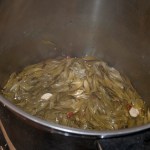
Now, add to the strained ash keys the spiced vinegar, along with the whole dried chillies, peppercorns, mustard seeds and peeled whole garlic cloves. Bring to a brisk boil for 15 minutes, and take off the heat. That’s it, you’re (essentially!) done, and your house probably smells like a very strange hybrid of a chip shop and a curry house. Set the pickled ash keys aside to cool. I left mine overnight, because it was pretty late by the time I finished them, and my big stock pot holds its heat quite stubbornly.

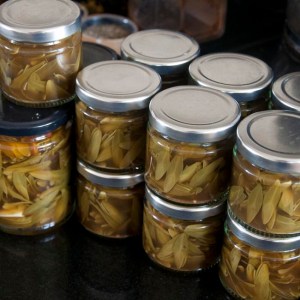
Fill your jarsWash, dry and sterilise your jam jars in the oven, then allow to cool before filling. I used 13 little ‘dumpy’ jars and two 330ml pickle jars for my batch. Assume you need at least the volume of your vinegar, and probably a bit extra, in jar capacity. Pack the ash keys, along with the chillies, garlic, peppercorns and mustard seeds, evenly but quite tightly into your jars. Once you’ve done this, fill the jars right to the brim with the spiced vinegar, and seal.

Filled jars of pickled ash keys

Don’t they make a pretty little lot? They need to be matured now in a cool, dark place for at least 2 – 3 months. But I did have a taste, and the omens are really promising – there’s a long but gentle heat from the combination of the whole chillies and the spiced vinegar, a little garlic note, and out of nowhere a subtle but noticeably ‘olive’ flavour from the ash keys themselves.  The acidity is not at all harsh, which is unexpected, there’s an almost sweet character which must come from the keys themselves as there’s no sugar in the pickle. They are, though, still a bit stringy (though much less so than earlier in the cooking process) – I think if I’d picked in May rather than leaving it until June, this may have helped! I expect they’ll continue to soften while they steep in their jars of vinegar.

All in all, then, a bit of a revelation, these ash keys! I’m not sure what I was expecting, but I don’t think it was much like this! I can’t wait to see what they’re like in a couple of months time, but I think they’ll make a very nice substitute for olives or capers, and will probably go a treat with a nice mature cheddar.

Read more from the Country Skills blog >>

When Life Gives You Lemons – Part 5: sweet lemon pickle [Guest Blogger]

Lemon TreeOur Guest Blogger is Ross, from Christchurch, NZ.  

You may recall the lovely series of lemon-glut busting recipes which Ross shared with us back in November last year.  He’s back today, with another lovely lemon preserve.  He says of this one “This recipe is a keeper! Much, much nicer than the hot oily one.”

Sweet lemon (or lime) pickle

The hot lemon pickle recipe is, well, hot. Great if that’s what you’re looking for, but sometimes you want something sweeter, less oily and less incendiary. This pickle is easier to make, too.

Prep time: 20 mins
Maturing time: 3-4 weeks

This makes somewhere over 1kg of pickle (I didn’t think to weigh it).

  • About 500g of lemons. (Or limes. Confusingly, the two words seem to often be used interchangeably in Indian English. I haven’t tried this recipe with limes but I expect it’ll be just as great.)
  • 100g salt
  • 500g white sugar
  • 250g demerara sugar (Note: Some recipes call for grated jaggery. If you can get hold of some, great!)
  • 1 tsp turmeric
  • 1 tbsp chilli powder of your desired heat

This recipe is almost entirely jar-based. You need space to throw the salt and sugar around, so it’s back to our old friend the large kilner jar – sterilised, of course.

Wash and dry the fruit. As usual, make sure you’ve removed any wax.

Squeeze a few fruits until you’ve collected about 125ml (1/2 cup) of juice. Keep the skins!

Cut the skins, and the remaining whole fruit, into pieces that are the right sort of size that you want to find in your pickle. This might be eighths or quarters, depending on your taste and the size of the fruit. Put all the chopped pieces into the jar.

Mix the juice, salt and turmeric, pour it over the fruit.

Compress the fruit in the jar so that it’s all covered by liquid.

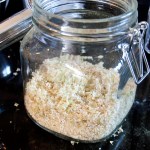
When you add the sugar, it sinks.Put the lid on and leave the jar in a warm sunny place. While it’s ‘cooking’, give the mixture a good shake-up every couple of days. You’re waiting until the fruit has softened; expect this to take about a week and a half, longer if it’s cold.

Throw in the sugar and mix well.

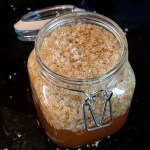
Put the jar in a safe place (doesn’t have to be sunny this time) for another week and a half or so. The sugar sinks, so give it a good stir every couple of days. Before adding the chilli.When most or all of the sugar has dissolved, it’s ready. I found three distinct layers – floating lemon pieces, the denser sugary syrup, and the undissolved sugar.

After adding the chilliFinally, add the chilli powder and stir well.

It’s now ready to bottle and/or eat immediately. If you bottle it later, be sure to stir well as the fruit tends to rise in the sugary mixture.

No need to refrigerate. Apparently it keeps for over a year if you leave it in a cool dry place – but it’s so yummy, I’m not sure it’ll be around that long!

The finished product

Afterword:

I’ll be making more of this, it’s awesome with poppadoms or as a side with a curry.

You could probably try this recipe to good effect with other citrus fruit, but the combination of the sour lemons and sugar really works well on the taste buds.

Ross is an expat thirtysomething Brit who went to the Shakey Isles in search of adventure. Works in technology, enjoys creating, has a love-hate relationship with his kitchen.

If you’ve enjoyed this recipe, have a look at Ross’s other lemon glut-busting recipes for lemonadelemon liqueur, and lemon sorbet (which you might be needing, if you decide to experiment the hot pickle!).

Read more from the Country Skills blog >>

When Life Gives You Lemons – Part 4: lemon pickle [Guest Blogger]

Today’s Guest Blogger is Ross, from Christchurch, NZ.

Lemon pickle

This one is a bit friskier, with the smoking hot oil making the kitchen smell strongly of mustard for a while – you have been warned!

This made about 1kg of pickle for me (including some excess oil).

  • 8 lemons,
  • 150g salt,
  • 25g fenugreek; 25g mustard powder; 50g chilli powder; 8g turmeric. (I used mild chilli powder from my local Indian supermarket, and the end product still had a bit of a kick; if you prefer it incendiary, then use the hot stuff.)
  • 300ml mustard oil; 1/2 tsp asafoetida (hing); 12g mustard seeds (crushed).

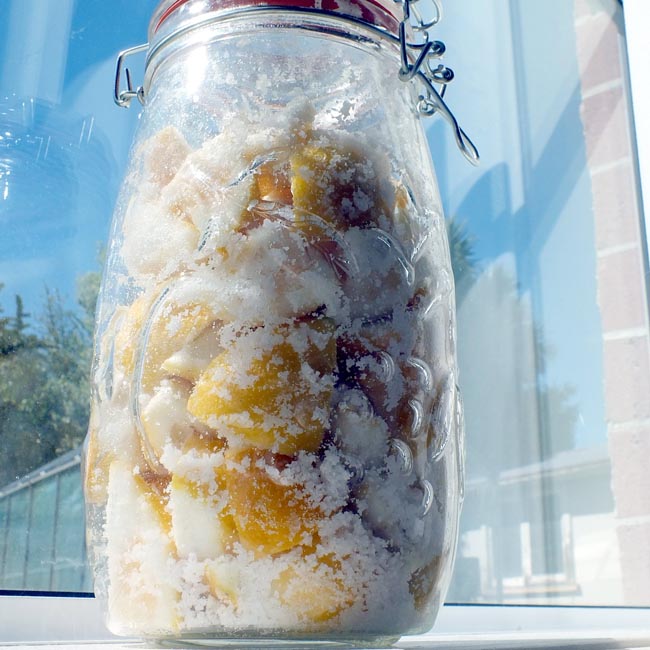
Salted lemonsStart by sterilising a large glass jar – a kilner-type jar like the one pictured is ideal.

Wash the lemons, dry, cut into eighths; you don’t have to remove the pips, but I did.

Put the lemons in the jar. Add the salt and shake it all up well to spread it all over them.

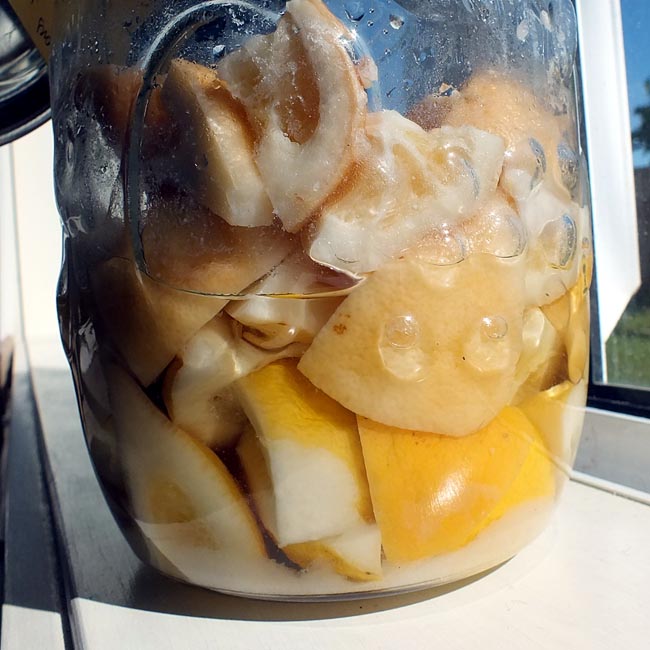
Lemons, after saltingCover; leave in a warm place for 1-2 weeks. (I put it on the windowsill which catches the sun nicely.) The juice leeches out of the lemons; where they’re exposed to the air, the lemon pieces soften and go a dull brown colour.

Mix the fenugreek, mustard powder, chilli powder and turmeric. Add this to the jar and shake it around gently. Re-cover and put it back into the warm for 2-3 days.

With all the spicesTransfer the lemon pieces and spices to a large saucepan.

Heat the mustard oil in a large frying pan. Fry the mustard seeds and asafoetida.

Keep heating the oil until it starts to smoke, then pour it over the lemons. (This is where it gets a bit frisky.)

Mix well. Allow to cool, transfer to a bowl, cover once more and leave in the warm for another week or so.

Lemon pickle

Now it is ready to put into jars; I tried (without huge success) to decant the excess oil. Then you can give some to your friends as presents, or to your enemies as a chemical weapon…

Ross is an expat thirtysomething Brit who went to the Shakey Isles in search of adventure. Works in technology, enjoys creating, has a love-hate relationship with his kitchen.

Warm thanks go out to Ross for these four great blog posts – hopefully he’ll be back with some more antipodean country skills for the blog in the future!  Have a look at Ross’s other lemon glut-busting recipes for lemonade and lemon liqueur, and lemon sorbet (which you’ll be needing, after sampling this pickle, I think!).

I hope you’ve all enjoyed this contribution from a great guest blogger as much as I have!

Read more from the Country Skills blog >>

When Life Gives You Lemons – Part 3: lemon sorbet [Guest Blogger]

Lemon TreeToday’s Guest Blogger is Ross, from Christchurch, NZ.

Lemon sorbet

Next up, to cleanse the palate, a simple sorbet. Note that if you have an ice cream maker it’ll make life easier, but it’s not mandatory (I don’t have one).

This recipe uses 8 lemons, and makes about 2.5 cups of sorbet.

  • Make up some simple syrup (see post 1 of this series) with 1 cup of water and 1 cup of sugar.
  • While it’s cooling, zest most of the lemons. You’re looking for about 2 tsp of zest – the finer, the better – I reckoned I had enough after six lemons.
  • Juice the lemons. You’re looking for about a cup of juice.
  • Mix the juice, zest and cooled syrup. Chill well (I left mine in the fridge for a couple of hours).

Now freeze. If you have an ice cream maker, you’re all set – but I don’t. That’s OK, it just means a bit more effort. The end product is a water ice, not a block of solid ice, so all you have to do is fluff it up a bit as it freezes.

Lemon Sorbet

  • I split the mixture into a couple of clean shallow plastic tubs and put them in the freezer.
  • After a few hours it was semi-solid; I mashed it up with a fork, then put it back in the freezer. Ideally I’d have done this again after a few more hours, but it was late in the evening so I left it overnight. This was maybe a bit too long as it was nearly solid so was a lot of work! (You could probably use a blender instead, but I don’t have one.)
  • Then put it back in the freezer. After 12-24 hours it’s frozen enough to serve.

Ross is an expat thirtysomething Brit who went to the Shakey Isles in search of adventure. Works in technology, enjoys creating, has a love-hate relationship with his kitchen.

Have a look at Ross’s other lemon glut-busting recipes for lemonade and lemon liqueur.  Coming up soon, lemon pickle.  Watch this space!

Read more from the Country Skills blog >>

When Life Gives You Lemons – Part 2: lemon liqueur, or ‘limoncello’ [Guest Blogger]

Today’s Guest Blogger is Ross, from Christchurch, NZ.

Lemon Liqueur

I did the first part of this at the same time as I made up some lemonade. This was a small test batch but will scale up directly.

IngredientsIngredients –

  • A half bottle of vodka (375ml) – not flavoured, you want something as pure and tasteless as you can find.
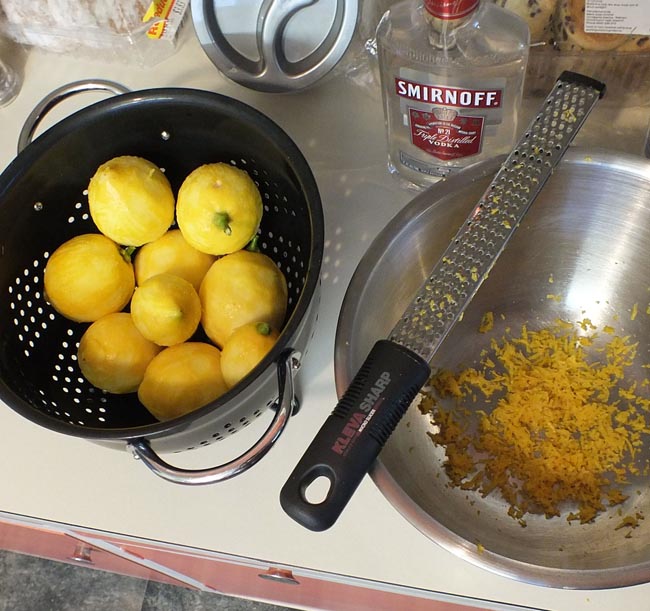
  •  8 lemons (zest only). Go for lemons with thick peels if you can, to maximise the amount of zest.

Sterilise a large sealable jar. This is the same as for making jam – a careful clean, rinse well, then dry in a slow oven.

Scrub and dry the lemons, make sure you’ve removed any wax. Now zest them; be very careful not to take any pith or you will spoil the result.

While the jar was cooling, I juiced the lemons to make the lemonade.

Lemon liqueur, infusingPut the zest into the jar and add the vodka. Make sure all the zest is covered, then seal it up and stash in a cool dark place for a while. I found a number of different recipes suggesting anything from 2 to 45 days; I left it for two weeks.

… time passes …

Make sure your bottles are clean and dry. You’ll end up with slightly more by volume than just the vodka.

Prepare a simple sugar syrup, and let it cool.

The amount of syrup you need is whatever will dilute your starting liquid to the desired strength (traditional limoncello is 30-32% ABV). In my case (375ml of 37.5% ABV vodka) this calls for 80ml of syrup.

Combine the infused alcohol with the syrup. Stir well. Optionally, say some recipes, let it rest for a few more weeks (I didn’t).

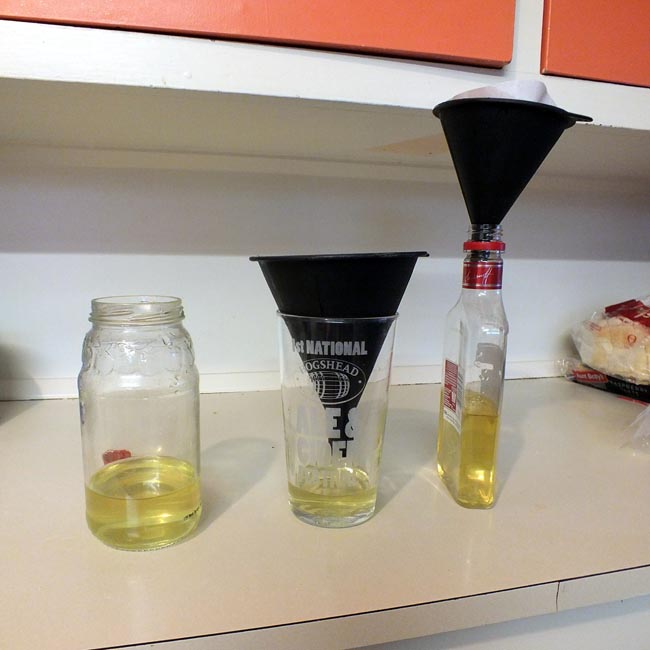
Filtering set-upNow filter carefully; for best results filter more than once. I started out with a sieve, then switched to coffee filters. I filtered it four times, which might be excessive; I set up a little production line (pictured). The filtering was slow, and the setup easy to knock over; I found myself longing for some clamp-stands like I used in chemistry class in high school. Unsurprisingly, the filters clogged quite readily; I got through several of them.

Bottle directly from the last filtration; the liqueur should be clear but coloured. At this point the product is very sweet and sharp. Let it mature in the bottle for at least a week; both the sharpness and the cloying sweetness melt away. Serve cold (direct from the fridge, or even the freezer). It’s dynamite-strong; take care!

Next steps?

This wasn’t real limoncello; apparently the genuine stuff is made with grain alcohol which pulls more flavour out of the lemon. (Grain alcohol as in 95% ABV – yes, almost pure ethanol – 190 proof in old money. It’s difficult to find on the shelves, but here in New Zealand it’s legal to distill spirits for personal use. There might be another blog post in here along those lines, but that’s a project for another day…)

Ross is an expat thirtysomething Brit who went to the Shakey Isles in search of adventure. Works in technology, enjoys creating, has a love-hate relationship with his kitchen.

Coming soon, more lemon glut-busting recipes from Ross – lemon sorbet, and lemon pickle.  Watch this space!

Read more from the Country Skills blog >>

When Life Gives You Lemons – Part 1: Lemonade! [Guest Blogger]

Today’s Guest Blogger is Ross, from Christchurch, NZ.

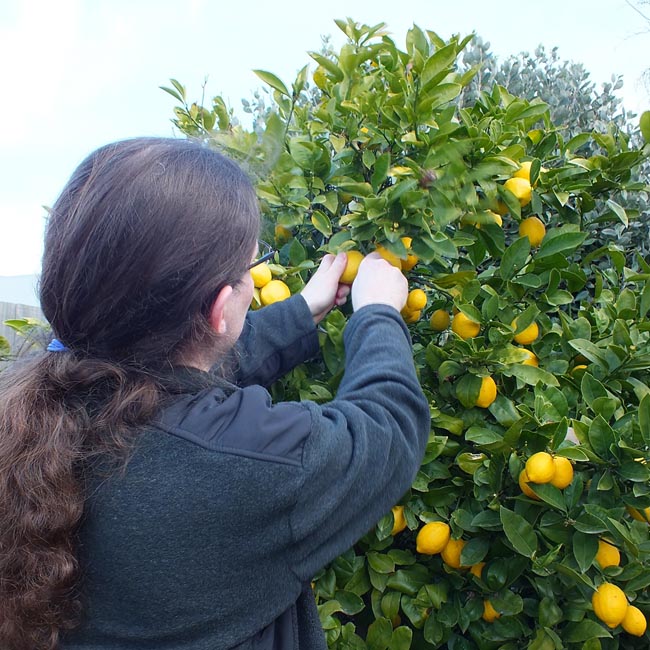
Lemon TreeWhat to do when life gives you lemons?

We have a lemon tree. Consequently, we have a lot of lemons. It’s just turning to spring here in New Zealand as I am starting to write this, it’s our first spring in this house, and we have a crop ready to harvest.

As a long time reader of the Country Skills Blog I went fishing for suggestions. There is plenty of marmalade on here, which I must get round to trying out sometime, and everybody has heard of traditional old-style lemonade, but what other interesting things can we do with them…?

Studying some recipes I found recipes for a lemon liqueur not entirely unlike limoncello, which use only the zest of the lemon, whereas lemonade uses only the juice. A perfect combination for the first experiments!

Simple Sugar Syrup

This comes up in a few of these recipes, so I’ll describe it once.

Take roughly equal volumes of sugar and water. Mix and heat in a small pan; boil gently until the sugar has dissolved leaving you with a clear syrup. You usually want to leave it to cool before you do anything else with it; if not, take care – it’s like napalm.

Fresh Homemade Lemonade

Lemonade 1Ingredients:

  • Lemons (juice only),
  • sugar,
  • (optional) fresh mint to garnish.

120ml of lemon juice + 1/2 cup sugar makes about 650ml lemonade.

Juice however many lemons. I got about 120ml from the eight lemons I used for my test batch of limoncello; I could have probably got some more from them if I had tried harder.

Lemon JuiceMake up some simple syrup following directions above. I used the same volumes of water and of sugar as I had lemon juice – near enough 1/2 measuring cup of each.

Let the syrup cool, then transfer to a jug. Add the lemon juice, then more water to dilute: three times as much water as you put into the syrup, so I used 1 1/2 cups. Chill well before serving. If you have any fresh mint to hand (I didn’t), it would make an excellent garnish.

Ross is an expat thirtysomething Brit who went to the Shakey Isles in search of adventure. Works in technology, enjoys creating, has a love-hate relationship with his kitchen.

Coming up soon, more lemon glut-busting recipes from Ross – lemon liqueur, sorbet, and lemon pickle.  Watch this space!

Read more from the Country Skills blog >>

Getting In A Pickle – gorgeous spiced plum chutney

Accidents in the kitchen always seem to happen when everything’s just at that critical point… and any cook worth their salt, when scalded by a volcanic eruption of boiling sugar and vinegar, is likely to think ‘never mind my arm, have to save the chutney!’

So it was Thursday evening.  The chutney is fine, incidentally, thank you for asking!

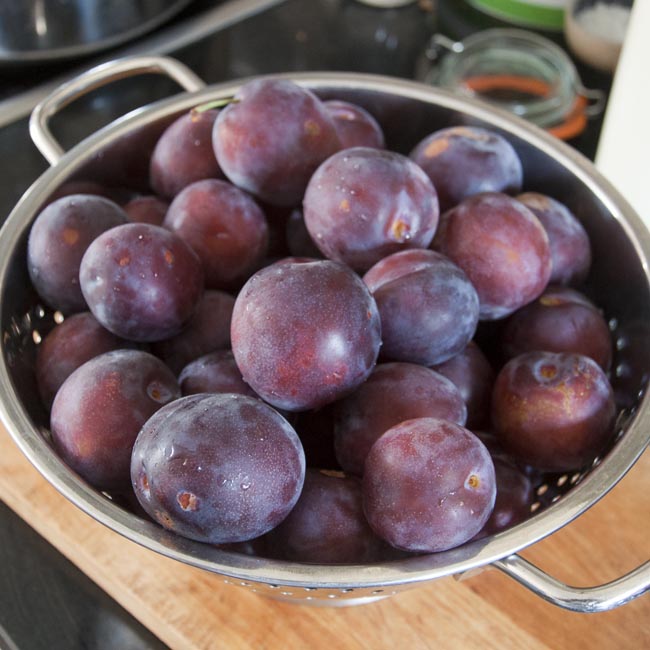
Red plumsAs well as bringing some beautiful French apricots back from their holidays, my lovely in-laws also arrived with a couple of kilos of fabulous red plums.  This put me in a real quandary, let me tell you.  Plum jam is one of my favourite things in the whole world.  But then this spiced plum chutney (originally Delia’s, credit where credit’s due!) is my very very favourite chutney.  It has a lovely fruity character topped with just a subtle hint of Christmas spices, and is wonderful with a lovely sharp mature cheddar, or a slice of home-cooked ham.

What eventually made my mind up was my jam jar situation.  I’ve done a lot of preserving in the last few weeks – it is that time of year after all! – and the jars I have left are a motley bunch.  Quite a lot of them have held things like sauces, curry pastes, and even pickles and chutneys.  The sorts of aromas that ‘hang around’ jars and lids, despite your best cleaning and sterilisation efforts.  It’s not really the flavour sensation you want with your breakfast jam!

This chutney is full of big flavours, and will swamp any faint ‘eau de korma’ residue it might have to deal with!

My well thumbed 'bible'The recipe is somewhat modified from the one in my very well thumbed copy of the Delia Smith ‘Complete Cookery Course’, reprinted from the 1982 edition.  Conveniently, it’s also available at ‘Delia Online’, here.  I’m not going to duplicate the recipe, since it’s freely available for you to read, but I changed the quantities and slightly modified some of the ingredients to suit my 2kg batch of plums, and what I had in the cupboard.

This is a BIG batch of chutney, producing 9 jars about 1lb in size, and a further eight small kilner-type jars, plus a bit extra which wasn’t quite a full pound jar.  I estimate in total it makes about 12lb, or 6kg.  It needs a very big pan – my large stock pot was over half filled, before reducing, and has a capacity of about 15l.  Unless you’re planning on eating an awful lot of chutney, giving lots of it away, or selling it (I think it would go really well at a farmer’s market!) I’d probably suggest scaling these quantities down to half or even a third (Delia’s original quantities are for 1.3kg of plums, which is still a very big batch).

I used the following –

  • 2kg of dark red / purple plums.  The tart / acid ‘cooking’ sort are probably better than sweet eating plums for this recipe.
  • Four smallish Bramley apples, totalling about 800g in weight.
  • 5 large-ish onions
  • 5 cloves of garlic
  • 3 teaspoons of ground ginger
  • 750g of seedless raisins
  • 750g each of soft brown and demerera sugar
  • 3 pints of malt vinegar (excuse the switch to imperial measures – this is about 1.7 litres, malt vinegar comes in pint-bottles in these parts, so it’s a measure of convenience).
  • 3 desert spoons of salt
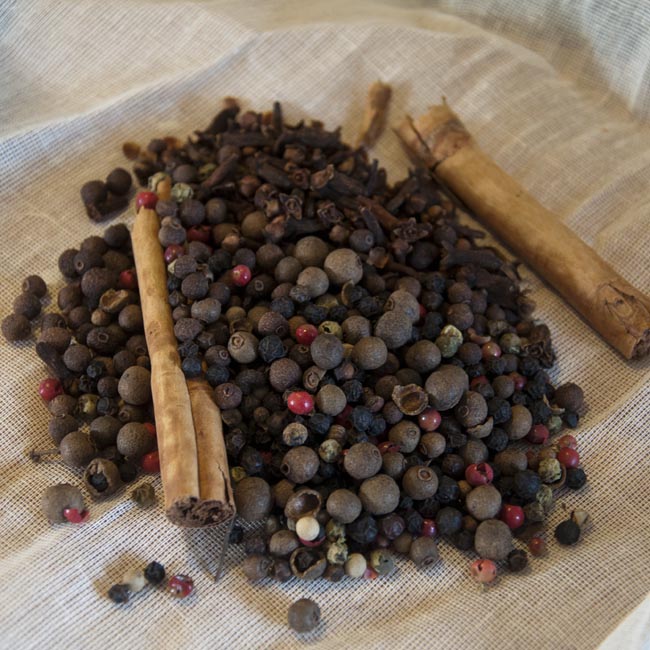
  • a large cinnamon stick, 15g of whole allspice berries, and 20g of mixed peppercorns (the mix was about 1/3rd allspice berries, oddly), and a tablespoon of whole cloves, all tied up in a muslin parcel.
  • A giant stock-pot, food processor, and enough jam jars to contain your chutney (lots, and lots, of jam jars!), which should have plastic-lined lids to help resist the vinegar.

Whole spices with muslin

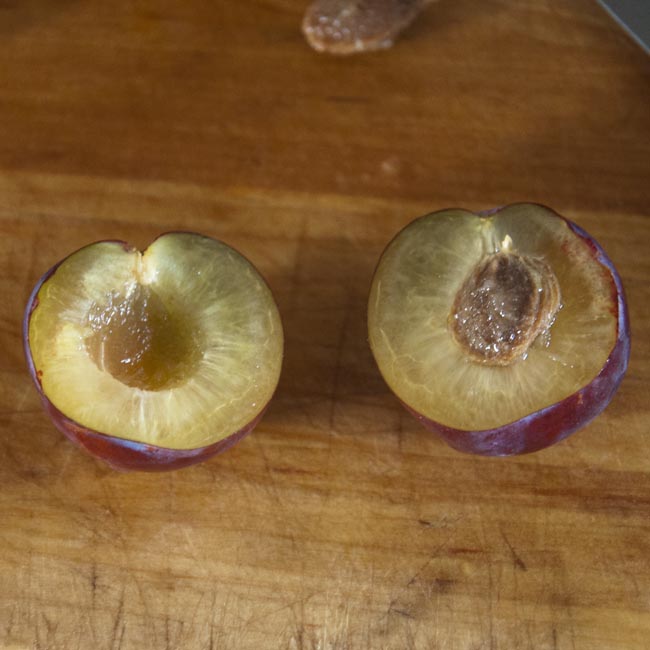
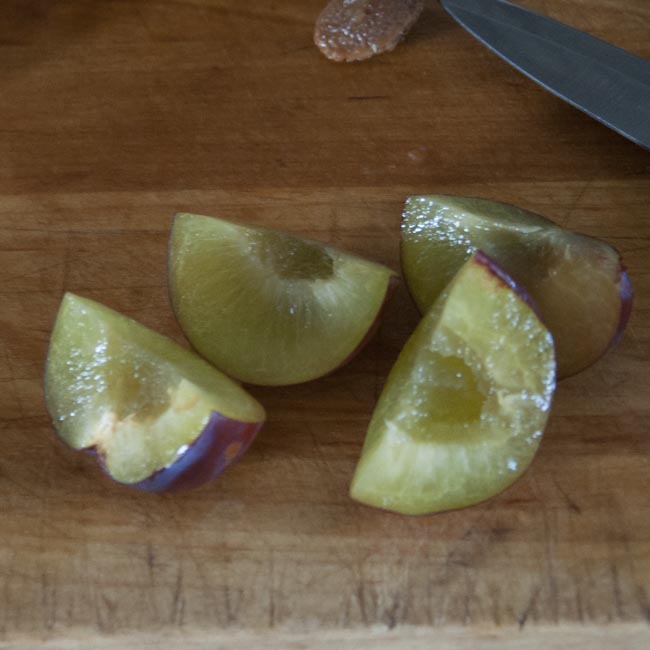
First wash, then stone and quarter all your plums. I find the quickest way to do this is to first slice along the line of the plum, down the visible ‘seam’, and divide the plum in two. The stone will cling to one of the halves, and especially with the smaller firm-textured cooking plums, won’t want to come out easily.

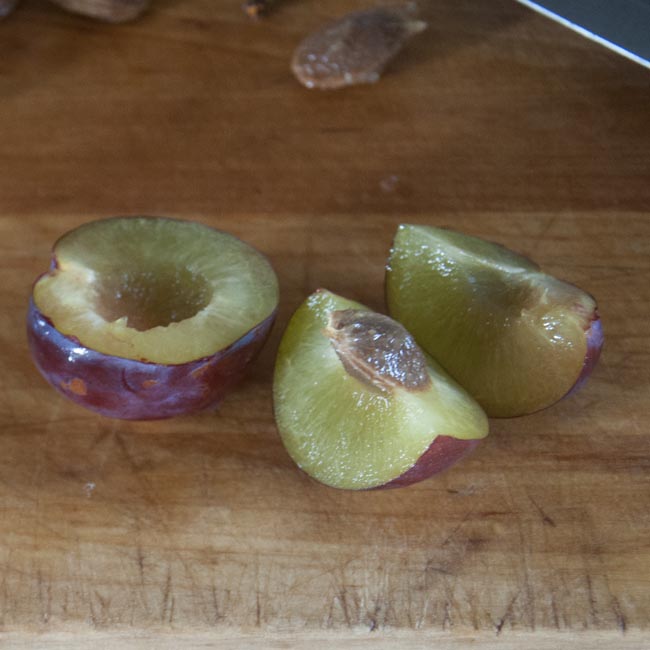
Stoning plums - 1   Stoning plums - 2   Stoning plums - 3

Take this half, and slice in half again, across the sort axis of the stone this time. The stone will now be sticking conveniently out of one of your quarters, and can easily be pushed free.  Cut your other half into quarters, too, and you’re done.  Incidentally, stoning plums can stain your fingers and fingernails a rather attractive nicotine brown colour, I think as a result of the tannins, so if you care about this, consider wearing gloves!

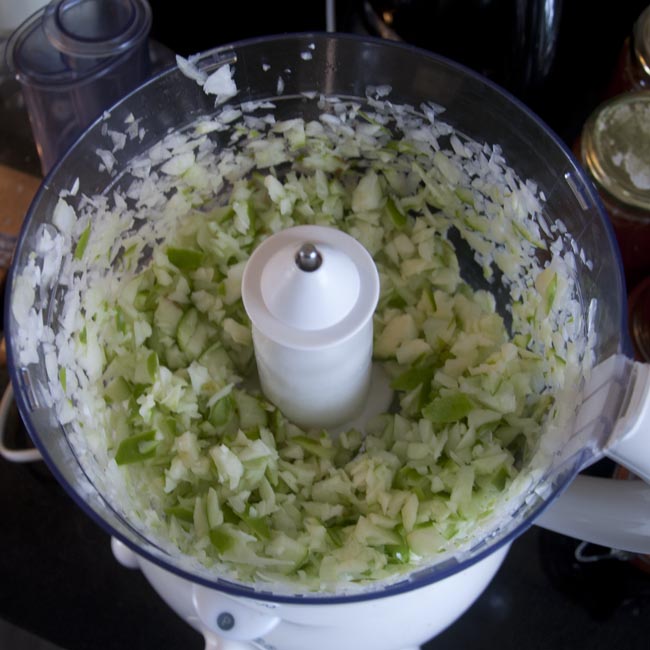
Chopped apple in food processorThe recipe calls for minced onion and apple.  I put mine through my food processor in batches, but left some nice texture in both.  The first time I made this recipe I didn’t have a decent food processor and diced all the apples and onions very finely by hand.  It works, but I can’t say I can recommend it!

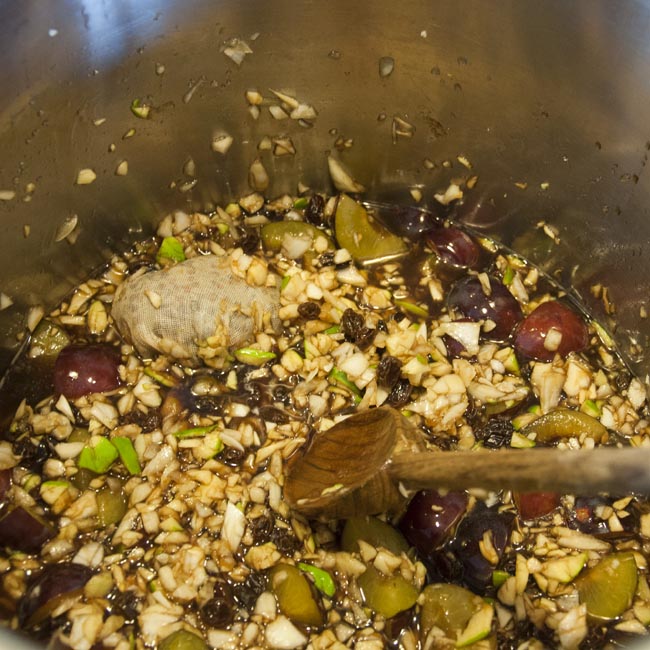
Mixed ingredients in panAfter your fresh ingredient preparation, it’s very simple really.   Add all the other fresh, dry, and liquid ingredients, and toss in your spice bundle (Delia recommends tying your bundle of spices to the pan handle, but I really can’t see any benefit to this!).  Bring everything to a simmer, stirring to mix as it all comes up to temperature.  Your kitchen will smell rather like Christmas-gone-wrong about now – festive spices mixed inexplicably with onion and vinegar.

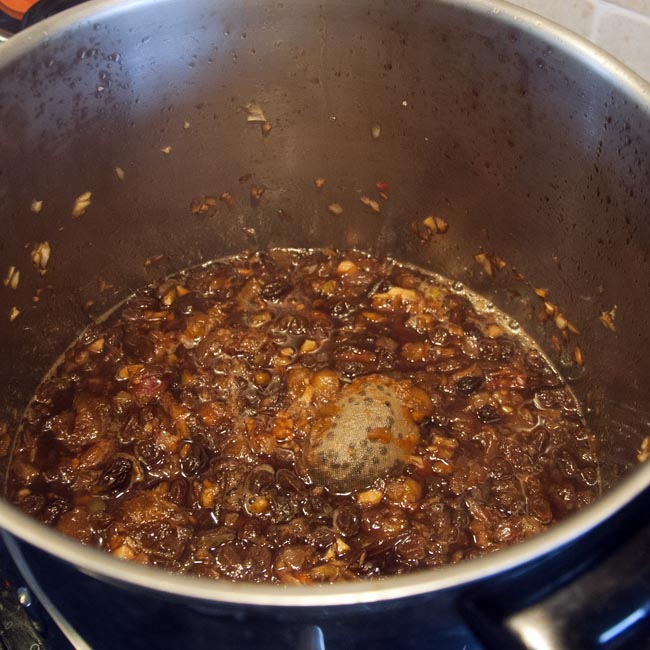
Cooking away nicelyThen let it bubble, stirring occasionally, for about three hours (my mixture was about six inches deep in my very big stock pot – a wider pan, or a smaller batch, which would allow the mix to sit in a shallower layer will reduce noticeably faster) until the mixture is reduced, glutinous, and the vinegar mixture has thickened so that it doesn’t immediately flow back into a channel cleared with a spoon.  I had to ladle out a couple of spoon-fulls into a bowl to check this.

As it starts to reach this stage, it will tend to ‘glob’ with really big bubbles, particularly when stirred, so learn from my experience and take care to protect your hands and arms from scalding!  This is the point that it’s at risk of sticking and burning, too, so keep stirring when you think you’re getting close.  Once it’s ready, fish out the spice bag, and bottle straight away into your hot sterilised jars.

Bottled chutney

It will be at it’s best if you allow it to mature for at least three months before eating – just in time for Christmas, then! – though I had some of the ‘extra’ today with some bread and cheese, and it’s already very good!  It will keep very well, too – I’ve eaten this chutney after at least four years’ storage.

Now, I wonder if I can get hold of some more plums to make some jam, too …

Read more from the Country Skills blog >>

This Is My Jam – French apricot with kirsch

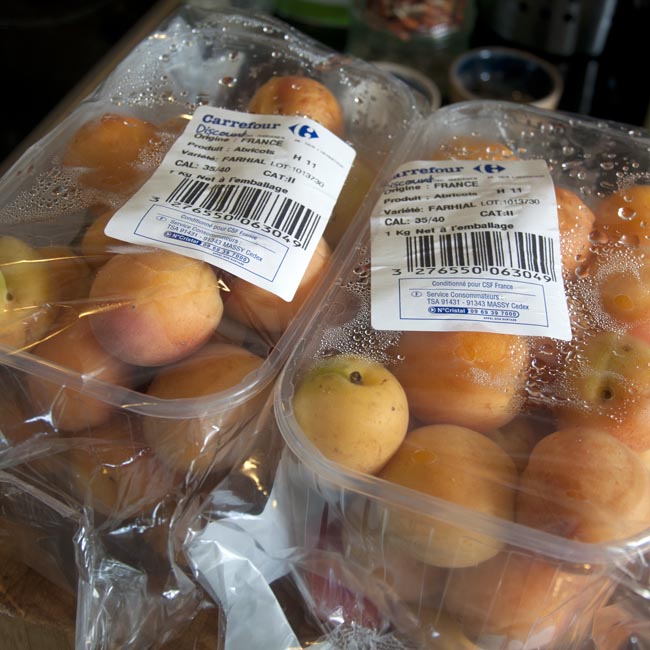
We had a visit from my in-laws this week, on their way back from holidaying in France.  It’s always lovely to see them, but this time was particularly special – they brought with them 2kg each of beautiful French apricots and plums.  So today, my day off, was always going to be about preserving!

I wanted to make some really nice authentic French apricot jam, so this is as simple as it comes – apricots, sugar, a squeeze of lemon juice… and just a little ‘twist’!

For this jam, you will require –Fresh French apricots

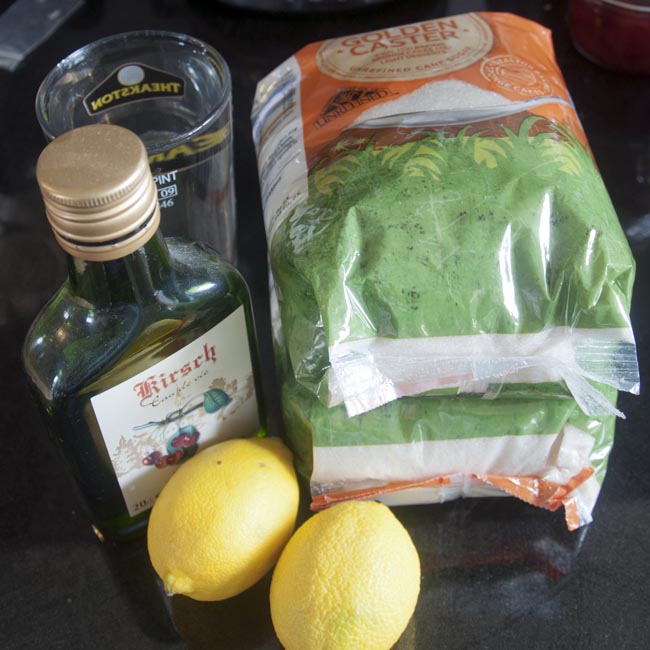
  • 2kg of French apricots (well, OK, anyone’s apricots will do, I suppose!) not too ripe.
  • 2kg of golden caster sugar (as a general rule, I prefer to use the least-refined sugar that I can get away with in any given situation)
  • 3 slightly sorry-looking lemons from the fruit bowl (the sorry state is not compulsory, and two nice big fresh juicy lemons will do well here!)
  • Half a pint of water
  • A couple of tablespoon measures of kirsch (or other eau-de-vie of your preference)
  • Generous sized preserving pan, not aluminium
  • Enough jam jars to contain your batch.  I always wash and sterilise more than I think I’ll need, as it doesn’t do to run out at bottling time!

IngredientsObviously you can scale the quantities to suit your apricot supply – they’re very nice convenient multiples!  I find 2kg of fruit is a good useful batch size, easily manageable with the equipment I’ve got, and makes enough jam to generously repay the investment in time and effort.

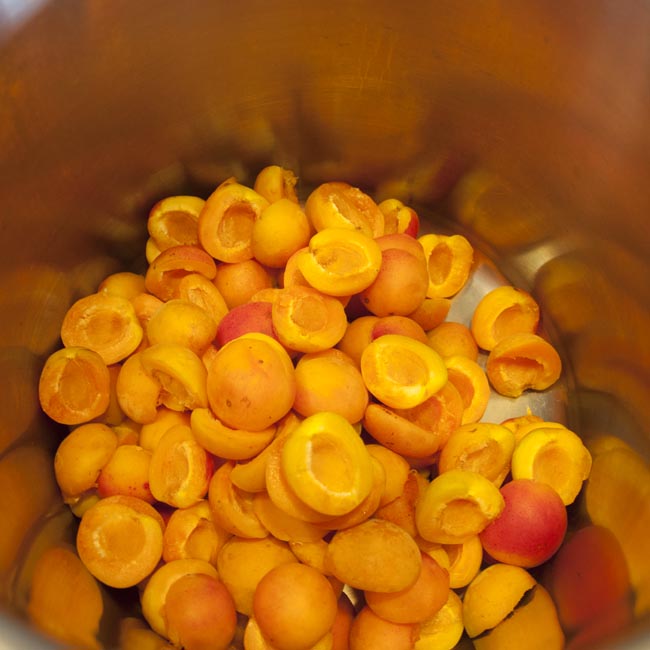
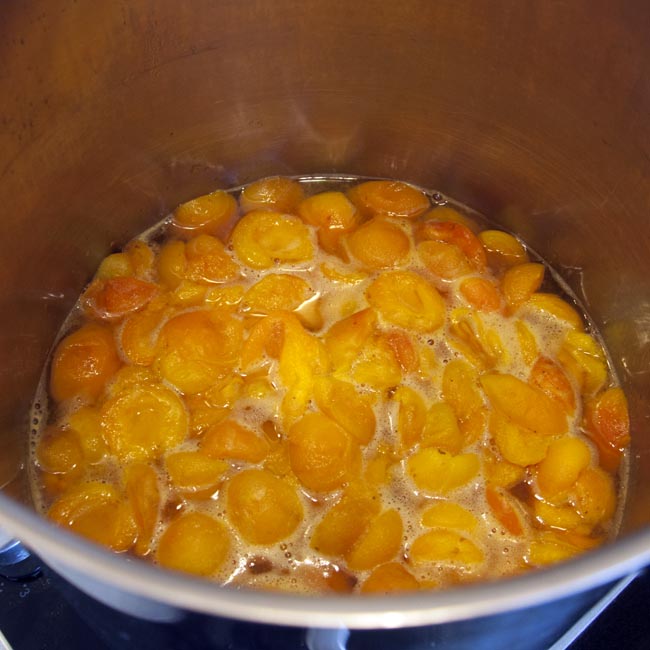
Apricot halvesWash your apricots, then halve them and remove the stones.  Don’t throw the stones away just yet!  Put all your half apricots into your pan, and add the half pint of water, and bring this to a gentle simmer.  Stew the apricots very gently until they’re just soft, and the juice has run.

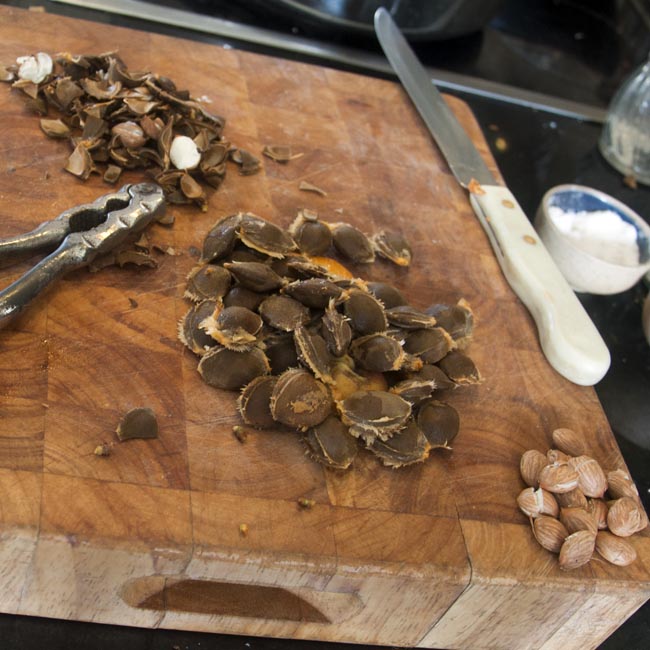
Apricot kernelsWhile your apricots are stewing, take your nutcracker (if you have one) and gently crack about a dozen of the reserved apricot stones.  Inside you’ll find the kernels – they look like little almonds, and this is no coincidence, as almonds and apricots are closely related, so closely in fact that you shouldn’t grow apricot and almond trees nearby one another!  You can add these to the jars of jam at bottling time (about one per jar), which will infuse a lovely subtle bitter-almond flavour into your jam – this is completely optional, of course, if you can’t be bothered with the faff (or can’t lay your hands on a nutcracker!).

Gently stewed apricotsPut your clean jam jars and lids into a cold oven and set it to 150C.  Now add the sugar and heat gently until it’s all dissolved – you might find adding it in portions is easier and results in less trauma to the apricot pieces.

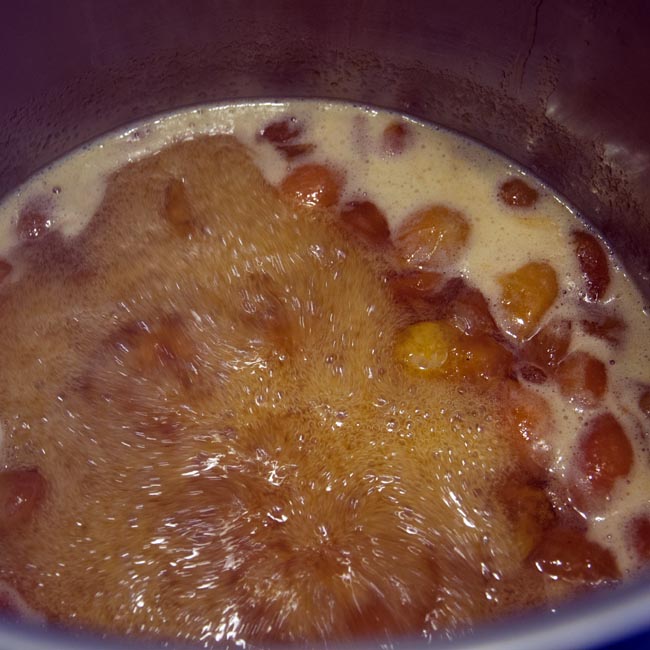
At a rolling boilNow turn up the heat and boil the jam until it reaches a set.  This didn’t seem to take very long at all for me (though I have to admit to being distracted by sorting and cleaning out the *next* batch of jars at this point) and the natural pectin in the apricots seemed to be adequate.

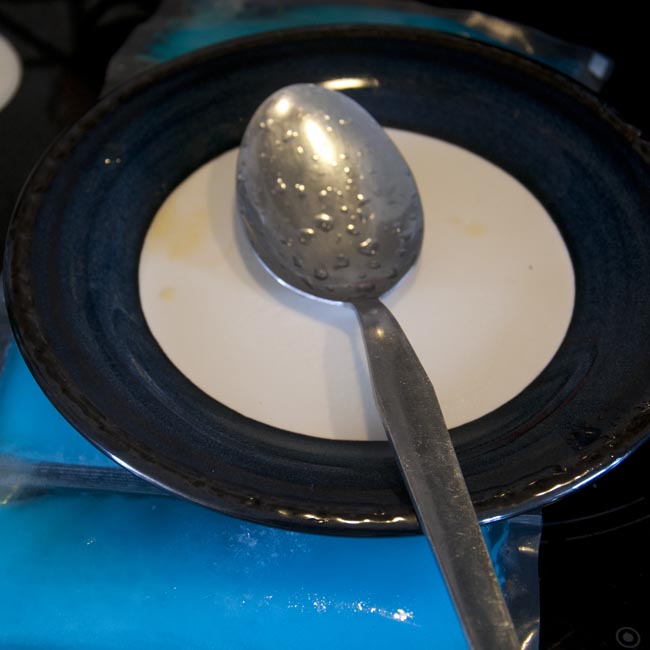
Cold saucerI tested the set using the cold-saucer technique (I often forget to freeze the saucer, so this is my usual approach – placing a saucer on top of a freezer block, the sort you’d use to keep a chill bag cool).  I’m not after a firm set for this jam so I was satisfied as soon as I got a bit of a wrinkle on top of the sample.   Once it looks like you’re getting there, juice the lemons and stir the juice into the jam.  Get the first batch of jars out of the oven ready to go.  Finally add the kirsch and stir in briskly.

Bubbles at bottling timeNow start bottling your jam immediately, using a large-aperture funnel if you have one.  If you’re doing this right, you’ll be able to see bubbles rising in your jam as it hits the hot glass of the jam jar.

In the jar with the apricot kernelsFill a small number of jars at a time (2 or 3), don’t forget to add a kernel or two to each jar before adding a wax disk (if you like).  Secure the lids down tightly, before getting the next few jars out of the oven.

I was pleased with the yield of this batch, five good big jars with about a half litre capacity, five little mini-kilner-alikes (it would have been six, but one developed an alarming crack during sterilising!), and a cruet-worth for my breakfast over the next few days.

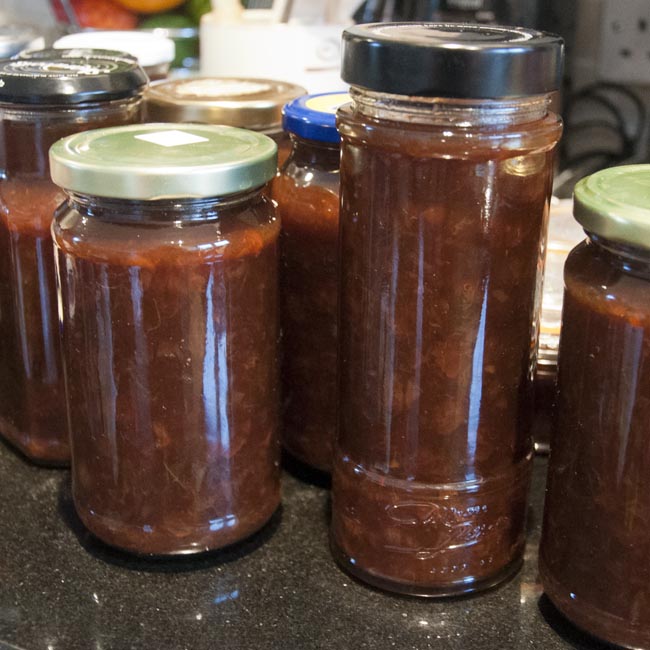
Finished batch

It’s gorgeous jam, too, with the subtle note of the kirsch just evident against the lovely deep rich apricot.  The balance of sweet and acid is very pleasing.  The set seems to have come out as I wanted – not a firm set, but not runny either, just like a traditional French apricot jam should be!

Now all I want is a crusty baguette, some unsalted butter, and an excuse to really tuck in!

Read more from the Country Skills blog >>