
It’s too early in the year to have a glut of tomatoes, but I wanted to try my hand at home-made tomato ketchup. The commercial offering is so ubiquitous, how many of us pause to think what’s in it, or if we could make it better ourselves? I wondered if using sun-dried tomatoes, the dry-packed sort, might give me a shortcut to a sauce that would pack a real concentrated tomato punch. Well, they do – with the added bonus of not requiring the extended cooking time required to drive excess water off fresh tomatoes.
To make a little over a litre of sun dried tomato ketchup, you will require the following –
- 250g of dry-packed sun dried tomatoes
- Two small to medium sized yellow onions
- 5 cloves of garlic
- Whole red chilli
- Red wine vinegar
- Balsamic vinegar
- Fresh ginger
- Soft brown sugar
- Ground allspice
- A carton of apple juice
- Food processor, ideally with blender attachment, or hand-held liquidiser
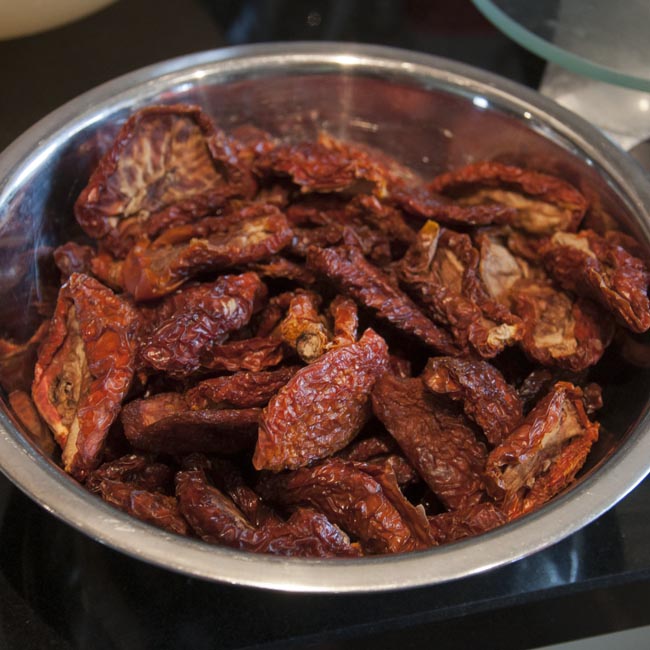 Put the tomatoes in a bowl and pour over enough freshly boiled water to cover. Roughly chop the onions (or peel, quarter, and chop in the food processor). Mince the garlic. Once the tomatoes have been soaking for about half an hour, pour off – but reserve! – the soaking liquid. Roughly chop the tomatoes by hand or put them through the food processor. Also finely chop the whole chilli (it can go through the machine with the tomatoes).
 Now put a glug of olive oil (or your preferred cooking oil) in the bottom of a large pan, and then start to fry off the onions, adding the garlic when the onion has gone translucent, but not taken on any colour. Fry until just colouring and then add the chopped tomatoes & chilli, mix together and add the tomato-soaking liquid back in. This liquid will have taken on some lovely flavour from the tomatoes (which is why we’re using it). Note however that dry-packed tomatoes are preserved with salt, so if reducing the amount of salt in your diet is important to you, you should discard this liquid and instead add enough apple juice to allow you to start to stew the tomatoes.
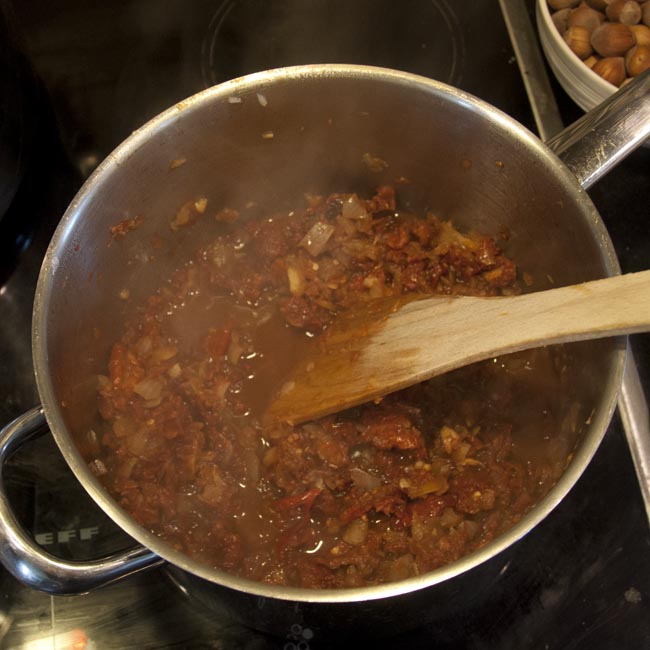 At this stage, the whole process becomes a matter of personal taste. I added about a cm of fresh grated ginger to the pot, along with a quarter of a teaspoon of allspice. I started by adding 50ml of red wine vinegar, a glug of balsamic vinegar, and a tablespoon of soft dark brown sugar. Keep tasting the mix as it cooks, and adjust your seasoning as required.
 Once it’s been bubbling away for about twenty minutes, pour the contents of the pan into your blender, or take the pan off the hob and use your handheld blender. Start to liquidise the mix, adding apple juice as you go until you achieve your desired consistency. I stopped short of blending mine completely smooth, because I like it to have a little texture – a sort of hybrid ketchup/salsa feeling. I ended up adding about half a litre of apple juice in total.
 Now return your mix to the hob and set it bubbling again. This is the time to make the final adjustments to your flavours. I ended up adding an extra splash of wine vinegar at this stage, along with another half tablespoon of sugar. Remember that you’re tasting the ketchup hot, once it’s cold, most flavours, but particularly vinegar flavours, will be less marked, so if a really sharp vinegar is to your taste, make sure you dial it in now!
Once it’s cooked and seasoned to your satisfaction, pack your ketchup into sterilised jars or bottles while still piping hot, and seal tightly. Old glass salad dressing bottles are great (and will have plasticised lids, which will help protect the metal from the vinegar). I would expect this to keep similarly to chutney, and to have a shelf life of several months in a cool dark place. Keep it in the fridge once opened and eat up reasonably quickly!

Try it – it’s gorgeous, sharp and sweet and packed with concentrated tomato flavour. I tasted it alongside commercial ketchup today and it makes the branded stuff taste like red acidic sugar water. It will make a great burger relish, and goes beautifully with oven baked spicy potato wedges.
Read more from the Country Skills blog >>




 Country Skills for Modern Life